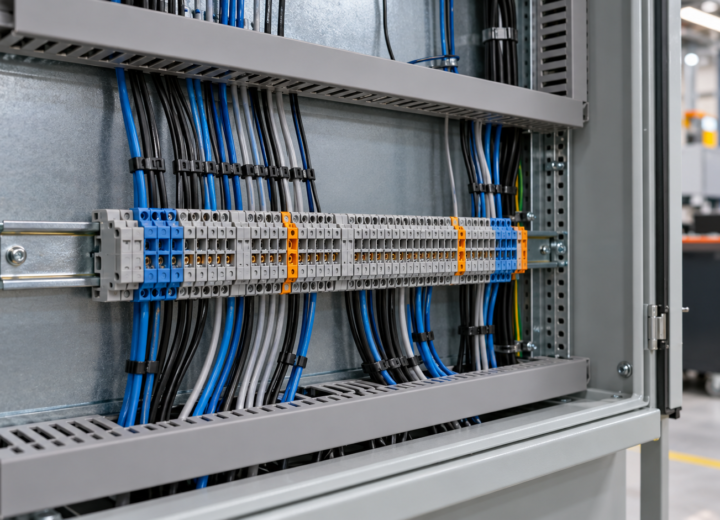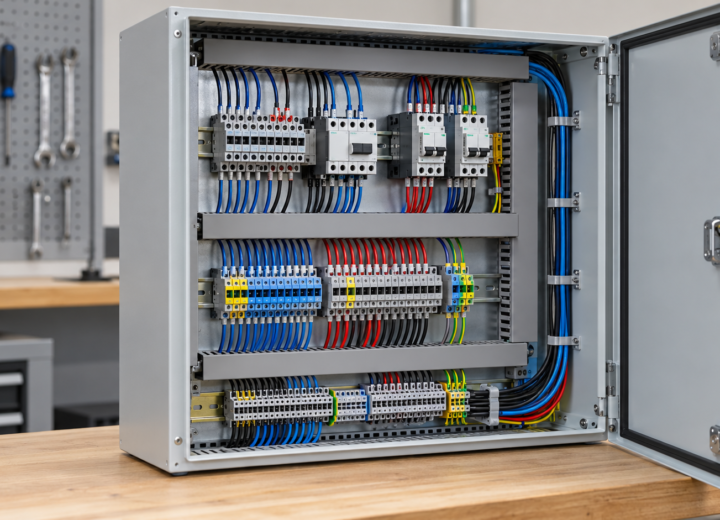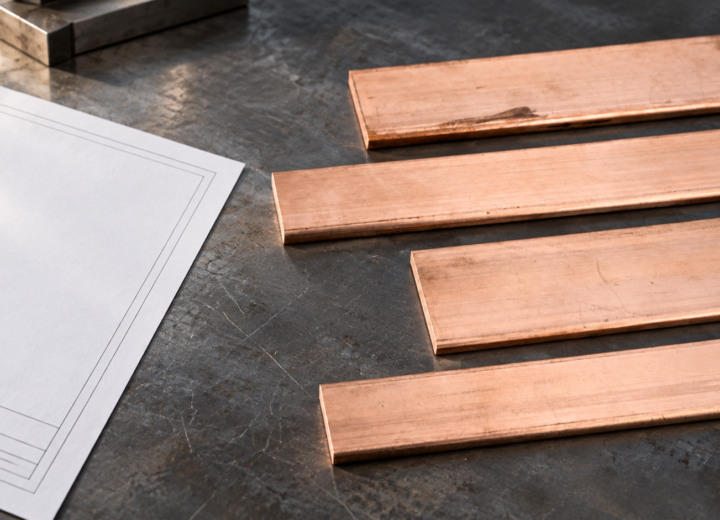
When a switchboard engineer in Suzhou encountered a late-stage fit-up problem, she asked the fabricator to remake a short link bar after two holes no longer aligned with the enclosure standoffs. The first replacement looked correct on the bench, but the plated hardware bound during assembly and the bend sat visibly off the mounting plane. The reversal came when the team traced the issue to an incomplete datum scheme and an unsequenced cutting, punching, and bending plan—not simply to a defective copper bar.
Summary: Custom bus bars should be specified as an electrical and mechanical part: define the copper form, finished geometry, datums, hole and bend relationships, surface condition, and required records before quoting. At 20 °C, NIST lists copper resistivity at 1.7241 microohm-centimetres; that useful material property does not by itself determine a finished assembly’s temperature rise or compliance. Start with the assembly drawing and the intended verification route, then choose the fabrication sequence around the feature that must remain controlled.
CNC Cutting Copper Bus Bar specifications begin with a controlled datum scheme.
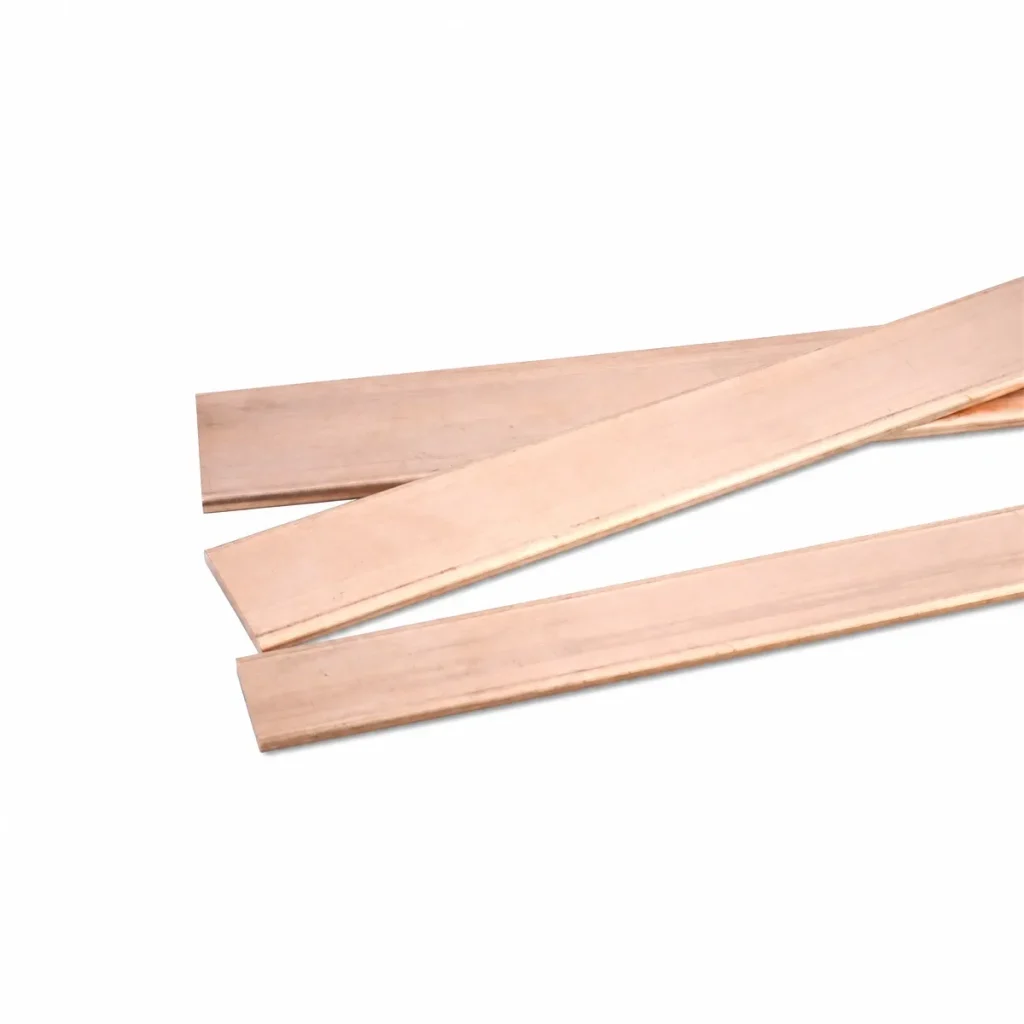
Cutting is where stock dimensions become an assembly interface. A usable drawing identifies the reference edge or centreline, finished length and width, burr direction where relevant, material form, and the features that are functionally tied to that datum. Without that information, an apparently minor trim variation can migrate into a terminal, insulator, or enclosure interface.
For conductivity calculations, resistance changes with length and cross-sectional area; the NIST 20 °C resistivity value is a reference point, not a promise of installed performance. ASTM B193 is the test method commonly associated with resistivity measurement, while the actual product form should be selected under the applicable copper material specification. A drawing should state what needs to be measured and documented rather than treating a catalogue value as a finished-part result.
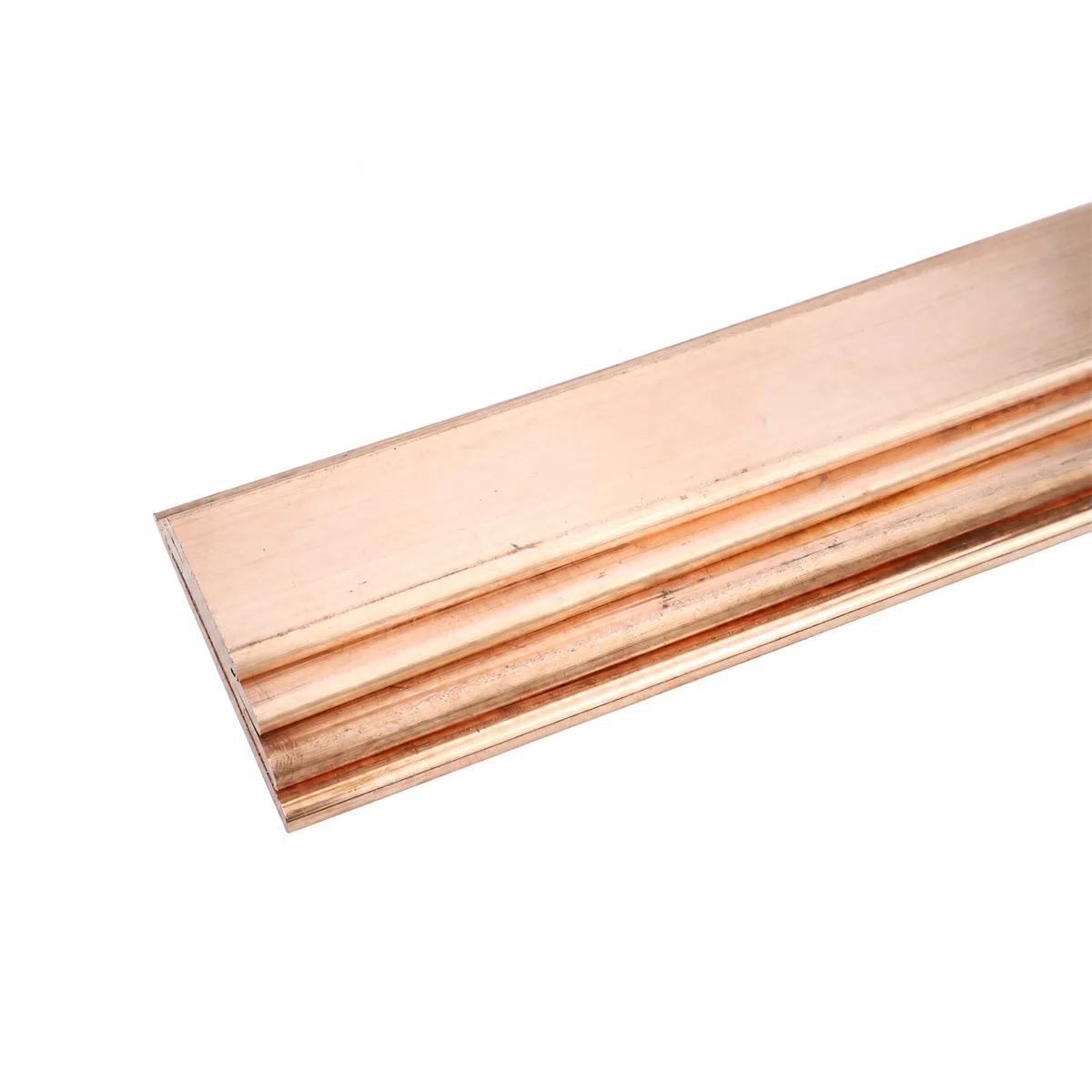
For assemblies with several outgoing tabs, CNC Cutting Copper Bus Bar work is most reliable when the nesting and trim plan protect the datum edge through downstream handling. Ask whether protective film, edge conditioning, marking, or identification will be applied before shipment; each can affect the inspection sequence or the usable contact surface.
CNC Bending Copper Bus Bar work must preserve electrical clearances and mechanical interfaces.
A bend changes more than shape. It changes the relationship between holes, terminals, adjacent phases, insulation supports, and the enclosure plane. The bend angle, inside radius, orientation, datum used for post-bend dimensions, and whether a feature is dimensioned before or after forming should be explicit; a flat-pattern dimension alone is seldom enough for a crowded cabinet.
ASTM B152/B152M addresses copper sheet, strip, plate, and rolled bar product forms. It can help a buyer align material procurement with the drawing, but it does not certify a formed bus bar for a particular panel or switchboard. Material temper, bend direction relative to rolling, and requested visual condition should be reviewed against the fabricator’s forming capability and the required geometry.
Use a simple functional check: confirm the bend plane and terminal plane against the mating components, then define which of those surfaces establishes inspection. CNC Bending Copper Bus Bar fabrication becomes easier to quote and inspect when the drawing distinguishes critical interface dimensions from non-critical envelope dimensions.
CNC Punching Copper Bus Bar decisions should follow the feature sequence.
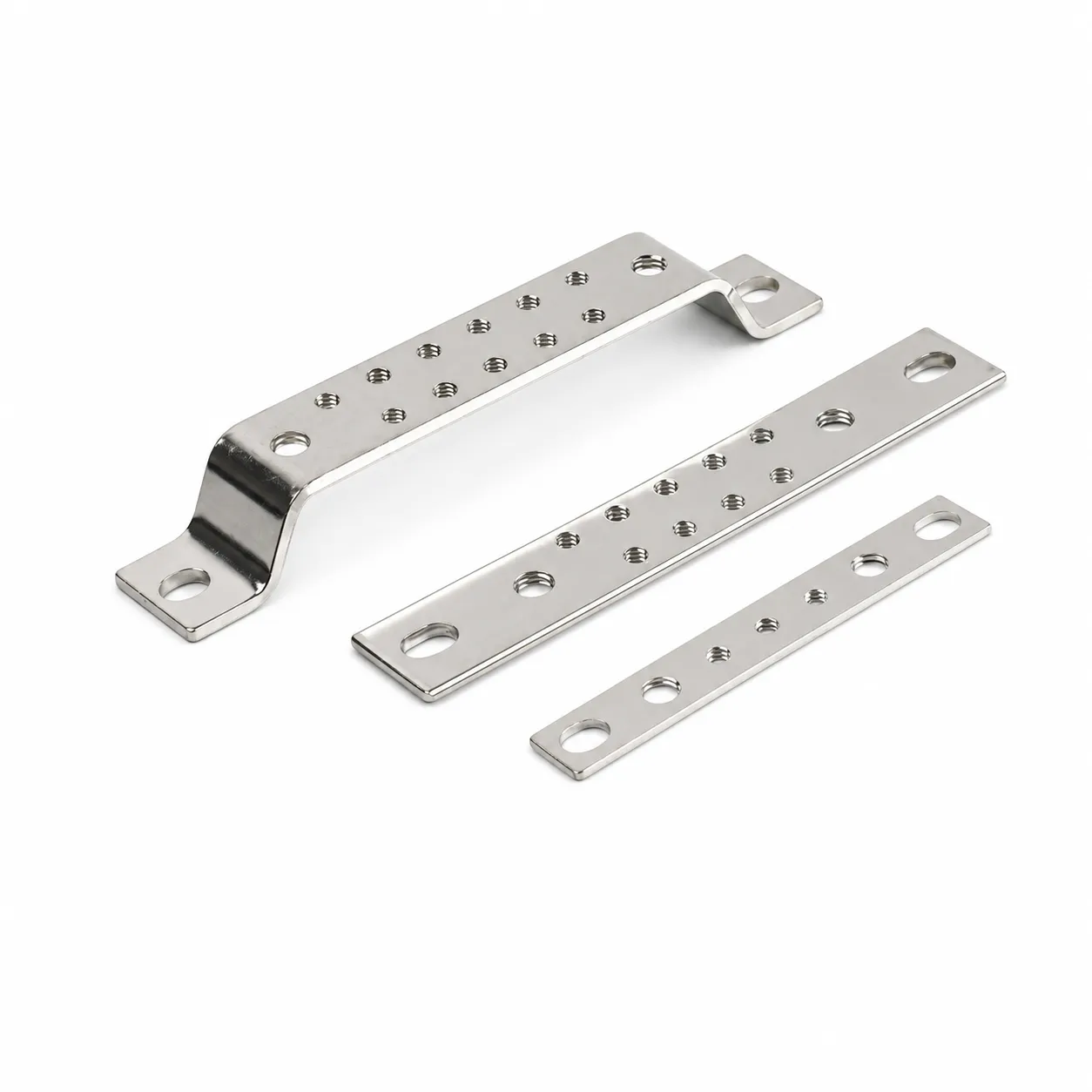
Holes, slots, and notches are not interchangeable from an assembly perspective. Their purpose may be fastening, locating, venting, or providing clearance around a terminal. The drawing should identify feature type, finished size, positional relationship to the functional datum, and any requirement for deburring or edge condition; the mating fastener and washer stack should be considered at the same time.
A sensible route often punches flat features before forming, then verifies the formed part from the agreed datum. That is not universal: some geometries call for a different order to protect access or positional control. The purchasing question is not “can you punch it?” but “which sequence maintains the specified relationship after forming?”
For a bus bar that carries multiple hardware interfaces, CNC Punching Copper Bus Bar planning should also reserve adequate access for inspection. A coordinate report is meaningful only when it states the datum and measurement condition; it cannot substitute for fit-up verification against a representative mating part where that interface is critical.
The fabrication route and application requirements should be compared by risk, not by a single unit price.
The least expensive operation on a quote can become the costly one if it shifts rework to assembly, plating preparation, or incoming inspection. The comparison below is deliberately process-led: it helps teams identify the feature that controls the route, then request evidence appropriate to that feature. Unit cost and lead time remain quote-specific because geometry, material availability, finish, quantities, and records change them.
| Process focus | Best drawing control | Typical downstream risk | Useful receiving check |
|---|---|---|---|
| Cutting to length/profile | Reference edge, finished profile, edge condition | Datum drift into mounting interfaces | Overall profile and datum-to-feature check |
| Punching holes or slots | Feature size, position, burr direction, fastener intent | Hardware interference or inadequate seating | Gauge or mating-hardware fit check |
| Bending/forming | Angle, radius, bend orientation, post-form datum | Loss of coplanarity or enclosure clearance | Fixture or representative assembly check |
| Combined route | Operation order and final inspection condition | Rework after a feature becomes inaccessible | First-article review of critical interfaces |
An illustrative total-cost view is useful: a part that saves one handling step but requires repeated manual fit-up can cost more over a project than a route with a clearer first-article check. Compare quotation assumptions, inspection records, packing method, and the cost of a delayed enclosure build—not an unsupported generic price per bar.
Current capacity, temperature rise, dielectric distances, corrosion exposure, and mounting method are assembly questions. They depend on the complete electrical design and environment, so no responsible supplier should infer them from bar width alone. The matrix separates useful manufacturing inputs from decisions that must remain with the responsible assembly designer.
| Application condition | Drawing or order input | Fabrication feature to review | Assembly-level decision |
|---|---|---|---|
| Electrical cabinet links | Terminal interfaces and cabinet datums | Hole position, formed offsets, edge condition | Clearance, creepage, and temperature-rise design |
| Distribution equipment | Phase identification and support locations | Repeatability across matching parts | Rated assembly verification route |
| High-humidity location | Specified finish and contact-area restrictions | Surface protection and packaging | Corrosion suitability of the complete joint |
| Retrofit or replacement | Measured mating geometry and installation access | Profile, bends, and hardware clearance | Compatibility with the installed assembly |
The Copper Development Association’s electrical guidance is useful background for copper’s electrical role, while the final conductor size and layout must be supported by the applicable product and assembly design. Treat photographs and nominal dimensions as starting points; provide controlled drawings and representative mating details when the interface is consequential.
Standards and practical sourcing questions should be scoped to the material, test, and finished assembly.
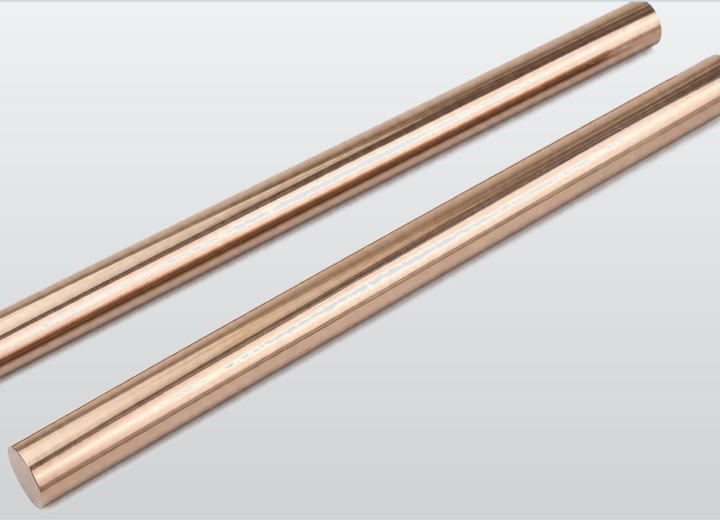
ASTM B187/B187M covers copper bus bar, rod, and shapes; ASTM B152/B152M covers sheet, strip, plate, and rolled bar. Those documents support material and product-form specification, but neither should be presented as an automatic certification of a custom fabricated part or the completed switchboard. Confirm the edition, material designation, and any buyer-specific documentation before placing an order.
ASTM B193 is a resistivity test method, not a blanket performance certificate. IEC 61439-1 applies at the assembly level; it informs the design and verification of low-voltage switchgear and controlgear assemblies, rather than certifying an individual bus bar merely because its material or shape is described. Claims must match the destination market, intended use, and evidence actually available for the finished assembly.
For procurement, make the technical package answer four questions: which material form is required, which dimensions establish fit, which finish and marking restrictions apply, and which inspection or traceability records are expected. DONGYAO can review those inputs as part of a configurable fabrication enquiry; its sourcing notes for electrical cabinet projects are a helpful starting point for preparing the brief.
First, send a revision-controlled drawing with a clear datum scheme, material form, quantity, and required finish. Second, separate critical fit dimensions from general envelope dimensions and identify the mating terminal or support where that relationship governs. Third, request confirmation of the proposed sequence—cutting, punching, forming, deburring, finishing, and inspection—before treating samples and production parts as equivalent.
Fourth, agree on practical evidence: photographs, dimensional results, material documentation where specified, and packaging requirements should be proportionate to project risk. DONGYAO’s manufacturing-service discussion can help frame an enquiry, but the buyer should retain responsibility for electrical design assumptions and any assembly-level verification.
Frequently asked questions about custom copper bus bar fabrication.
Is laser cutting always better than CNC cutting for a copper bus bar?
No. The suitable process depends on profile complexity, material thickness, edge requirements, quantity, equipment access, and the final interface. Ask the fabricator to explain the proposed route and inspect the features that matter to the assembly rather than selecting by process name alone.
Should holes be punched before or after a copper bus bar is bent?
Often they are produced flat before forming, but the correct order is geometry-specific. Define the post-form datum and any critical hole-to-bend relationship so the chosen sequence can be assessed against the actual fit-up requirement.
Does ASTM B187/B187M certify a finished electrical assembly?
No. It is a material/product-form specification for copper bus bar, rod, and shapes. A switchboard or other low-voltage assembly has its own applicable design and verification requirements, including the scope represented by IEC 61439-1 where applicable.
What should a buyer include in a custom bus bar RFQ?
Include controlled drawings, material form, quantity, finish, critical datums, feature intent, packing needs, and requested records. If a mating interface is unusually sensitive, provide a representative part, fixture requirement, or an agreed first-article acceptance method.
Can a fabricator determine the current rating from a bus bar drawing?
Not responsibly from geometry alone. The rating and temperature rise depend on the full assembly, conductor arrangement, terminals, ambient conditions, enclosure, and applicable verification; the responsible electrical designer should provide the governing requirements.
Sources:
- NIST: Physical Properties of Copper
- Copper Development Association: Electrical applications
- Copper Development Association: Standards and specifications
- IEC 61439-1 publication page
- International Copper Association: About copper
Good bus bar sourcing is less about choosing a machine name than about preserving the dimensions and interfaces that carry the assembly’s real risk.
When your drawing and verification needs are ready, review the CNC Cutting Copper Bus Bar options with DONGYAO, then contact the team with the controlled drawing and intended application.
For related conductor products, view the product categories.