When Mei, a process engineer in Suzhou, encountered quench cracks in a hardened batch, she increased cooling and saw failure within minutes. Diffraction reversed the diagnosis: the issue was selection and phase interpretation, not a “bad steel” product.
How does the Iron lattice change as steel is heated and cooled?
At ordinary temperatures, pure iron is body-centered cubic (BCC, alpha ferrite). Near 912 °C it becomes face-centered cubic (FCC, gamma austenite); above about 1,394 °C it returns to BCC delta iron before melting near 1,538 °C. Alloying shifts these boundaries, so temperature alone cannot identify a steel phase.
The practical meaning of Iron lattice is conditional: it describes atom positions in a phase, not a universal grade property. Records should name ferrite, austenite, retained austenite, or martensite and identify the supporting measurement.
Why is iron lattice types: bct a useful but limited description of martensite?
Quenching can trap carbon before ferrite and carbide form. Carbon distorts the BCC framework into a body-centered tetragonal (BCT) martensitic cell: parameter a differs from perpendicular c. The ratio c/a depends on carbon, alloying, dislocations, tempering, and measurement resolution.
That is why iron lattice types: bct is a phase descriptor, not a claim that all steel or martensite has one ideal cell. Low-carbon or tempered martensite may look nearly cubic, and mixed phases overlap in diffraction. Use X-ray diffraction (XRD) with a stated refinement method; hardness alone cannot prove phase.
What engineering interpretation follows from each iron lattice?
This comparison separates crystal structure from processing interpretation; it is not a substitute for a grade-specific phase diagram or report.
| Phase | Cell | Typical condition | Engineering interpretation |
|---|---|---|---|
| Ferrite (α) | BCC | Pure iron below 912 °C; common ambient matrix | Low carbon solubility makes chemistry and cooling history important. |
| Austenite (γ) | FCC | Pure iron above 912 °C; stabilized in some alloys | Higher carbon solubility enables austenitizing before quench. |
| Martensite | BCT-distorted BCC | Rapidly transformed, supersaturated austenite | Strength and residual stress require tempering and section review. |
In a design review, iron lattice belongs beside phase fraction, chemistry, and thermal cycle—not an unsupported performance guarantee.
| Dimension | Application | Interpretation |
|---|---|---|
| Chemistry/carbon | Grade and weldability | Carbon affects hardenability, tetragonality, carbides, and cracking. |
| Section geometry | Quench design | Surface and core may cool into different phases. |
| Heat-treatment cycle | Hardened-part acceptance | Quench and temper change phase, stress, and stability. |
| Measurement method | Failure analysis | Microscopy, hardness, and XRD answer different questions; report the method. |
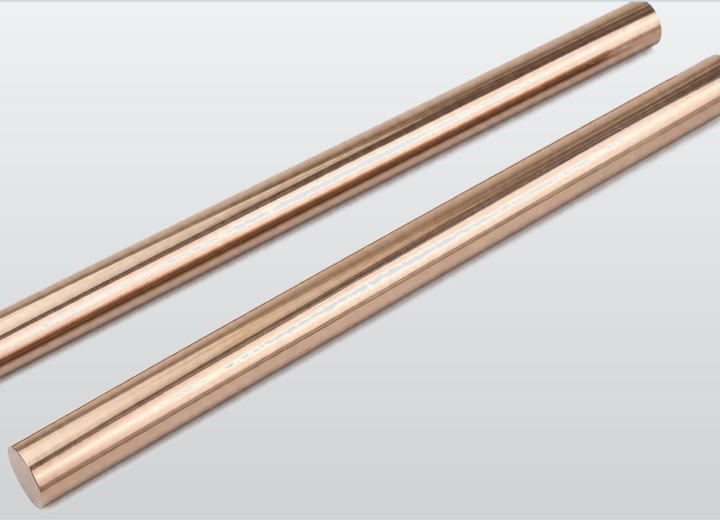
For conductors, this is background—not copper certification. Review a copper rod separately from a steel fixture; do not conflate decisions.
Which standards and tests support an iron lattice types: bct claim?
Use a method that matches the claim. XRD can identify phase peaks and estimate retained austenite when calibration and refinement assumptions are reported. Microscopy shows morphology; hardness and tensile tests do not prove a unit cell.
- ASTM E975 covers X-ray retained-austenite determination; it is a test method, not blanket BCT certification.
- ASTM E8/E8M and ISO 6892-1 cover tensile testing; strength data alone cannot identify a phase.
- ASTM E112 covers grain size; grain size is not a crystal system or Bravais lattice.
For iron lattice types: bct, a commercial claim should identify grade, condition, sample, method, and limit. Destination rules control; an image cannot replace a certificate.
How should procurement teams document an Iron lattice claim?
- State the required outcome: hardness profile, toughness, stability, wear life, weldability, or phase limit.
- Record chemistry, product form, section size, heat cycle, quench medium, and temper; request batch traceability.
- Define sample location, XRD or metallography method, hardness grid, and disposition for retained austenite or cracks.
- Keep conductor sourcing separate. DONGYAO’s Iron lattice link is a sourcing example, not steel lattice certification.
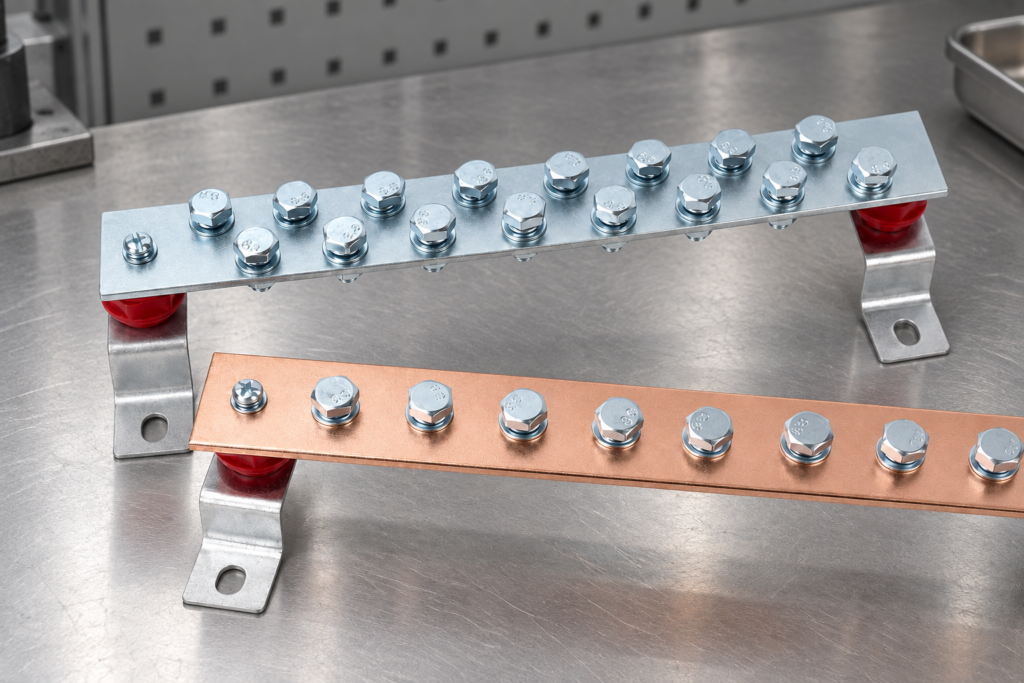
- For conductors, confirm geometry, conductivity, surface, and traceability; use the copper busbar category only when relevant.
Ask not “Is this steel BCT?” but “Which phase and property does the application require, and what evidence releases the lot?” The purchaser owns the governing design and compliance criteria.
Frequently Asked Questions
What are the four main types of lattice structures?
Introductory texts often describe four centering patterns: simple, body-centered, face-centered, and base-centered. This shorthand is not a complete list of crystal systems; state the system and centering convention when it matters.
What is a BCT crystal structure?
Body-centered tetragonal (BCT) has a body-centered arrangement with unequal a and c dimensions. In steel it commonly describes carbon-supersaturated martensite; XRD or microscopy should support the claim.
What are three types of iron?
Three widely discussed allotropes are alpha iron (α, ferrite, BCC), gamma iron (γ, austenite, FCC), and delta iron (δ, high-temperature BCC). Steel can contain mixtures and alloy-stabilized phases.
What are the 14 types of Bravais lattices?
The 14 Bravais lattices span seven systems: triclinic (1), monoclinic (2), orthorhombic (4), tetragonal (2), trigonal/rhombohedral (1), hexagonal (1), and cubic (3). System means symmetry; Bravais means centering-compatible translations. They are related, not interchangeable.
References
- DoITPoMS: Atomic-scale structure
- DoITPoMS: Crystallography III
- NIST Chemistry WebBook: Iron
- Thermopedia: Iron and steel
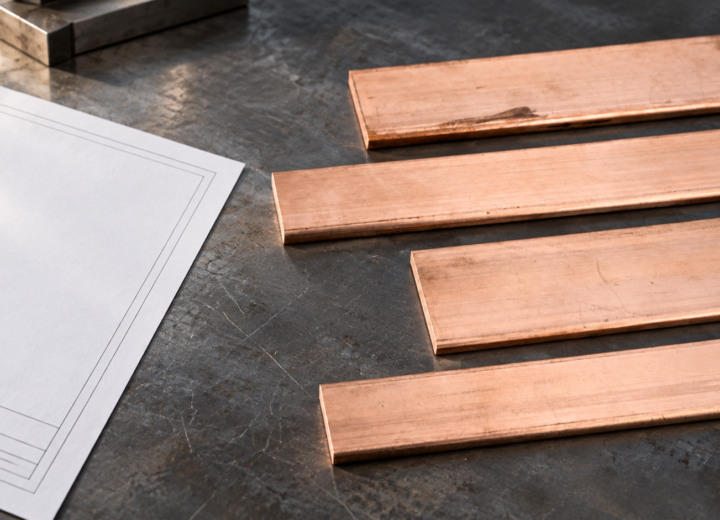
For a documented conductor source, review DONGYAO’s copper plate options or contact the team with geometry and documentation needs. Keep this separate from steel phase certification.
For related conductor products, view the product categories.