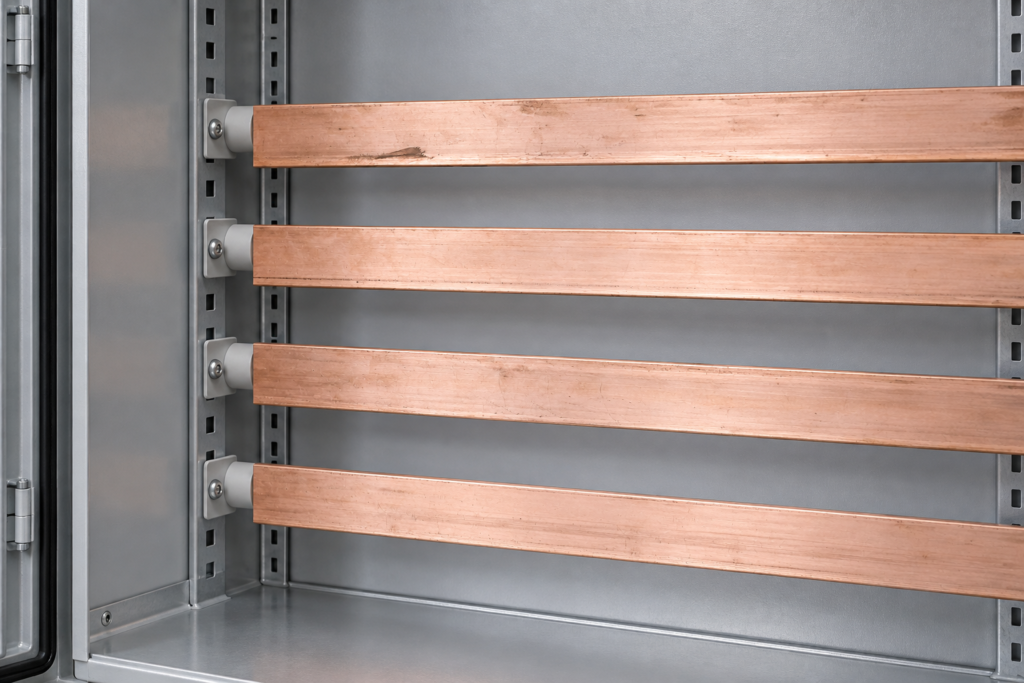
When Marta Silva, a commissioning engineer in Monterrey, tightened a grounding conductor onto a switchboard bar, continuity passed but a fault-injection test produced a hot, discolored joint within seconds. Investigation found the bar undersized for the fault duration, its holes forcing a poor lug position, and no documented surface or torque process. It was a selection and installation-control problem, not simply bad copper.
Summary: A copper bus bar for grounding is a low-impedance bonding component whose performance depends on cross-section, joint design, fault duration, corrosion, and material records. NFPA 70 Article 250 governs applicable grounding and bonding installations, while ASTM B187/B187M addresses copper bus bar, rod, and shapes; neither creates a universal assembly rating. Define the fault path and tests before buying, then match the drawing to lot traceability.
How does a Copper Bus Bar carry a grounding fault-current path?
A Copper Bus Bar bonds protective conductors and enclosures so a fault returns to its source and operates protection. Resistance creates I²R heating; area, length, joints, and clearing time matter. Ask whether the path survives the specified fault and duration, not how many amps a strip supposedly carries.
Specify grade, temper, width, thickness, holes, edges, and finish. Verify resistivity with ASTM B193, then perform a low-resistance joint check. Copper 101 is background, not a certificate.
How should a copper ground bus bar be bonded and protected from corrosion?
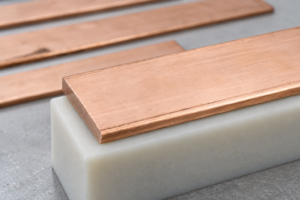
A copper ground bus bar needs clean faces, suitable lugs or clamps, controlled tightening, and inspection access. Keep the path short; paint or one fastener must not bridge an insulating coating. Bonding is the joining function; grounding connects to the system under the destination code.
Galvanic corrosion matters when bare copper touches aluminum, galvanized steel, or treated structure in moisture or salt. A copper ground bus bar may need plated hardware, interface compound, drainage, enclosure control, or an approved bimetallic connector. Select from the environment; do not promise a generic service life.
How does a copper ground bus bar differ from a neutral bar and an equipment busbar?
They may look alike but have different functions. A ground bar is for protective bonding; a neutral bar carries circuit return current and may be isolated or bonded only at the permitted point; an equipment busbar distributes power. Code and the single-line diagram control the arrangement.
| Component | Primary function | Selection evidence | Common error |
|---|---|---|---|
| Ground bar / copper ground bus bar | Protective bonding and fault return. | Fault, clearing time, terminations, corrosion. | Using neutral or paint as ground. |
| Neutral bar | Circuit return current. | Bonding point, conductor count, isolation, code. | Impermissible neutral-ground bond. |
| Equipment busbar | Power distribution. | Voltage, load, short-circuit withstand, clearances. | Using a power rating for grounding. |
Which Copper Bus Bar dimensions should an engineer put in the RFQ?
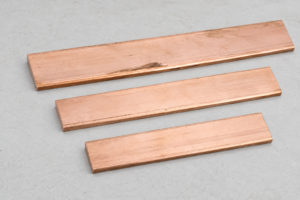
Start with the application, then define the finished part. Thickness and width influence resistance, heat dissipation, stiffness, drilling, and thread engagement; hole pitch and edge distance influence lug fit. Include tolerances.
| Application | Dimensions to define | Process and acceptance focus |
|---|---|---|
| Main grounding bar | Width, thickness, length, holes, pitch. | Fault calculation, fit, deburring, traceability. |
| Panel/cabinet bonding | Length, holes, bend/offset, clearance. | Paint removal/hardware, torque, access. |
| Outdoor/corrosive service | Exposed area, joint, drainage, finish. | Compatibility, sealing, cleaning, packaging. |
| Link or connector | Blank, profile, slots, threads, flatness. | Temper, forming radius, position, conductivity. |
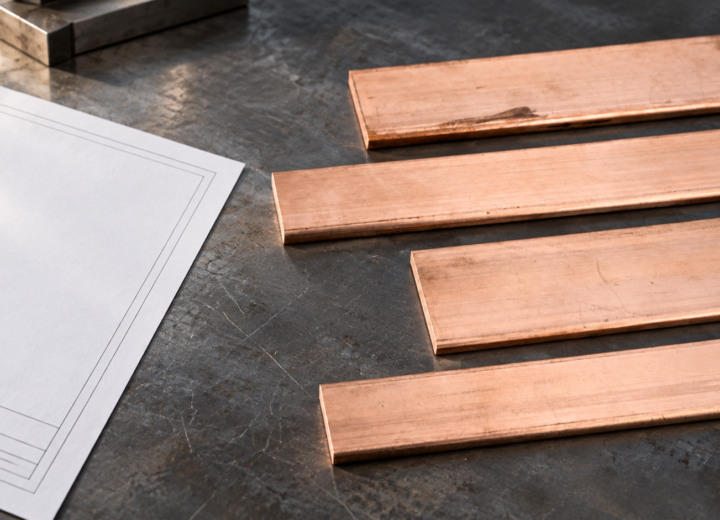
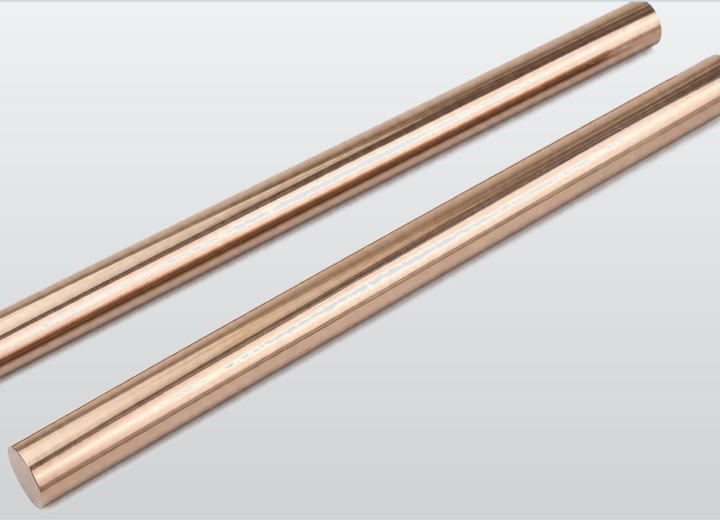
For a Copper Bus Bar order, state whether dimensions are before or after bending, plating, or machining. Request drawing approval, material, lot linkage, dimensions, and test evidence. A copper plate or copper rod may suit different geometry; neither is automatic.
Which grounding standards and records support a copper ground bus bar?
Apply standards by scope. NFPA 70 (NEC), especially Article 250, sets applicable grounding and bonding rules; IEC 60364-5-54 addresses earthing and protective conductors in low-voltage installations. UL 467 covers listed grounding and bonding equipment when required. ASTM B187/B187M is a copper product specification, and ASTM B193 a resistivity test method—not switchboard approval.
Keep the evidence chain: drawing, material/temper, heat or lot record, dimensions, joint preparation, tightening method, continuity/resistance results, and assembly fault-duty verification. State destination market and installation type in the RFQ; unsupported “rated for” language creates rework.
How should procurement select and document a Copper Bus Bar supplier?
Use a short, auditable buying sequence:
- Calculate the fault path from source, conductor, joints, prospective current, and clearing time; appearance is not a rating.
- Lock grade, temper, dimensions, tolerances, holes, finish, mating metals, and corrosion controls on the drawing.
- Define inspection: material identity, conductivity/resistivity, dimensions, burrs, surface, joint resistance, and records.
- Compare total cost, including machining yield, hardware, testing, packaging, access, and possible rework.
DONGYAO is a configurable sourcing option through its Copper Bus Bar and product pages. Quote against the approved drawing and records; capability does not replace engineering approval.
Frequently Asked Questions
What is a copper bus bar?
A copper bus bar is a formed, cut, or machined copper conductor used to carry or bond current over a short, rigid path. Geometry, grade, temper, joints, enclosure, and duty determine behavior; the phrase alone is not a universal rating.
What is a copper ground bus bar?
A copper ground bus bar is a copper bar arranged for protective bonding and connection to an electrical grounding system. Suitability depends on code, terminations, fault, clearing time, joints, and environment.
What is the difference between a bus bar and a ground bar?
“Bus bar” is a broad term for a rigid conductor used for distribution or bonding, while “ground bar” describes protective bonding. A ground bar can be a bus bar, but a power busbar is not automatically a grounding component.
Where are copper bus bars commonly used?
They are used in switchboards, panelboards, cabinets, power-conversion equipment, battery systems, data centers, and industrial grounding assemblies. Geometry and evidence change with voltage, environment, fault duty, and installation rules.
References
- Copper alloys: properties and uses
- Copper 101
- Copper standards and specifications
- Copper busbar applications
- NFPA 70: National Electrical Code
Specify the path, prove the joints, and let the record—not color—close the grounding decision. For drawing and documentation support, contact DONGYAO with the application and RFQ.
For related conductor products, view the product categories.