When a procurement manager in Shenzhen named Lin tightened a replacement screw on a copper busbar cabinet, the joint loosened during the first thermal cycle and the plated head showed red rust. The failure was not simply a bad product: the team had specified “iron” by appearance, missed the steel composition and coating, and paired it with a dissimilar metal without checking the service environment.
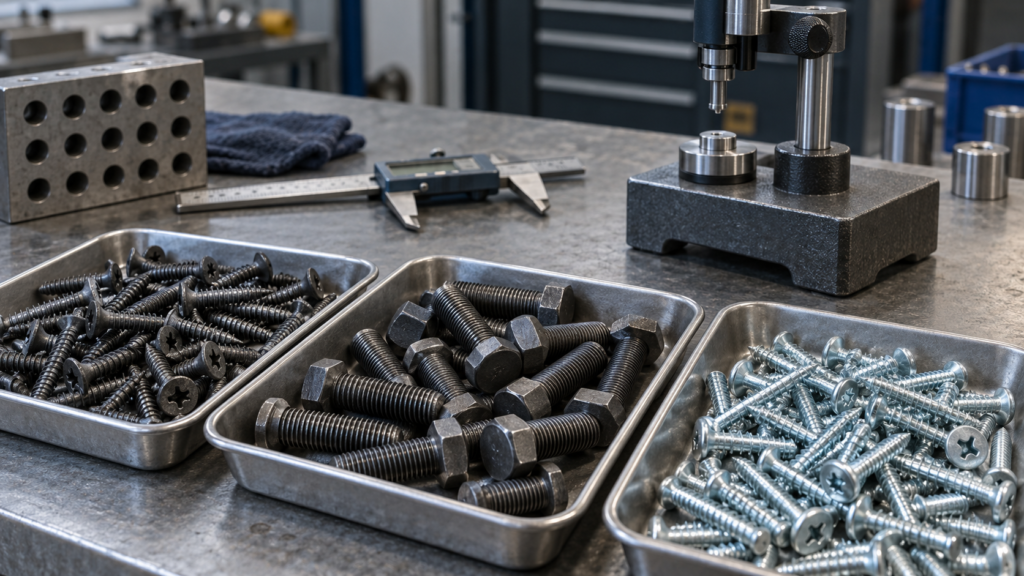
In purchasing language, “iron screw” often means a ferrous screw that attracts a magnet. Most mass-produced fasteners use steel because controlled carbon and processing provide more useful preload and thread durability than commercially pure iron.
Commercial iron screws are usually steel fasteners
Steel is an iron–carbon alloy; carbon level, alloying additions, processing, and heat treatment affect hardness, ductility, and strength. A catalog may use “iron screw” as a search term while its technical description says carbon steel or stainless steel. The buyer ordering steel screws should ask for the material designation and inspection document rather than rely on color or magnet response; the phrase iron screws is only a starting label.
Four practical families cover most metal assembly decisions:
- Plain steel: an economical ferrous option for controlled indoor conditions, normally needing a finish or corrosion-control plan.
- Stainless steel: a chromium-containing steel family selected for corrosion resistance; its conductivity and galling behavior differ from carbon steel.
- Coated or plated steel: steel with a zinc, conversion, paint, or other protective system. The coating changes corrosion behavior and may affect thread fit or electrical contact.
- Non-ferrous options: brass, copper, aluminum, or polymer fasteners used when conductivity, low magnetic response, mass, or galvanic compatibility is more important than steel-like strength.
Iron bolts and steel screws differ mainly by specification and use
“Bolt” and “screw” describe installation more than chemistry. Both can use the same steel family; a bolt commonly works with a nut, while a screw may form or engage its own thread. Translate terms such as iron bolts into material, finish, diameter, pitch, length, and application.
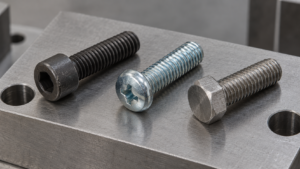
For metalwork, choose the joint style before the shopping label. Machine screws suit tapped holes; self-tapping, thread-forming, and self-drilling designs suit prepared sheet; countersunk heads need a matching seat. Drive access and thread length must support repeatable installation without bottoming.
Iron screws should be sized by joint dimensions and cost drivers
| Decision dimension | What to record | Why it changes cost or risk |
|---|---|---|
| Diameter and pitch | Nominal size, thread pitch, and tolerance | Controls engagement, tooling, inventory, and clamp-load repeatability |
| Length and head | Grip length, head style, drive, and clearance | Avoids rework, protrusion, bottoming, or inaccessible tooling |
| Material and finish | Steel family, coating, contact surface, and environment | Drives corrosion maintenance, electrical compatibility, and documentation needs |
| Volume and process | Annual quantity, machine installation, torque method, and inspection | Influences packaging, automation, labor, and total installed cost |
Compare total cost rather than unit price alone. Sorting, damaged threads, corrosion cleanup, and field replacement can outweigh a lower unit price; treat any cost model as illustrative and use the buyer’s actual labor and maintenance inputs.
Choosing iron bolts and steel screws starts with a documented checklist
- Define the joint: tapped hole or nut, load direction, clamp requirement, access, and expected service cycles.
- Specify dimensions: diameter, pitch, length, head, drive, tolerance, and thread engagement.
- Choose the material family and finish against moisture, temperature, electrical contact, magnetic sensitivity, and mating metals.
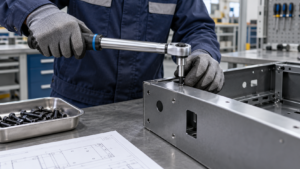
- Set the verification package: drawing revision, sample fit check, tightening method, and any required inspection or test evidence.
- Review supply continuity, packaging, lot identification, and replacement equivalence before approving a substitute.
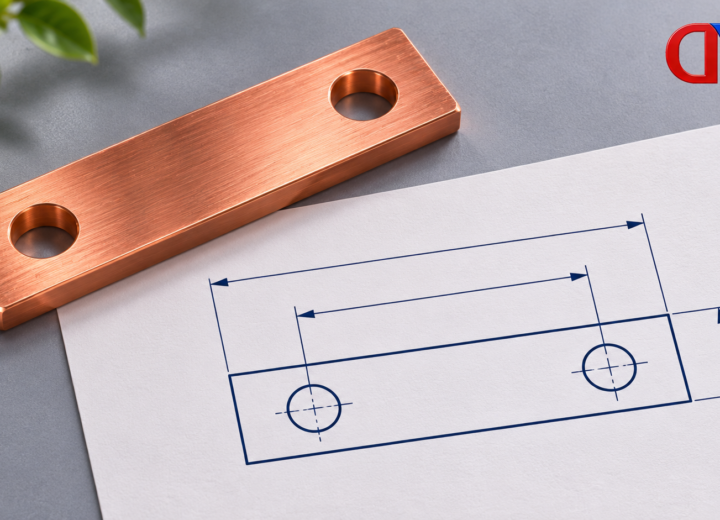
DONGYAO supports procurement teams needing electrical connection components, copper busbars, copper plates, and brass plates. Buyers can review iron screws and related electrical components or discuss a joint drawing before production.
Frequently Asked Questions
What are the three types of screws?
There is no single universal set of three. A useful purchasing split is machine screws, self-tapping or thread-forming screws, and wood or material-specific screws; within each group, head, drive, thread, and material still need specification. For metal cabinets, start with the mating-hole design and required clamp load.
What are five different types of screws?
Five common functional types are machine, self-tapping, thread-forming, self-drilling, and set screws. The names describe how the screw engages or holds; they do not identify whether it is plain steel, stainless steel, coated steel, brass, or another material. Confirm the actual drawing and finish before ordering.
What is a type 4 screw?
“Type 4” is not a universal material or performance designation for screws. It may refer to a supplier’s head, thread, drive, or internal style code, so the buyer should request the governing standard or drawing and its dimensional and material requirements. Do not infer that Type 4 means pure iron or a particular corrosion rating.
What are the different types of screws used for metal?
Metal assemblies commonly use machine screws in tapped holes, self-tapping or thread-forming screws in prepared sheet, self-drilling screws where the point makes the pilot hole, and set screws for positioning. Select the steel family or non-ferrous alternative after checking thickness, edge distance, clamp load, coating, galvanic pairing, and tool access.
For conductive joints, DONGYAO’s guidance on copper busbar selection can help align the fastener with the busbar material and assembly purpose. A drawing review is usually more useful than treating “iron screws” as a complete specification.
References
- Royal Society of Chemistry: Iron, element 26.
- Royal Society of Chemistry: Carbon, element 6.
- Copper Development Association: Copper properties and resources.
The practical principle is simple: “iron” is a marketplace shortcut, while a reliable fastener specification names the steel or non-ferrous material, dimensions, finish, process, and evidence. When the joint affects an electrical connection, invite DONGYAO to review the component scope through the contact page before production release.
For related conductor products, view the product categories.