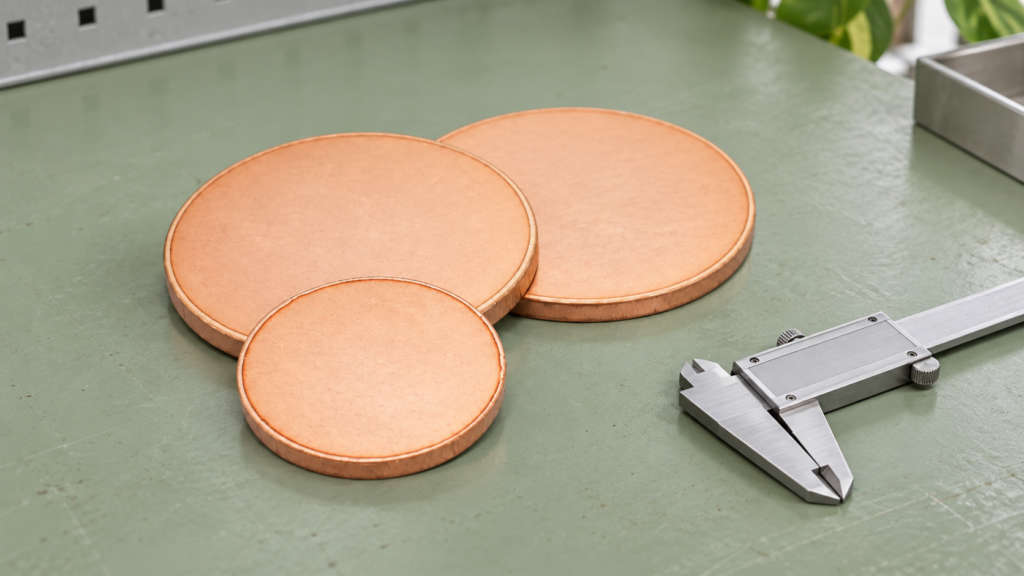
A circular blank can match the requested diameter yet rock on its mating surface, carry an unacceptable edge burr or crack during forming. Replacing it with another visually similar piece may repeat the problem: the missing requirement could be flatness, edge condition or temper, not the nominal material name.
A copper disc is a solid circular blank, commonly cut or formed from flat stock. Buyers need to distinguish its bulk material from copper-colored coatings and separate stock specifications from finished-part acceptance.
A copper disc needs an alloy designation before a performance promise
Copper is not one interchangeable specification. The Copper Development Association identifies C11000 as electrolytic tough-pitch copper (ETP), with minimum copper of 99.90%, including silver. Its listed typical electrical conductivity is 101% IACS at 20 C; a typical database value is not a guarantee for every delivered lot.
C10100 is oxygen-free electronic copper, while C12200 is phosphorus-deoxidized high-residual-phosphorus copper (DHP). The latter has 0.015-0.040% phosphorus and listed conductivity of 85% IACS at 20 C. Choosing by color or a generic “pure copper” label obscures these differences. Specify the grade, condition and the property evidence your application actually requires.
For electrical contact duty, conductivity is only one input. Contact area, pressure, surface condition, heat dissipation and the mating components determine assembly behavior. Neither an alloy name nor a conductivity percentage alone establishes an allowable current.
The dimensions of a copper disc must describe the finished part
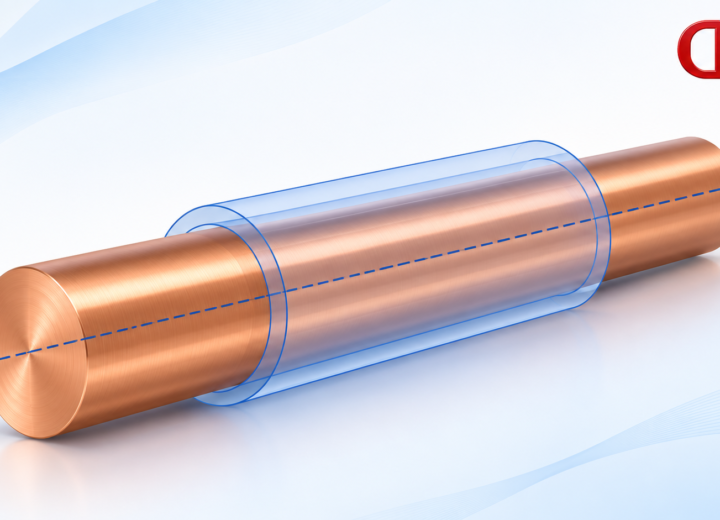
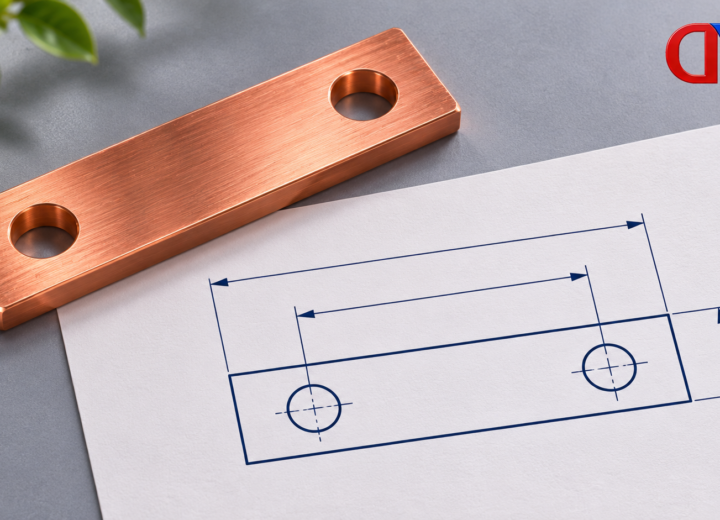
Diameter determines fit and contact area; thickness affects the conducting section, stiffness and forming response. Specify both tolerances, plus flatness, edge condition and any hole or concentricity requirement. There is no universal tolerance suitable for every blank, so acceptance must follow the agreed drawing.
For an illustrative solid blank without holes, mass = density x pi x diameter squared x thickness / 4, using consistent units. Applying the C11000 database’s specific gravity of 8.91 as an approximate density of 8.91 g/cm3, a 50 mm diameter and 2 mm thickness gives about 35.0 g. This is a nominal estimate, not a product measurement or grade-identification test.
Ask how the blank will be produced and finished through the service enquiry. Cutting method, deburring and flattening can affect the delivered result; agree on the output requirements without assuming that any process inherently meets them.
A copper disc needs a surface and temper suited to its next operation
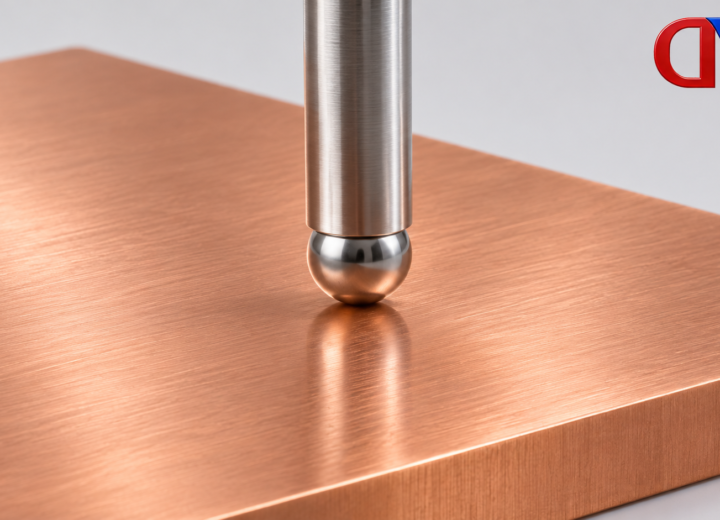
Inspect the face and edge separately. Burrs can interfere with seating or handling; scratches and oxidation may matter where the face becomes an electrical or thermal interface. Specify acceptable condition, packaging and any cleaning requirement instead of treating a bright finish as proof of material quality.
Temper describes material condition and affects how a blank responds to bending or drawing. Annealed and harder conditions are not interchangeable; select against the intended operation and obtain relevant material evidence. The C11000 source explicitly associates its minimum 100% IACS figure with the annealed condition, illustrating why property statements need their conditions attached.
A copper sheet specification can establish the starting stock, but it does not automatically verify burr height, finished flatness or contact performance after cutting. Include these finished-part checks in the purchase requirements.
A copper disc comparison should separate material identity from suitability
| Material | Verified distinction | Selection implication |
|---|---|---|
| C11000 ETP | Minimum 99.90% copper, including silver; annealed minimum 100% IACS. | A conductivity-led candidate, subject to the application’s processing and assembly requirements. |
| C10100 oxygen-free electronic | Annealed minimum 101% IACS; oxygen-free electronic designation. | Consider when the design specifies this grade; confirm documentation rather than inferring it from appearance. |
| C12200 DHP | 0.015-0.040% phosphorus; listed 85% IACS conductivity at 20 C. | Assess its property trade-offs; do not substitute it into a conductivity-critical design without approval. |
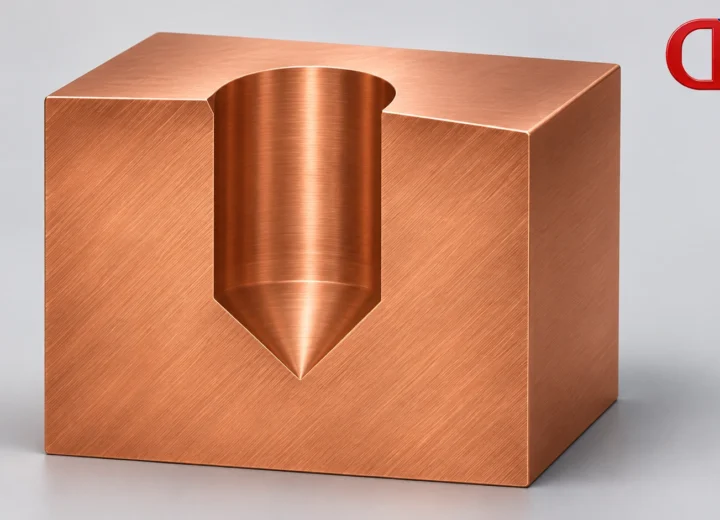
| Copper-plated substrate | A copper layer covers a different bulk material. | Not equivalent to solid copper; identify substrate, coating and functional requirements separately. |
These figures come from alloy reference data, not a quotation or delivered-lot certificate. Comparative suitability requires the actual grade, temper and design conditions.
A copper disc cost review should follow the application requirements
| Application or operation | Requirement to resolve | Potential cost driver |
|---|---|---|
| Electrical interface | Alloy, contact geometry and validated assembly temperature rise. | Property evidence and assembly testing. |
| Thermal contact | Thickness, mating flatness and surface condition. | Finishing and inspection effort. |
| Formed component | Temper, tooling suitability and permitted cracking or deformation. | Process trials, scrap and rework. |
| Close-fitting blank | Diameter tolerance, edge condition and inspection plan. | Secondary machining or deburring. |
Compare accepted-part cost, not only blank price. An unnecessarily tight tolerance can add work, while an undefined edge condition can transfer that work to assembly. A round copper plate description still needs a drawing and material designation to become a comparable purchasing specification.
The standards for a copper disc must be applied within their scope
ASTM B152/B152M covers copper sheet, strip, plate and rolled bar; the alloy database lists it for C11000, C10100 and C12200. It is relevant to flat-stock procurement, not automatic certification of every circular part cut from that stock.
ASTM F68 addresses oxygen-free copper in wrought forms for electron devices. ASTM B170 addresses refinery shapes, not finished discs. A supplier citing either standard must explain its relevance to the material being supplied. Specify the applicable edition, material condition and required documents, then separately define finished geometry and acceptance.
Material compliance does not certify an electrical assembly or its destination-market conformity. Unsupported claims can cause rejection or qualification delays; request evidence tied to the actual lot and intended use.
A copper disc purchase should begin with four documented decisions
- Define the function, mating conditions and next process before selecting an alloy or temper.
- Issue a finished-part drawing with diameter, thickness, flatness and edge requirements that affect use.
- Agree on material documentation, lot traceability and an inspection plan proportionate to the risk.
- Evaluate representative samples in the intended assembly before approving repeated supply.
When approaching DONGYAO about metal or electrical components, submit these requirements through the contact page and ask which options and supporting documents can be confirmed. A clear copper disc specification makes any response easier to assess.
Frequently Asked Questions
What is copper sheet used for?
It is used as flat material for fabricated components, including electrical, thermal and formed parts. Suitability depends on alloy, temper, thickness and the finished design; a general material name is insufficient for approval.
Is copper plated the same as pure copper?
No. Copper plating is a layer on a substrate, whereas solid copper has copper-based material through its section. Identify both the substrate and coating specification before comparing performance or machining behavior.
What is a copper plate used for?
It provides flat stock for components needing a specified section, geometry or interface. Electrical and thermal applications still require the appropriate alloy and design qualification; thickness alone does not establish a current rating.
What are the different grades of copper sheet?
Examples include C11000 ETP, C10100 oxygen-free electronic and C12200 DHP. They differ in chemistry and properties, and each can be supplied in different conditions. Specify the designation, temper and applicable stock standard rather than assuming all copper grades are equivalent.
References
- Copper Development Association: C11000
- Copper Development Association: C10100
- Copper Development Association: C12200
Explore DONGYAO products, then contact the team with your drawing, material requirements and intended application.
For related conductor products, view the product categories.