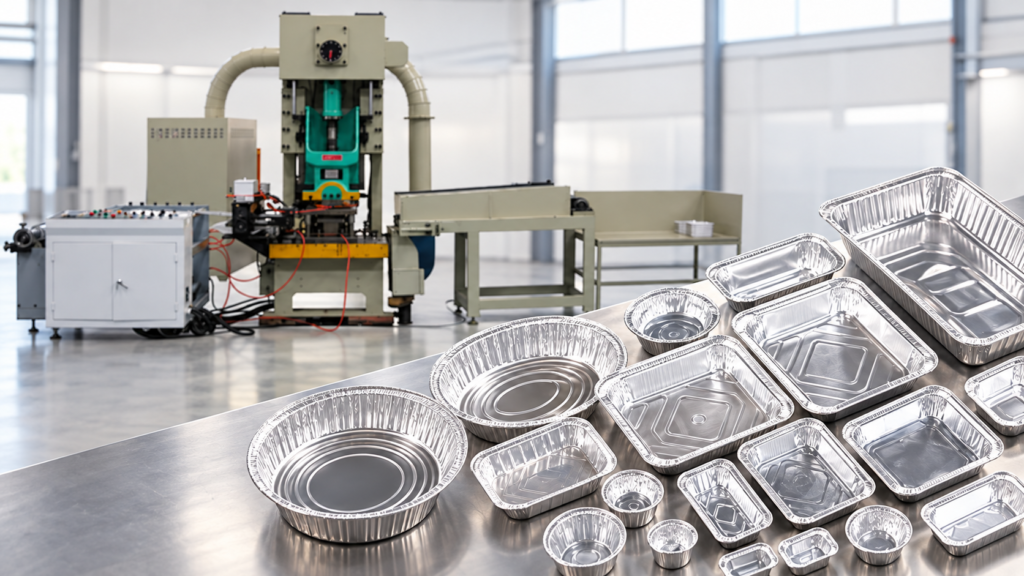
Uneven cookie browning, a warped tray, or residue after a tomato bake can turn a routine oven job into a material-safety question. Before blaming the metal, check whether thickness, food chemistry, surface condition, and operating limits match the task.
Safety depends on food chemistry, heat, time, surface condition, coatings, and intended use. U.S. eCFR Part 175 addresses specified indirect food additives, not every finished tray. A rigid tray must also be distinguished from thin foil.
Aluminum sheet selection controls food-contact performance
For an aluminum sheet sourcing request, specify alloy, temper, thickness, finish, and deburred edges. A material catalog does not establish stock or food-contact qualification. Gauge alone does not prove safety; check a coating’s temperature limit and applicable eCFR Part 175 provision rather than treating the regulation as tray approval.
Aluminum transfers heat quickly, supporting rapid heat-up and browning. Dark finishes, hot spots, and warping change results. Check dimensions and flatness with a caliper and straightedge; compare a trial bake with the existing tray before changing the cycle.
Aluminum baking sheets need a controlled surface and food match
Dry doughs and cookies commonly suit clean, intact aluminum baking sheets. The discussion in the Part II migration study supports avoiding direct acidic or salty contact with bare aluminum; it is not a baking-sheet test. Tomato, citrus, and vinegar-rich or salty wet dishes are better matched to stainless steel or an appropriate food-contact coating or liner.
Rated baking parchment may help release dry baked foods, but it is not a universal liquid or migration barrier. Observe its own temperature limit; do not assume it makes every wet acidic dish suitable for bare aluminum. Remove food after baking and avoid acidic-food storage in the tray.
Retire or segregate trays with deep scratches, flaking coatings, severe pitting, burrs, or persistent residue. Light discoloration alone is not a toxicity diagnosis, but residue can affect the next batch. Use the maker’s cleaning directions and avoid abrasive scouring on a coated surface.
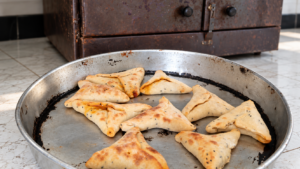 A used tray with pastries and residue illustrates why cleaning and surface checks matter.
Is aluminum safe for cooking when heat and time are controlled?
The question is aluminum safe for cooking has a conditional answer: use a suitable, intact tray as instructed, without assuming zero migration. A 200°C, 25-minute bake is illustrative, not equivalent to overnight sauce storage. BfR’s assessment identifies migration under certain conditions; the Part II study adds food-chemistry context without supplying a baking-sheet exposure estimate.
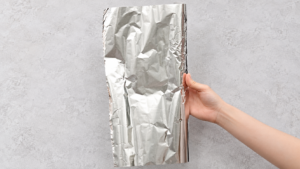
Foil is thin, easily creased, and may contact food over a large area. Follow package and appliance instructions; avoid acidic or salty contact, heating elements, and airflow obstruction. Do not line an oven floor unless permitted. Foil does not replace a rigid tray’s support.
Aluminum baking sheets and stainless steel serve different baking priorities
Aluminum usually offers faster heat response and lower mass; stainless steel usually offers more rigidity and tolerance of acidic contact. Neither is automatically healthier. Evaluate intact food-contact surfaces, recipe performance, and coating instructions rather than the metal name alone.
| Dimension | Aluminum baking sheet | Stainless steel baking sheet | Procurement implication |
|---|---|---|---|
| Heat and browning | Fast response; browning can be quick. | Slower response; timing may differ. | Validate the bake cycle. |
| Acidic foods | Needs an appropriate food-contact liner or coating. | Usually more tolerant when intact. | Match surface to menu. |
| Durability | Light but more easily dented or warped. | Heavier; generally more abrasion-resistant. | Balance handling and replacement. |
| Cleaning | Gentle care protects the finish. | Often tolerates more scrubbing. | Follow finish-specific instructions. |
| Cost tendency | Often lower initial cost. | Often higher initial cost. | Compare service life and downtime. |
These are tendencies, not guarantees. Gauge, finish, and order volume affect cost. Include rejected batches, liners, washing time, and replacement frequency in the lifecycle comparison.
Is aluminum safe for cooking under food-contact rules?
The references have different scopes: BfR provides risk-assessment context; the peer-reviewed study covers drinking bottles and moka pots, not baking sheets; and U.S. eCFR Title 21, Part 175 covers specified indirect food additives. They are not interchangeable product certifications.
Define destination market, foods, maximum temperature, contact time, cleaning chemistry, and coating or liner. Request material and surface identification, intended-use instructions, and applicable migration or extraction evidence. Retain test conditions: a result for one coating or food simulant cannot automatically cover another product.
Unsupported “toxin-free,” “zero migration,” or universal-safety claims can produce misleading marketing, returns, and regulatory scrutiny. Tie claims to the actual product and documented use.
Aluminum sheet procurement works best with five documented actions
- Define exposure: food, acidity, temperature, time, liners.
- Lock construction: alloy, thickness, temper, flatness, finish, tolerances.
- Validate baking: browning, release, warp, residue, cleaning.
- Inspect trays: dimensions and surfaces; quarantine damage.
- Keep evidence: drawings, care, declarations, reports; review substitutions.
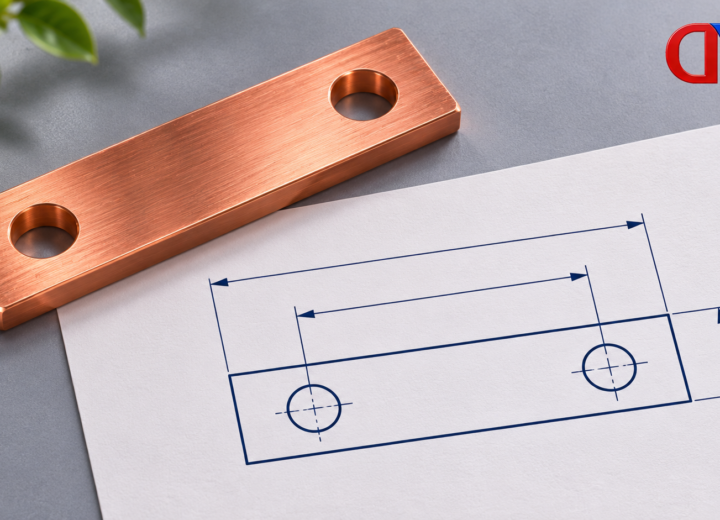
This consumer guidance covers finished-tray use, not certification. DONGYAO handles B2B industrial metal/material sourcing and electrical requirements: copper plates, copper busbars, brass plates, and electrical connection components. Send drawing/service conditions via DONGYAO’s contact; verify food-contact compliance with tray maker. DONGYAO is not a certified aluminum bakeware supplier.
Frequently Asked Questions
Is it safe to cook on aluminum baking sheets?
Usually, yes, when the sheet is clean, intact, intended for oven use, and within the manufacturer’s limits. For wet acidic or salty dishes, choose stainless steel or an appropriate food-contact coating or liner; parchment alone is not a universal barrier. Avoid acidic-food storage in bare aluminum and replace deeply scratched, pitted, flaking, or persistently dirty trays.
Does aluminum foil give off toxins when heated?
Foil should not be described with an absolute “toxin” conclusion from heat alone. Exposure depends on food chemistry, temperature, time, contact area, and foil condition; follow the package and appliance instructions, keep foil away from heating elements, and use a supported liner for the intended recipe.
Which is better, stainless steel or aluminum baking sheets?
Aluminum generally transfers heat faster and is lighter, while stainless steel usually offers greater rigidity and better tolerance of acidic contact on an intact bare surface. Choose against the recipe, browning target, cleaning process, expected service life, and total cost rather than assuming one material is universally better.
What is the healthiest material for baking sheets?
There is no single healthiest material for every use. An intact, correctly specified food-contact surface used with suitable foods and cleaning controls is more important than a marketing label; select aluminum, stainless steel, or a qualified coating based on the actual exposure and care plan.
References
- German Federal Institute for Risk Assessment: Health assessment of aluminium
- Peer-reviewed migration study, Part II: drinking bottles and moka pots
- U.S. eCFR Title 21, Chapter I, Subchapter B, Part 175
For industrial sourcing, see DONGYAO’s catalog and contact DONGYAO for copper plates, copper busbars, brass plates, or electrical connection components; provide a drawing and service conditions. DONGYAO is not a certified aluminum bakeware supplier.
For related conductor products, view the product categories.