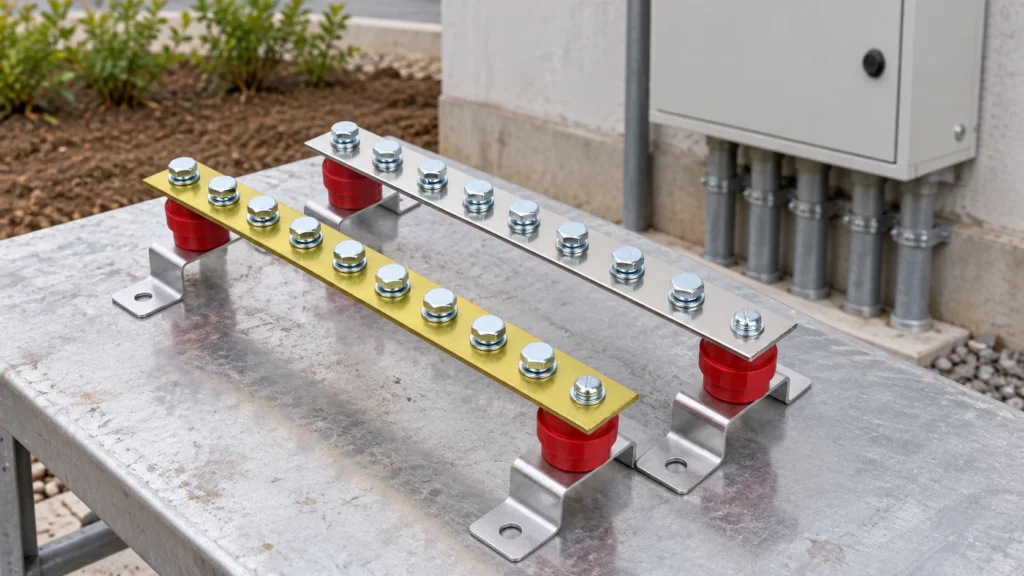
A rod stops against rock, leaving a foot above the surface. Driving harder may damage it; cutting the exposed end may conceal the problem without providing enough soil contact. The important question is not whether the rod looks finished, but whether its installed depth meets the applicable electrode rule.
How much ground rod length must contact the soil?
A ground rod is an electrode connecting a grounding system to earth. NFPA 70, the National Electrical Code, addresses electrode installation in the United States; the locally adopted edition and amendments determine the enforceable requirements.
NEC 250.53(G) distinguishes installed contact from purchased length: at least 8 feet must contact soil for the ordinary rod or pipe arrangement. The upper end normally sits flush with or below ground unless the top and connection are protected against physical damage as the code permits. A protective arrangement does not erase the soil-contact requirement.
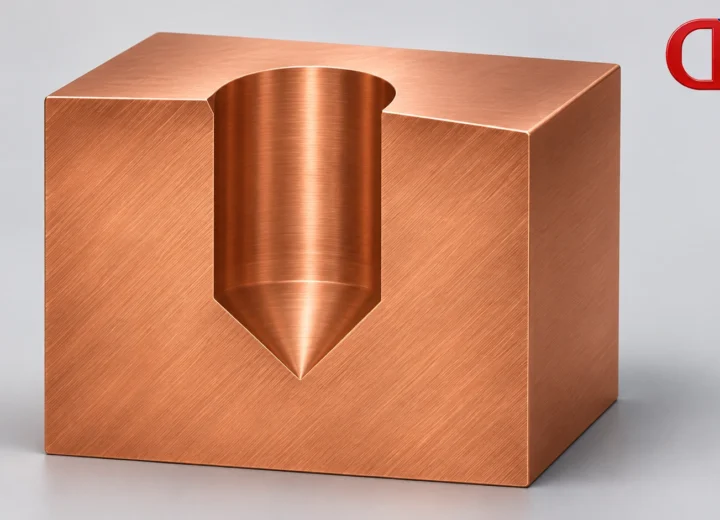
For a ground rod that encounters rock bottom, the rule permits driving at an angle no greater than 45 degrees from vertical; where necessary, a trench at least 30 inches (0.76 m) deep is the further rock-specific option. These are not general permissions to stop at convenient depth, bypass utilities or shorten an electrode. A qualified person should confirm the conditions and accepted method.
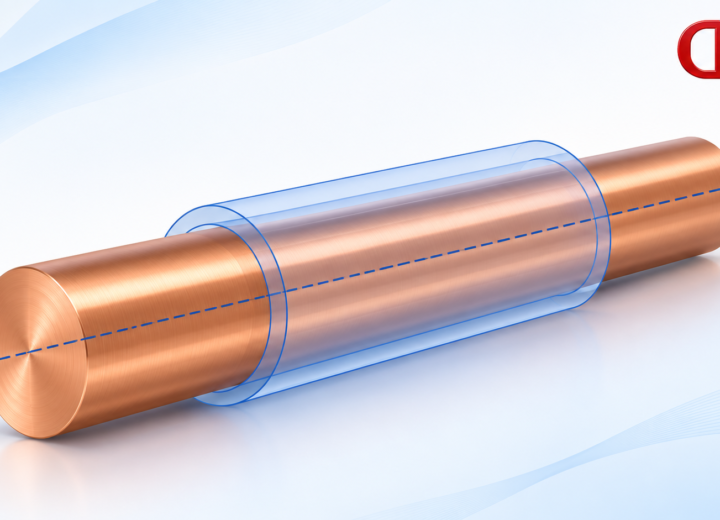
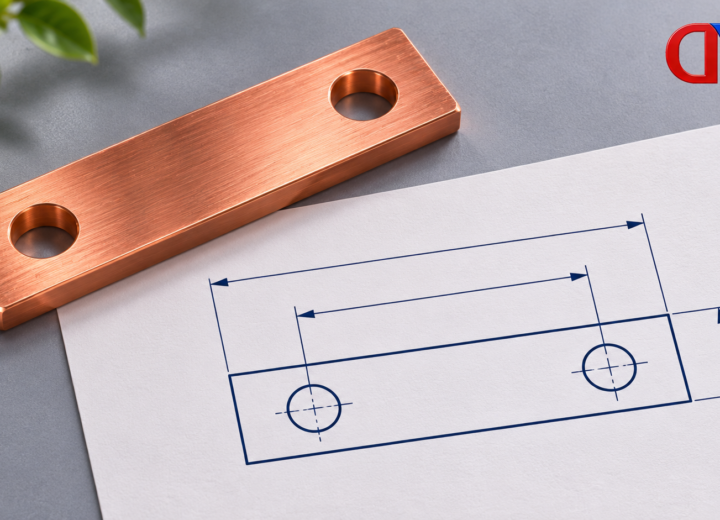
Coordinate the ground rod connection drawing with any custom copper parts needed elsewhere in the bonding system. This is a fabrication coordination task, not evidence that copper stock is an approved buried electrode.
Does a galvanized ground rod need a different depth?
A galvanized ground rod does not receive a shallower installation allowance because it is zinc-coated. NEC 250.53(G)’s ordinary 8-foot contact requirement applies to rod and pipe electrodes; NEC 250.52(A)(5) separately addresses electrode construction and dimensions. Use a compliant electrode with the required construction, dimensions and applicable listing, not a painted pipe, fence post or unidentified scrap.
Depth and material solve different problems. Depth establishes contact with soil layers; zinc coating affects corrosion behavior. Soil chemistry, moisture and coating damage can influence service life, while seasonal drying or freezing can change resistance. There is no universal frost-depth number that makes every installation effective, nor a guaranteed resistance from choosing a particular coating.
For a galvanized ground rod, ask for the electrode specification and its intended installation conditions. A deeper or coupled electrode may reach a useful soil layer, but it also changes driving effort, connector selection and inspection requirements. Evaluate that design using site evidence instead of assuming that twice the length means half the resistance.
Where should the ground rod clamp sit relative to ground level?
The connection location must satisfy both protection and connector suitability. NEC 250.53(G) addresses protection of the electrode’s upper end; NEC 250.70 addresses permissible electrode connections. A buried mechanical connector must be approved for direct burial and matched to the electrode material, diameter and conductor.
Use the manufacturer’s stated tightening torque, not a generic value copied from another connector. Loose contact raises connection resistance; excessive torque can damage the conductor or hardware. An inspection enclosure does not turn an indoor terminal into a burial-rated connector, and copper busbars are not substitutes for electrode clamps.
Separate depth verification from electrical testing. OSHA’s construction rule in 1926.404(f)(10) uses a 25-ohm threshold for a single rod, pipe or plate electrode, with an additional electrode at least 6 feet away when required. That is not a universal performance target. Qualified personnel should use appropriate test methods without disconnecting an energized grounding path.
How do ground rod depth choices compare over their service life?
| Arrangement | Performance basis | Compatibility | Whole-life cost consideration |
|---|---|---|---|
| Required soil contact | Meets the normal depth basis; resistance remains site-dependent. | Specified electrode and approved connection. | Documented installation reduces avoidable rework. |
| Short contact with an exposed end | Does not satisfy the normal 8-foot contact requirement. | Exposure may also create damage risks. | Correction and repeat inspection outweigh apparent labor savings. |
| Approved rocky-soil alternative | Uses the code’s conditional geometry, not an assumed equivalent resistance. | Authority acceptance and protected connection matter. | Excavation and documentation replace some driving effort. |
| Engineered longer or coupled electrode | Targets relevant soil layers using site information. | Compatible sections, couplings and equipment required. | Higher initial effort needs a justified performance benefit. |
Budget copper connection materials separately from approved electrodes. Copper rod stock can support fabrication requirements, but stock availability does not establish approval for use as a buried grounding electrode.
Which dimensions govern a ground rod in different site conditions?
| Site condition | Dimension or decision | Scope limitation |
|---|---|---|
| Ordinary vertical arrangement | At least 8 ft (2.44 m) soil contact. | NEC 250.53(G), subject to adopted rules. |
| Rock prevents vertical driving | No more than 45 degrees from vertical. | Rock-specific alternative, not ordinary shallow-soil permission. |
| Rock requires trench placement | At least 30 in (0.76 m) deep. | Conditional alternative under the adopted code. |
| High or seasonally variable resistance | Assess soil, moisture, spacing and electrode design. | No universal extra depth or low-ohm guarantee. |
Which rules apply before a ground rod depth is accepted?
Apply NEC 250.53(G) through the jurisdiction’s adopted edition, not an unsourced online depth chart. OSHA 1926.404(f)(10) is a construction-work regulation with the specific 25-ohm and 6-foot (1.83 m) supplementary-electrode provisions; do not present it as a universal rule for every facility.
OSHA 1926.651(b) addresses identifying underground installations before excavation. Before driving or trenching, a qualified person should arrange the applicable service-location process and approved work method. Electrical grounding does not justify risking a buried cable, gas line or other service.
The electrode does not replace protective conductors and metallic bonding back to the source. Fault clearing depends on that effective return path, not on earth contact alone.
What should you specify alongside a ground rod depth requirement?
- Confirm the adopted rule and record soil contact, permitted rock conditions and protection on the drawing.
- Identify electrode material and dimensions, then match the connector to the conductor and burial condition.
- Require torque instructions, inspection access where specified, and safe testing arrangements.
- Separate buried-electrode hardware from aboveground copper connection parts in the purchasing schedule.
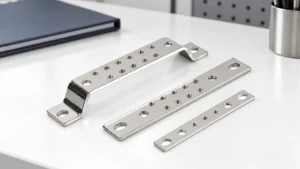
DONGYAO, Wenzhou Dongyao Trading Co., Ltd., provides custom copper fittings, copper busbars and grounding bars, plus tin-plated copper terminals. Coordinate hole positions, section dimensions and finish with the connection drawing; these products should not be represented as buried rod electrodes or clamps.
What ground rod connection questions arise most often?
What is a ground rod clamp used for?
A ground rod clamp connects the grounding electrode conductor to the electrode. It must suit the rod and conductor, remain secure and have approval for the environment, including direct burial when buried.
Can you use galvanized metal for a ground rod?
An approved galvanized steel electrode may be permitted when its construction, dimensions and applicable listing meet the adopted code. Zinc coating alone does not qualify ordinary metal stock or a fence post, and it does not reduce the required soil contact.
What are the different types of ground rod clamps?
Approved designs include bronze acorn-style mechanical connectors and suitable compression connectors, depending on the application. Check the specific product’s electrode, conductor and burial approvals; an exothermic weld is a joint method, not a clamp type.
How to put a ground clamp on a ground rod?
A qualified installer should follow the connector manufacturer’s preparation, conductor-placement and torque instructions. Confirm material compatibility and burial approval first, and never disconnect a live grounding path to attach hardware or perform a test.
References
For the aboveground bonding interface, contact DONGYAO about custom grounding copper bars. Share the connection drawing, copper section, hole pattern and finish requirements so the fabricated parts match the approved system design.
For related conductor products, view the product categories.