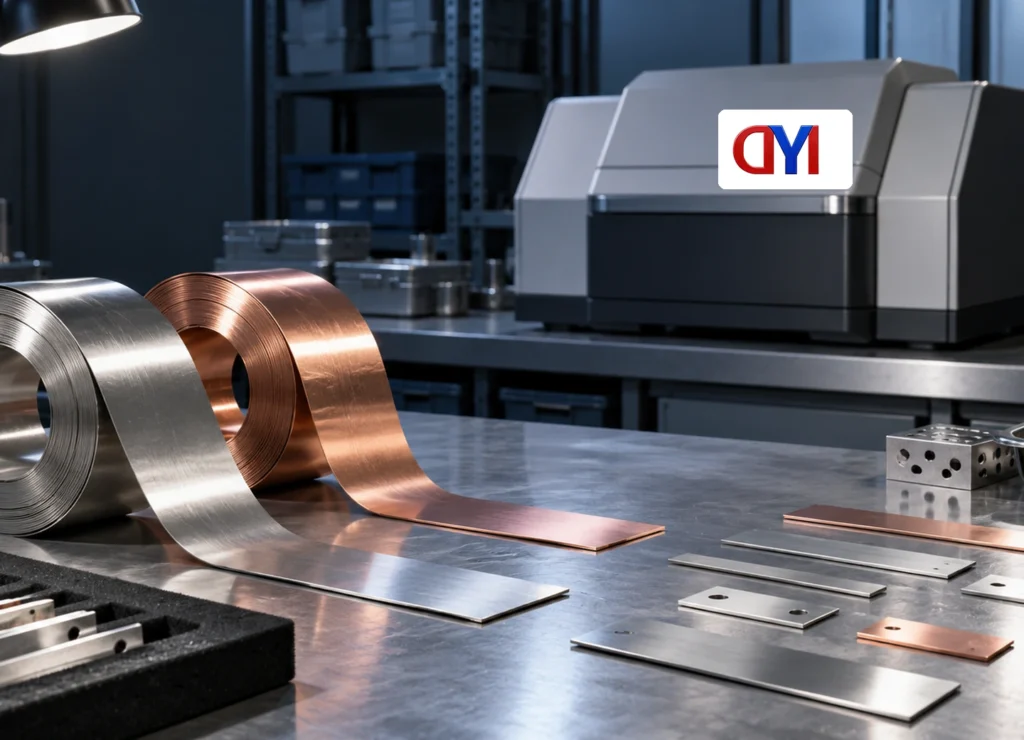
When a component buyer in Reading, Aisha, encountered a silver-colored strip that behaved differently during fabrication, the finish initially seemed correct. In this illustrative scenario, inspection had checked appearance but not the substrate. The corrective action was to verify base material and coating as two separate specifications.
Summary: Nickel-plated copper strip is copper with a nickel coating; it is not interchangeable with nickel-plated steel. ASTM B689 addresses engineering nickel coatings, ASTM B568 addresses coating-thickness measurement and ASTM B571 addresses qualitative adhesion testing. None of these alone establishes the electrical performance of the finished joint.
Identify the substrate before assessing the finish
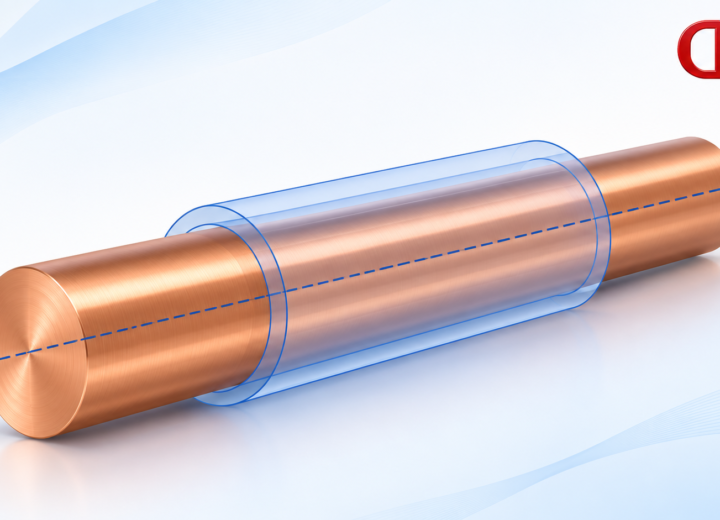
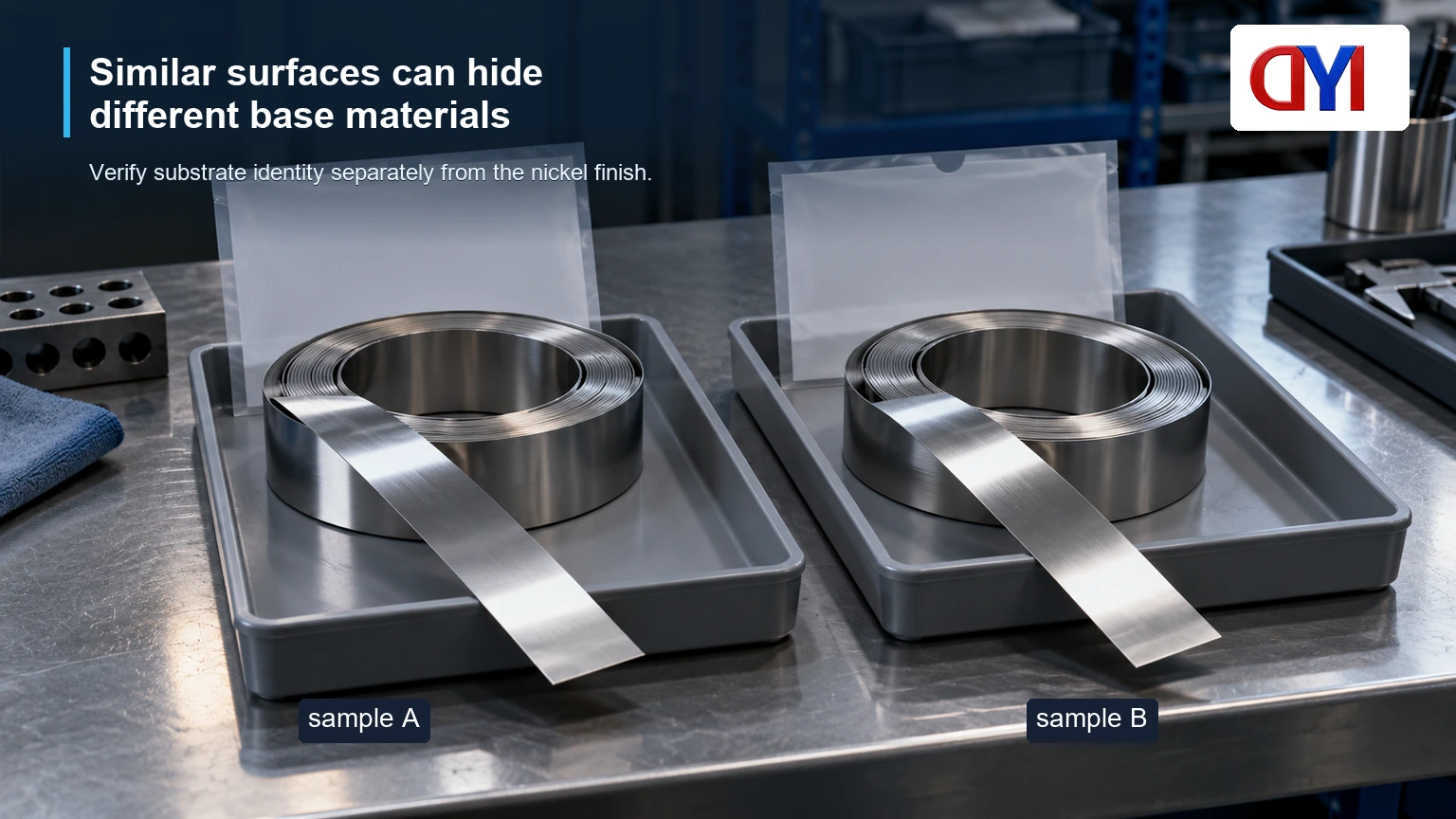
A silver surface can cover different base materials. Supplier descriptions, photographs and a simple visual check cannot establish the substrate. Require the copper grade, condition and lot identity separately from the coating process.
Nickel-plated steel and nickel-plated copper can have different electrical and fabrication behavior even when their external dimensions are similar. Avoid treating a magnet check as a complete material identification method: the actual construction and coatings must still be understood. Use documented material verification appropriate to the part.
| Supply option | Base material | Key acceptance question |
|---|---|---|
| Bare copper strip | Specified copper grade | Material, condition and surface preparation |
| Nickel-plated copper strip | Specified copper grade | Base copper plus coating requirements |
| Nickel-plated steel strip | Specified steel grade | Different substrate and application approval |
| Unidentified silver strip | Unknown | Hold until material identity is resolved |
ASTM B152/B152M can provide a material framework for covered copper flat products. Confirm product scope and grade. The plating specification must then address the actual part and process rather than being implied by the base-material certificate.
Specify coating thickness and location
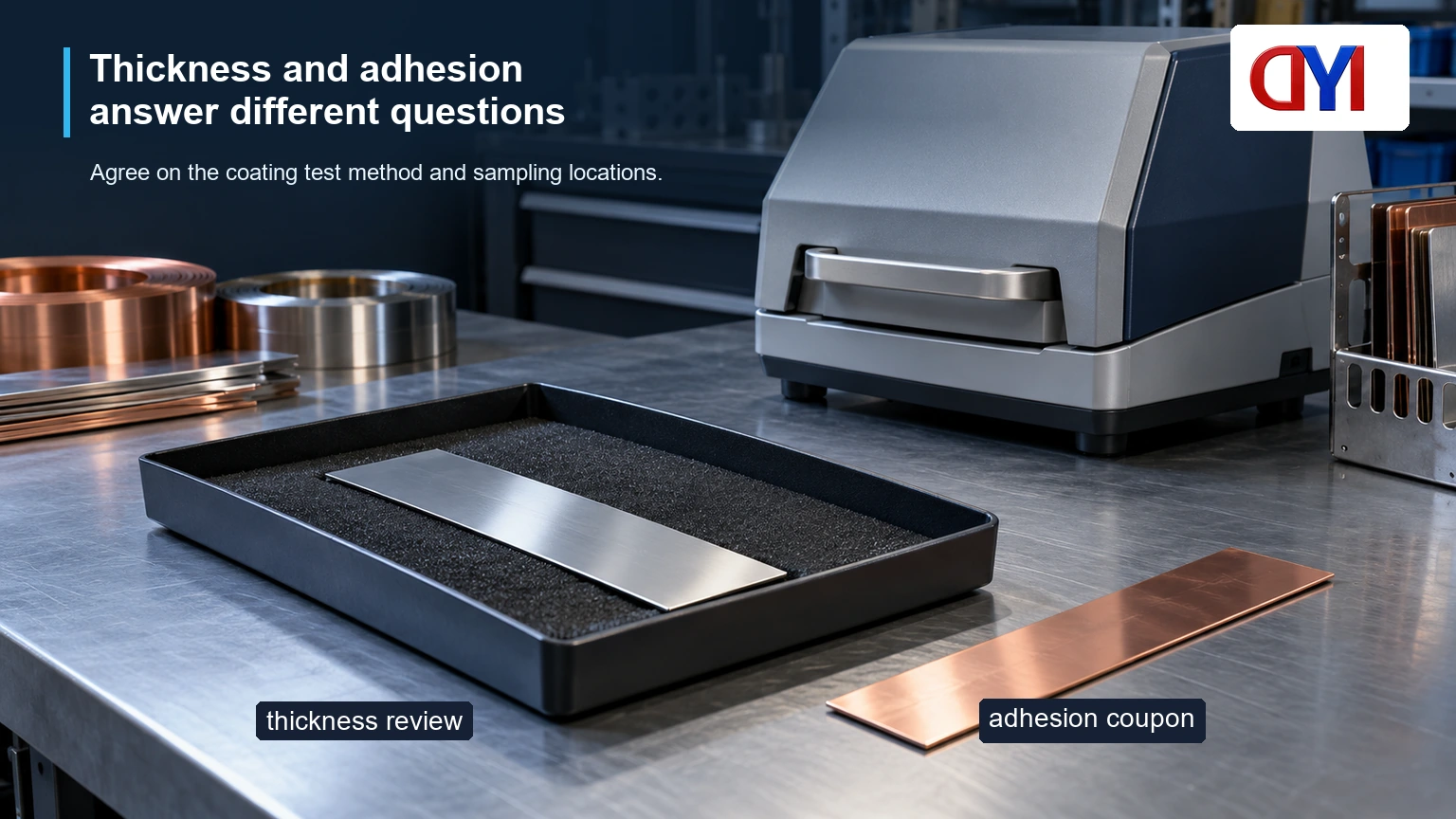
A coating requirement needs units, limits and measurement locations. State whether the requirement is a minimum local thickness, an average or another agreed criterion. Include contact areas, edges and masked regions where relevant. A single favorable measurement does not establish the entire part’s coating distribution.
For illustration, three readings of 4, 6 and 8 µm have a 6 µm arithmetic average. If the requirement were a 5 µm local minimum, the 4 µm location would fail despite that average. These are hypothetical readings used to explain acceptance logic, not a recommended coating thickness.
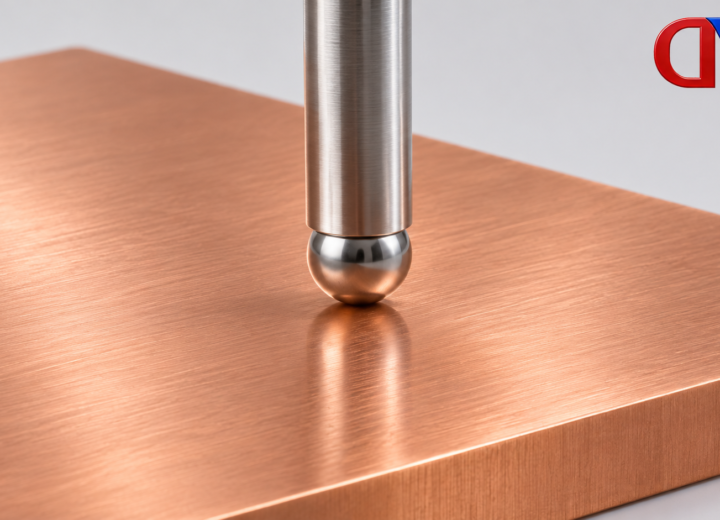
ASTM B568 uses X-ray spectrometry for coating-thickness determination within the method’s material and thickness limitations. Its applicability depends on the coating/substrate combination, calibration and measurement geometry. Ask the laboratory to establish the method for the actual construction.
Adhesion and downstream forming require a separate check
Coating thickness does not prove adhesion. ASTM B571 describes qualitative adhesion tests and explains that the end use or fabrication method should influence the selected test. A part formed after plating may need a representative forming-related assessment; do not select a convenient test unrelated to its duty.
Agree on whether strip is slit or formed before or after plating. Post-plating cutting can expose edges, while pre-plating fabrication changes the surfaces that must be coated. Neither sequence is universally preferable. The drawing and process specification should identify the required finished condition.
| Process detail | Specify | Inspection consequence |
|---|---|---|
| Substrate | Grade, temper and thickness | Separate base-material verification |
| Nickel finish | Process, thickness criterion and locations | Appropriate calibrated measurement |
| Slitting | Finished width, camber and burr limit | Edge and dimensional inspection |
| Forming | Bend geometry and process sequence | Representative adhesion/surface check |
| Contact surfaces | Finish, masking and allowed damage | Finished-part and joint acceptance |
A coating does not eliminate joint validation
Nickel may be selected for a particular surface or environmental requirement, but the coating alone cannot establish acceptable contact resistance or temperature rise. Joint geometry, pressure, mating material and service conditions remain relevant. Follow the approved connection design and test the actual assembly where required.
ASTM B689 is an engineering nickel-coating specification, not a complete electrical connector certification. A request such as “nickel-plated, high current” needs a separate electrical requirement. Specify the coating for its intended role and keep material, coating and assembly test records distinct.
Compare the cost of the complete process: material, slitting, plating setup, masking, inspection and rejects after forming. A cheap coating quote that omits local-thickness checks or post-forming acceptance may not be comparable with a fully specified offer.
Purchasing sequence for custom strip
- Fix the base material and condition before specifying the coating.
- Define finished width, thickness, edges and any formed geometry.
- Agree on coating process, thickness criterion, adhesion method and sequence.
- Approve sample records and finished-joint requirements before repeat supply.
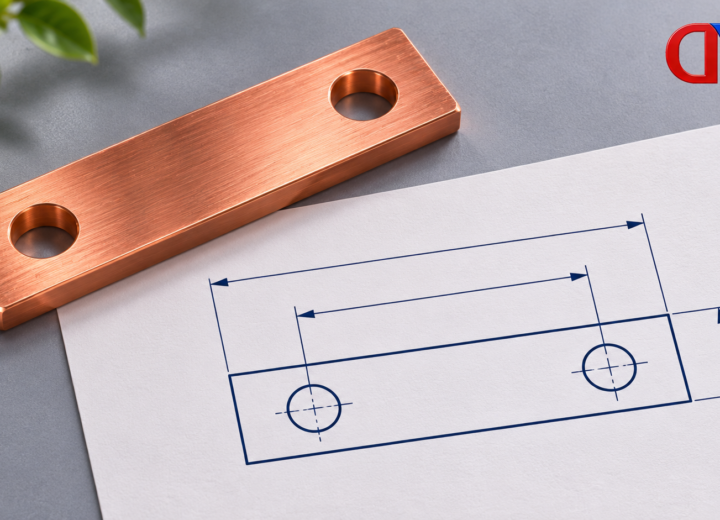
DONGYAO’s custom copper and grounding-bar range provides a starting point for finish discussions. Confirm availability of nickel-plated copper strip and the exact process in writing. The copper connector range can be compared with a supplied part drawing; neither listing proves the requested coating or electrical acceptance.
Frequently asked questions
What is nickel-plated copper strip used for?
It is used where a copper substrate and a specified nickel surface are required for the component. The application may involve electrical or environmental considerations. Verify the complete construction against the intended use.
How is nickel-plated copper different from nickel-plated steel strip?
The base material is different even if the surfaces look alike. That affects relevant electrical, mechanical and fabrication properties. Confirm substrate identity through the purchase specification and records.
Why is copper strip plated with nickel?
Nickel can provide a specified surface condition for the intended environment or process. The exact reason and acceptance criteria should be stated in the design. It should not be assumed to improve every electrical joint.
How can plating thickness and base material be checked?
Use separate material identification and coating-thickness methods appropriate to the construction. ASTM B568 is a relevant X-ray thickness method where applicable. Calibration, substrate and measurement locations must be defined.
Does a nickel coating eliminate the need to verify electrical joint performance?
No. The assembled joint still depends on contact geometry, pressure, mating materials and service conditions. Validate it under the applicable equipment requirements.
What should a buyer specify before ordering slit or formed nickel-plated copper strip?
Specify copper grade and temper, finished dimensions, edge limits and forming geometry. Add coating process, thickness criterion, adhesion test and process sequence. Include sample approval and lot-record requirements.
References
- ASTM B152/B152M: copper flat products
- ASTM B689: engineering nickel coatings
- ASTM B568: X-ray coating-thickness measurement
- ASTM B571: qualitative adhesion testing
Verify what is under the finish as carefully as the finish itself. Contact DONGYAO with the substrate, drawing and coating requirements for a documented process review.
For related conductor products, view the product categories.