The thermal conductivity of aluminum is 235 W/(m·K) at 295 K in the NIST reference table used here. Copper is listed at 400 W/(m·K) under the same temperature condition. These values offer a consistent starting comparison; a particular alloy or supplied part needs its own material data.
| Material entry | Thermal conductivity, k | How to use the value |
|---|---|---|
| Aluminum | 235 W/(m·K) | Reference comparison at the stated temperature |
| Copper (Cu) | 400 W/(m·K) | Reference comparison under the same condition |
The unit describes a material’s ability to conduct heat. Thermal conductivity differs from electrical conductivity and from a component’s heat-transfer rate, which is measured in watts.
Thermal conductivity of aluminum: grade and temperature matter
A general aluminum entry does not identify every aluminum alloy. When a drawing specifies a grade and temper, use data that identify that material and cover its operating temperature. Do not assign the reference value above to 6061 or 6063 merely because both are aluminum alloys.
A separate NIST entry illustrates this distinction: its conductivity curve fit is specifically for 1100 aluminum over 4–300 K. That archival dataset is not a universal aluminum specification, and its temperature interval is not a recommended operating range for a finished part.
For a comparison sheet, keep three items beside each number: material identification, reference temperature and source. If one is missing, leave the entry unresolved rather than mixing a generic room-temperature value with a grade-specific result.
Compare the heat path as well as the conductivity
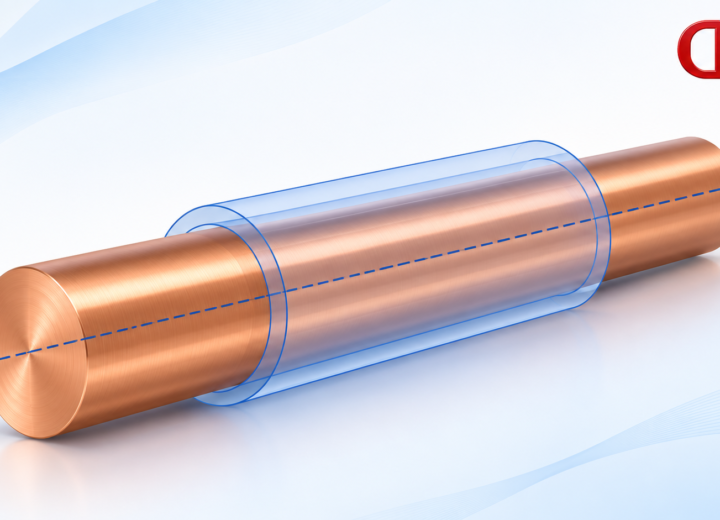
For an ideal, steady, one-dimensional path with constant conductivity, the conduction equation is heat-transfer rate = k × A × ΔT / L. Here, A is the cross-sectional area normal to heat flow, L is the distance along that flow, and ΔT is the temperature difference across the material.
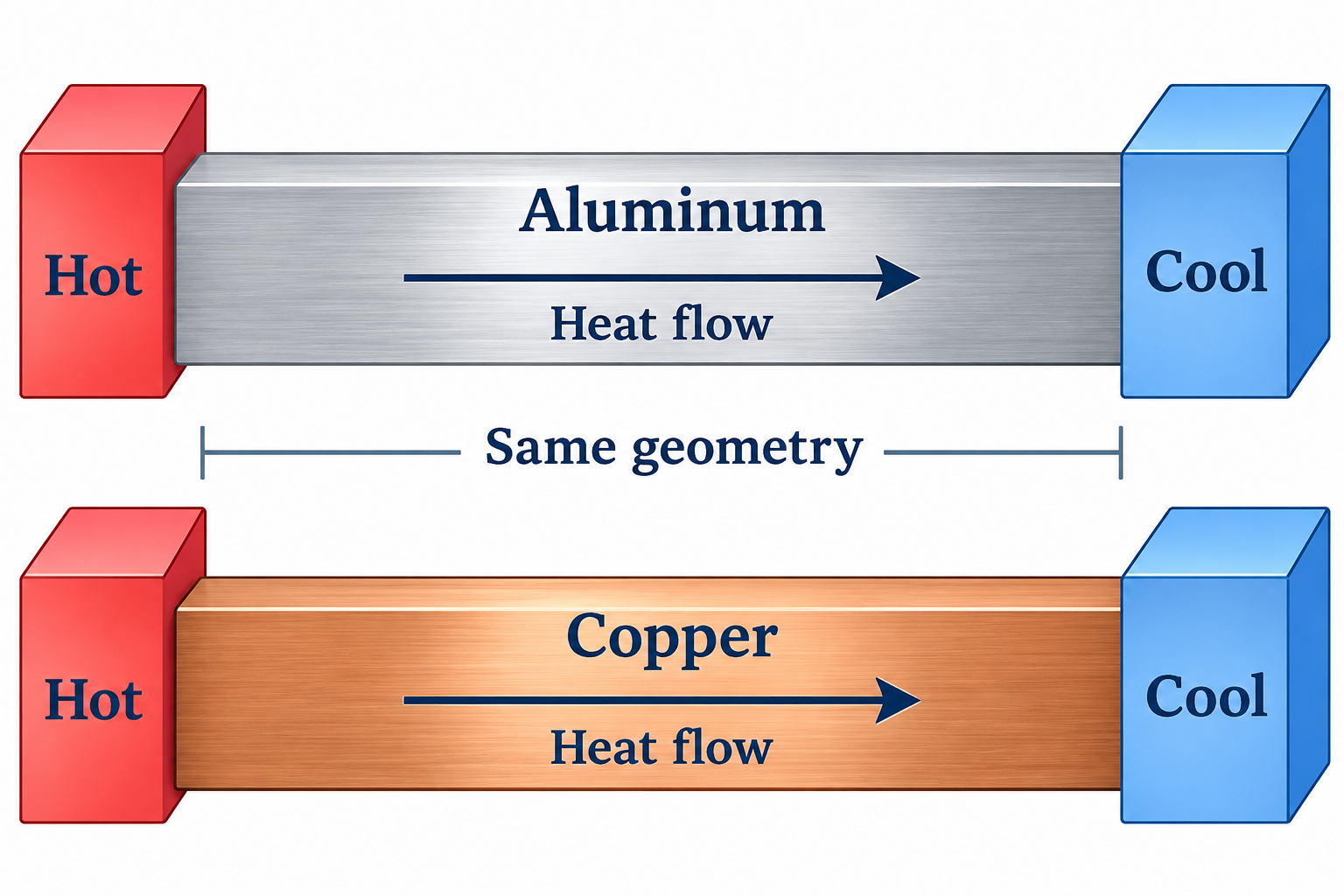
Consider a hypothetical path with A = 100 mm², L = 10 mm and ΔT = 10 K. Converting the dimensions gives A = 0.0001 m² and L = 0.01 m. Using the table values:
- Aluminum: 235 × 0.0001 × 10 ÷ 0.01 = 23.5 W.
- Copper: 400 × 0.0001 × 10 ÷ 0.01 = 40 W.
The ratio is about 1.70 for this deliberately identical geometry. These are calculated material-path examples, not measured product outputs. Changing area or path length changes the result even when the material stays the same.
An assembly assessment needs more information than this simplified path. Identify the interfaces and the hot and cool boundaries before using the calculation to represent a component. A conductivity lookup alone does not establish a finished heat sink’s performance or an electrical current rating.
What to put on a material comparison request
A useful request separates the material question from the component question. The following information card helps keep the comparison traceable:
- Material: name the grade, temper or supplied condition, and the document expected to identify it.
- Temperature: state where the material will operate and where the quoted conductivity applies.
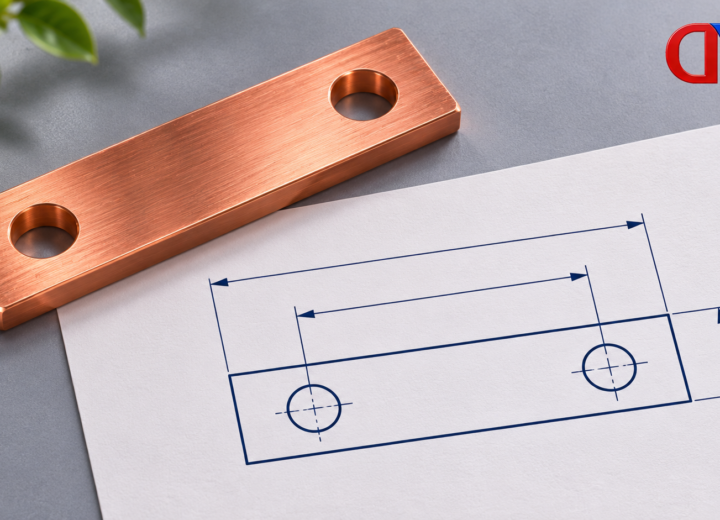
- Heat path: show the cross-section and distance along the intended flow direction.
- Assembly boundary: identify adjoining components and the temperatures or heat load the assessment must address.
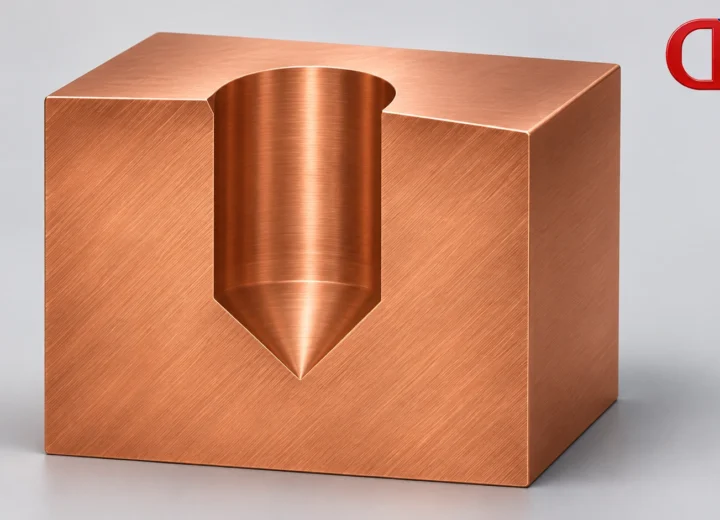
For a copper-block enquiry, DONGYAO’s T2 copper block product page provides a relevant starting point for material identity and dimensional customization. Include the drawing and the required thermal-data basis. The generic copper reference in this article should not be substituted for a specification agreed for the supplied material.
References
- NIST: selected-metal reference properties at 295 K.
- NIST: 1100 aluminum conductivity dataset (archival reference).
- OpenStax College Physics 2e: conduction equation and variables.
For related conductor products, view the product categories.