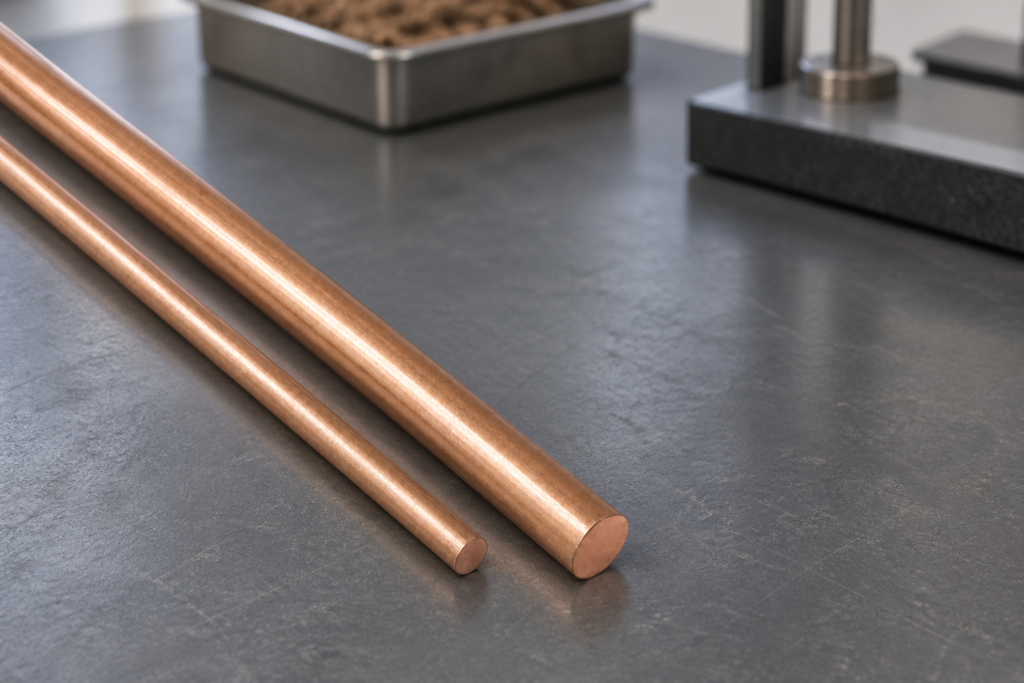
Summary: The honest answer is conditional: some ground rods are solid copper, but many products sold with similar wording are copper-clad steel. IEC 62561-2 addresses earth electrodes and earth electrode conductors, yet a product name alone does not prove its construction. Before ordering, verify the core and surface material, dimensions, joining method, destination-market requirements, and available test documentation. A rod that looks copper-colored may be suitable, but it should not be specified as solid copper without written evidence.
Are ground rods solid copper in every catalog?
“Ground rod” describes a function rather than one universal material. It is an electrode installed in soil and connected to a grounding or earthing system. A manufacturer may offer solid copper, copper-clad steel, galvanized steel, stainless steel, or another construction selected for the soil, mechanical installation, corrosion environment, and applicable rules.
A solid copper electrode has a copper body throughout its cross-section. A copper-clad steel electrode has a steel core with a copper layer bonded around it. Both can be described informally as copper grounding rods, but they are not interchangeable in a specification. The difference affects mechanical behavior, cut-end appearance, joining practice, and the evidence a buyer should request.
The term “copper” in a title, product family, or distributor search result is therefore not enough. Ask for a cross-sectional description, material declaration, manufacturing drawing, and applicable product standard. If the order requires solid copper, state “solid copper body” or the project’s equivalent controlled wording and require the supplier to confirm it on the quotation and inspection documents.
How do copper rod and copper-clad steel earth rod designs differ?
A copper ground rod is often chosen when the project values a copper body, established compatibility with copper conductors, or a particular corrosion strategy. Copper is conductive and can be formed into a robust electrode, but the required performance still depends on diameter, length, connection hardware, soil chemistry, installation damage, and the complete grounding design.
Copper-clad steel combines a steel core with an outer copper layer. The core can support driving loads, while the copper surface provides the intended electrical and environmental interface. That description is not a blanket approval: the bond between the two materials, the continuity of the cladding, the treatment of ends and threads, and the specified test evidence matter. A damaged or poorly joined surface may change the corrosion and connection risk.
Solid copper and copper-clad steel also behave differently during handling. Driving, cutting, threading, bending, or attaching a clamp can expose different failure modes. A solid copper body may be easier to identify at a cut end, while a clad product requires the buyer and installer to protect the cladding and follow the manufacturer’s joining instructions. Neither construction should be selected from color alone.
For a material comparison, treat the product as a system component rather than a loose metal bar:
| Decision dimension | Solid copper electrode | Copper-clad steel electrode | Buyer verification |
|---|---|---|---|
| Body construction | Copper throughout the stated body section. | Steel core with a bonded copper outer layer. | Request a drawing, material declaration, and cross-section description. |
| Mechanical installation | Driving and handling limits depend on the copper grade, dimensions, and end design. | Driving behavior depends on the steel core, cladding bond, and end treatment. | Confirm the installation method and any prohibited operations. |
| Corrosion interface | Exposure is primarily the specified copper material and its connections. | Performance depends on continuous cladding and protection of exposed steel. | Review soil conditions, cut-end treatment, and connection instructions. |
| Connection compatibility | May align with copper clamps and conductors when the full assembly permits it. | Requires a compatible connector and attention to the cladding at the connection. | Match the electrode, clamp, conductor, and installation procedure as one assembly. |
| Commercial wording | Should be identified explicitly as solid copper. | Should be identified explicitly as copper-clad steel, not implied by a copper color. | Make the construction a controlled line item on the purchase order. |
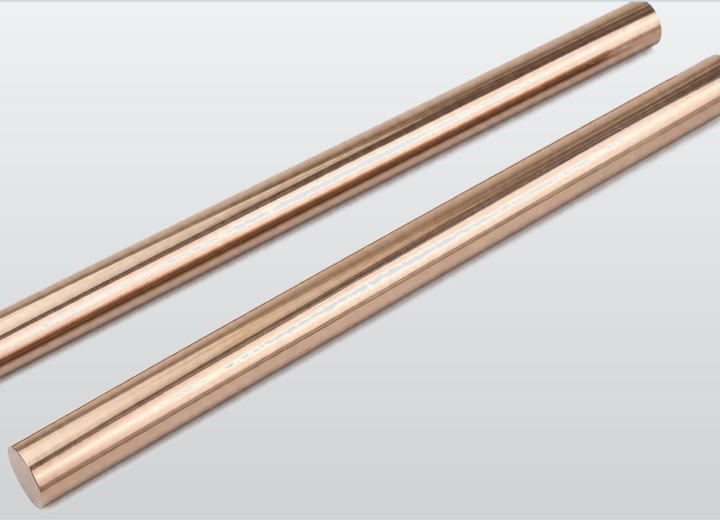
For projects that need a copper component in a broader electrical assembly, the Copper rod product page is a useful reference point for reviewing material descriptions and configurable dimensions. The linked product page should still be compared with the destination market’s installation rules and the project’s approved bill of materials.
What should soil, corrosion, and mechanical conditions determine?
Material selection begins with the site, not the catalog title. Soil moisture, acidity or alkalinity, chlorides, stray-current exposure, drainage, and contact with dissimilar metals can influence corrosion risk. The grounding design may also include buried conductors, clamps, inspection points, and other electrodes; each interface can become more important than the nominal rod material.
Mechanical conditions are equally practical. The installer may need to drive the electrode through compacted soil, gravel, fill, or a prepared bore. A design that is mechanically easy to install can reduce damage to the electrode and its connection. If driving is not permitted for the selected construction, the design may require another installation method or another product family.
Do not convert a corrosion preference into an unsupported life claim. A supplier can explain the material, coating or cladding, joining process, and available tests; the designer must then assess whether those facts fit the soil and system. Standards and authority requirements may differ by country, utility, building type, and lightning-protection scope.
Where a copper body is required, the phrase earth rod copper should be treated as an incomplete search term until the specification adds construction, dimensions, connection requirements, and evidence. The same discipline applies when a project uses an earth electrode as part of a lightning-protection system: identify the component’s role and applicable standard rather than relying on a familiar trade name.
Which dimensions and applications should a copper ground rod match?
There is no single dimension that makes an electrode suitable for every site. Length, diameter, end geometry, thread or connector details, and tolerances should come from the grounding design and the installation method. A project may need one rod, multiple electrodes, a deeper installation, or a different arrangement; the decision should be documented by the responsible designer.
The table below keeps application logic separate from unsupported performance promises. It is a procurement planning aid, not a substitute for the governing design, inspection authority, or manufacturer’s installation instructions.
| Application situation | Questions to resolve | Evidence to request |
|---|---|---|
| Building service grounding | What electrode arrangement, conductor size, connector type, and access requirements apply? | Approved drawing, material schedule, connector compatibility, and installation instructions. |
| Industrial or panel-related installation | Will the electrode interface with copper bus bars, bonding conductors, or an existing grounding grid? | Assembly drawings, material compatibility review, and documented inspection points. |
| Lightning-protection earth electrode | Does the electrode fall within the project’s lightning-protection component requirements? | Applicable standard edition, product test evidence, and system designer approval. |
| Corrosive or uncertain soil | What site data is available, and which dissimilar-metal contacts must be controlled? | Site information, material declaration, connection details, and corrosion-control rationale. |
| Replacement or retrofit | Does the new electrode match the existing conductor, clamp, geometry, and inspection method? | Existing-condition survey, replacement specification, and acceptance checklist. |
When the project also needs formed copper parts, a high-purity T2 copper block can help the procurement team distinguish material-grade requirements for a separate component. It should not be assumed that a copper block specification automatically defines an earth electrode; each component needs its own dimensional and compliance description.
How should buyers verify compliance before specifying a ground rod?
Compliance is a chain of decisions. IEC 62561-2 addresses components used in lightning-protection systems, including earth electrodes and earth electrode conductors. IEEE Std 142 is a grounding-practice reference. NFPA 70 provides the National Electrical Code framework for installations under its scope, while local authorities may adopt, amend, or supplement it. UL grounding and bonding services describe evaluation work, but a service page is not automatically a certification for a particular rod.
These sources should be read for their actual scope and edition. A standard may define requirements, tests, or application guidance; it does not mean every item marketed with a related keyword has been certified to it. Ask the supplier to identify the exact product, standard, edition, test report, listing, or declaration being claimed. If no such evidence is available, keep the statement conditional.
For projects using the NEC or a local adoption, the responsible electrical professional and authority having jurisdiction determine what applies. The same principle holds for lightning protection and utility work: the destination market, installation environment, conductor system, and inspection process control the acceptable design. Avoid marketing language that turns a material description into a universal approval.
Internal documentation should preserve at least four links in the decision: the drawing, the purchase order, the supplier’s product record, and the receiving or installation inspection. If any one of these says only “copper rod,” the ambiguity can reappear at the job site.
What should procurement teams document before ordering an earth rod copper product?
Procurement teams can reduce rework with a short, controlled checklist:
- State whether the electrode body is solid copper, copper-clad steel, or another approved construction.
- Record the required dimensions, tolerance, end treatment, connector interface, and installation method from the approved design.
- Identify the destination market, governing code or standard, responsible reviewer, and inspection authority.
- Request the drawing, material declaration, relevant test evidence, and installation instructions before releasing the order.
- Define how receiving inspection will confirm identity, dimensions, surface condition, and any required marking or documentation.
For a manufacturer, the useful support is precise documentation rather than a broad promise. DONGYAO can discuss copper component formats, drawings, and sourcing questions for a project, but the buyer should keep the final acceptance criteria tied to the approved grounding design. The applications page gives context for matching a component discussion to its intended electrical use.
One practical question is whether the requested electrode is actually part of a larger copper connection assembly. The grounding and neutral copper bus bar guide may help the team separate electrode selection from bus-bar bonding, neutral distribution, and enclosure connections. Those parts can be related in the system while remaining distinct purchase items.
Frequently Asked Questions
What is a copper earth rod?
A copper earth rod is an earth electrode identified with copper as its body material or outer conductive surface. The phrase alone does not establish whether the rod is solid copper or copper-clad steel, so the construction must be confirmed in the product record. Match the electrode to the grounding design, connector, soil conditions, and applicable requirements.
What is a copper ground rod used for?
A copper ground rod is used as an electrode that connects a grounding or earthing system to the soil. Its suitability depends on the complete installation, including conductor, clamp, arrangement, dimensions, soil, and inspection requirements. It should be selected from an approved design rather than used as a generic substitute for every grounding application.
Are copper rod, earth rod, and ground rod the same thing?
They can refer to related electrode products, but the terms are not guaranteed to describe the same material or legal application. “Earth rod” and “ground rod” usually describe the function, while “copper rod” may describe material, finish, or a commercial family. Confirm construction and the governing terminology used by the project’s market and authority.
Is an earth rod made entirely of copper?
No. Some earth rods are solid copper, while others use copper cladding over a steel core or use another approved material. Check the cross-section, material declaration, end treatment, and product documentation; the word “copper” in a title is not proof that the entire rod is copper.
References
- IEC 62561-2: Lightning protection system components, earth electrodes and earth electrode conductors
- IEEE Std 142 grounding practice overview
- NFPA 70, National Electrical Code landing page
When the design calls for a solid copper component and the documentation is clear, DONGYAO can help review the required format and sourcing details. For a project-specific discussion, contact DONGYAO about copper grounding components and connection parts.
For related conductor products, view the product categories.