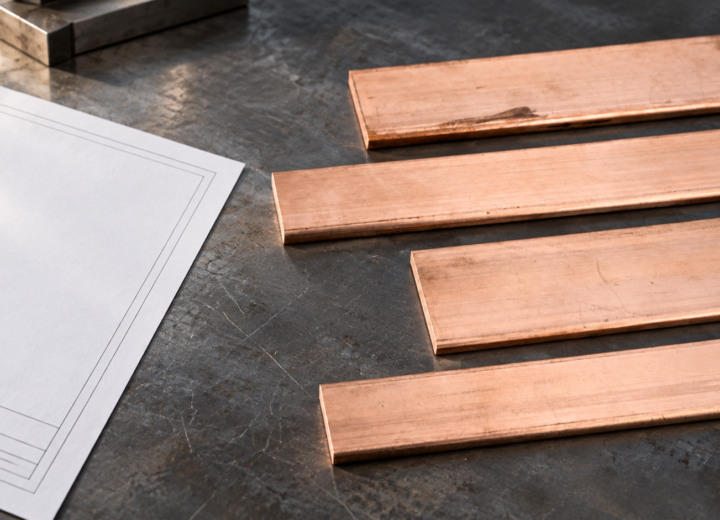

When a production engineer in Suzhou released a stamped busbar cover using an apparently suitable alloy, the first formed batch showed edge splitting and uneven springback at final inspection. The visible setback was not a bad press tool: the purchase order had named thickness but omitted temper, bend condition, and the receiving checks that would have exposed the mismatch before cutting.
Summary: Brass sheet metal should be specified as an alloy-and-temper system, not as a yellow-metal substitute. ASTM B36/B36M provides a useful dimensional specification reference, while the Copper Development Association shows why copper-alloy properties vary with composition and condition. Start with the functional load path, forming radius, thickness tolerance, and inspection method; then align the material callout with the fabricated part and its destination-market obligations.
Brass sheet selection starts with the function of the finished part
Brass is a family of copper-zinc alloys, so a drawing that says only “brass” leaves important variables open. Zinc level, additional elements, temper, thickness, grain direction, and surface condition can all change how a blank cuts, bends, machines, conducts, or accepts plating. The useful decision is therefore made at the component level rather than at the color or trade-name level.
For industrial fabrication, separate three questions: what the part must carry or shield, how it will be made, and how it will be inspected. A terminal, formed cover, spacer, contact feature, or decorative face may all begin as flat stock, yet their governing risks are different. This distinction keeps material procurement tied to the operational requirement instead of a generic catalogue description.
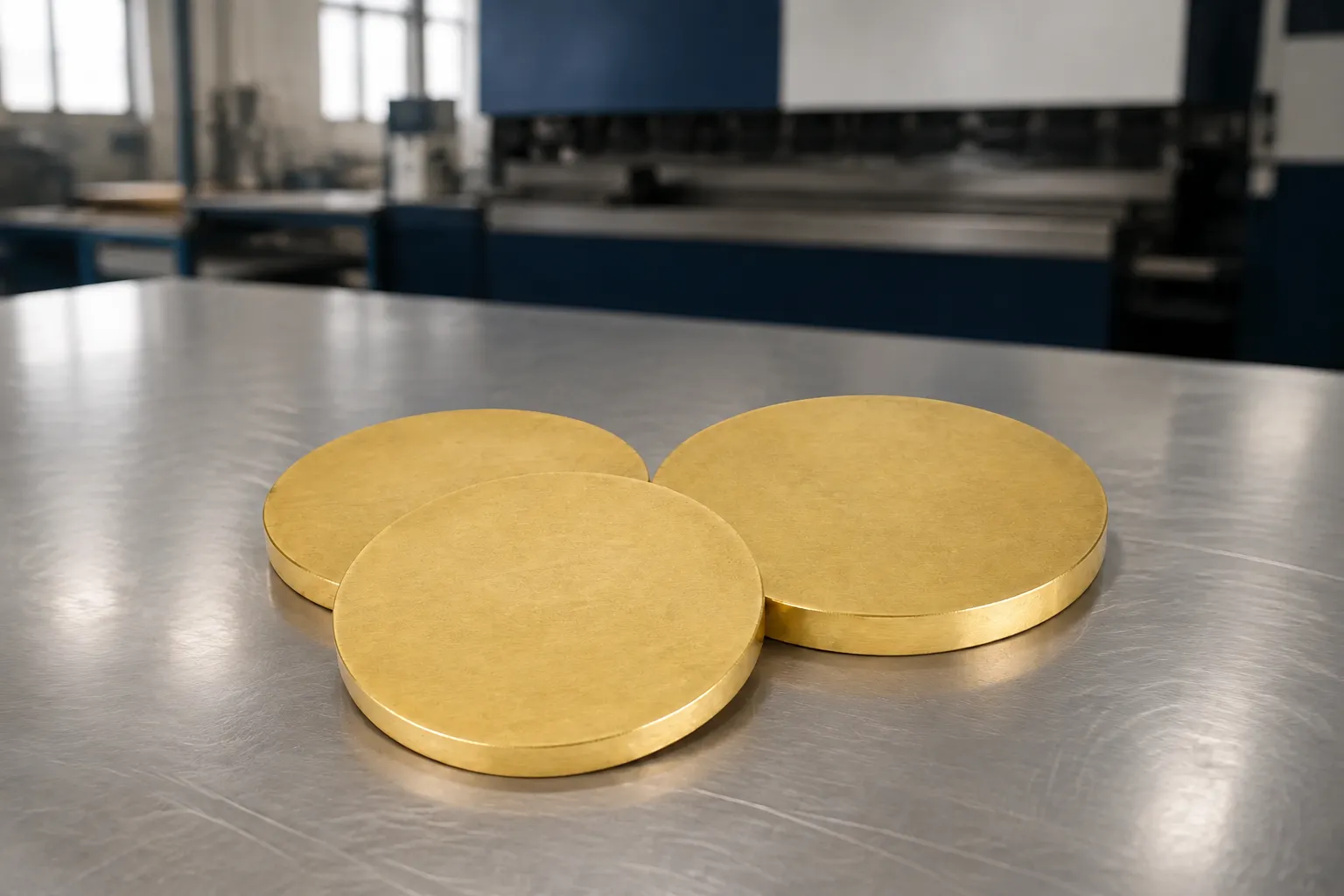
Alloy, temper, and thickness determine how sheet brass performs
Alloy selection is a trade between formability, strength, machinability, electrical behavior, corrosion response, and cost. A softer temper can make a tight bend more practical; a harder condition can improve stiffness but reduce margin at a formed edge. The Copper Development Association’s physical-property and microstructure resources are useful primary references because they explain how composition and structure affect this balance.
Buyers may use the trade wording sheet brass, but the purchase order still needs a recognized alloy designation and condition. That detail gives the supplier, fabricator, and inspector the same basis for deciding whether a lot is suitable for the stated process.
Use the drawing to state condition, not just nominal size
Thickness is only one dimension. A controlled drawing should identify the alloy designation accepted by the buyer, temper or mechanical condition, nominal thickness and tolerance, blank dimensions, burr direction where relevant, flatness expectations, and any surface finish. The receiving plan should then use calibrated thickness measurement and documented visual inspection rather than accepting a label as proof of conformity.
ASTM B36/B36M is relevant when the purchase is for copper-alloy plate, sheet, strip, and rolled bar dimensions; it does not by itself certify that a finished electrical assembly is safe, compliant, or suitable for a particular installation. Procurement teams should ask the mill or distributor which material documentation accompanies the lot, then verify that it matches the drawing callout and the agreed inspection route.
Plan forming around the actual bend, not a generic rule
Before volume work, run a representative forming trial that includes the specified bend radius, tooling, grain direction, lubrication, and edge condition. Inspect the first-off parts for cracking, distortion, burr rollover, and fit at the mating interface. A one-piece trial does not replace process qualification, but it gives engineering a direct check before the cost of a full production lot is committed.
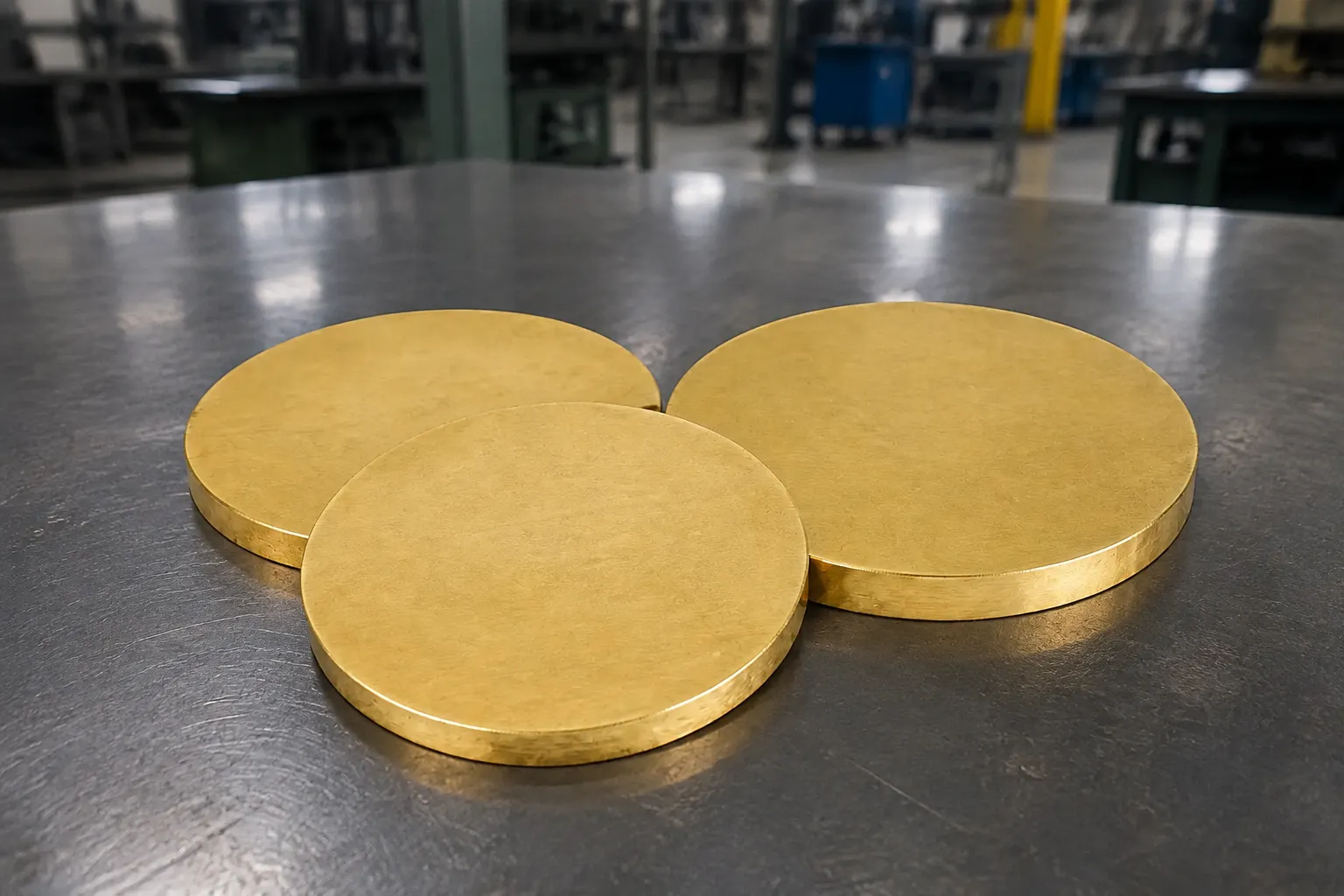
Fabrication controls prevent avoidable rejects in formed components
Cutting method matters because a sheared edge, punched edge, laser-cut edge, and machined edge can leave different burrs, heat effects, and dimensional variation. For a conductive connection or close-fitting cover, these differences can transfer directly into contact area, assembly fit, plating preparation, and rework time. Define the critical edge and inspection location before choosing the fabrication route for brass sheet metal.
Use a first-article inspection plan that measures the dimensions the next operation truly depends on: hole position, feature-to-edge distance, formed angle, flatness, and burr direction. Gauge selection should suit the tolerance and geometry; a caliper may be adequate for a broad blank but not for a formed feature where a fixture or go/no-go check better reflects functional fit.
Handling also affects yield. Brass surfaces can pick up fingerprints, abrasions, and embedded debris that become more consequential before plating, welding, bonding, or electrical contact. Segregate approved material by lot, keep protective interleaving in place where the finish matters, and record deviations before parts enter a later process that hides the origin of the defect.
Compare brass against the job requirements before comparing unit prices
| Decision factor | Brass approach | Alternative-material consideration | Procurement implication |
|---|---|---|---|
| Electrical function | Evaluate alloy condition and contact geometry together. | Copper may be considered where conductivity is the main driver. | Specify the complete functional interface, not material alone. |
| Forming behavior | Temper selection can support bending and stamping. | Steel or aluminium may need different tooling and corrosion controls. | Confirm a representative trial before release. |
| Machining and joining | Match alloy to the intended cutting, fastening, or joining process. | Alternatives can alter burr control and finishing steps. | Include downstream process cost in comparison. |
| Corrosion and finish | Assess service environment and required surface treatment. | Coated steels and plated alloys have their own failure modes. | Define inspection after finishing, not only at incoming. |
| Total cost | Unit cost is only one input. | Lower-priced stock can create more scrap or rework. | Use an illustrative cost model covering yield, cycle time, and returns. |
An illustrative comparison can be more useful than a material-price snapshot: a lower-cost blank that adds a secondary deburr, causes one extra setup, or produces a higher rework rate may cost more per accepted part. The calculation should use the buyer’s own labor, scrap, inspection, logistics, and downtime assumptions. It should not be presented as a universal savings claim.
Part geometry should determine the fabrication plan for sheet brass
| Part situation | Critical material or process question | Useful drawing control | Typical acceptance focus |
|---|---|---|---|
| Flat conductive link | Will thickness and surface condition support the interface? | Thickness, hole position, contact zone | Deburr, flatness, surface cleanliness |
| Stamped bracket or cover | Can the selected temper withstand the formed shape? | Bend radius, angle, grain direction where relevant | Crack-free bend and mating fit |
| Machined spacer or terminal feature | Which alloy best suits machining and joining? | Thread or hole geometry, finish callout | Dimensional fit and burr control |
| Plated or bonded component | What preparation is needed before the next process? | Surface condition and protected areas | Cleanliness and finish continuity |
The table is a starting point, not a material approval. Where the stock becomes an electrical connection element, the current path, heat rise, fastening force, insulation system, and enclosure all need their own engineering review. A material test certificate can support traceability, but it cannot replace validation of the finished assembly under its intended operating conditions.
Standards and compliance must be assigned to the correct obligation
Material specifications, machine safety rules, and market-access marking are related to a manufacturing program but are not interchangeable. ASTM B36/B36M addresses dimensional requirements for specified copper-alloy product forms. It is a specification reference, not a CE certificate and not a declaration that a fabricated electrical part meets every end-product requirement.
For fabrication equipment in the United States, OSHA 29 CFR 1910.212 addresses general machine-guarding requirements. Its relevance is the safeguarding of presses, cutting equipment, and other machinery—not a statement about the intrinsic compliance of the raw material. The employer and equipment context determine the practical guarding assessment.
CE marking applies to products within applicable European Union legislation, based on the product category and the rules that govern it. It is not a general quality badge and should not be applied to a brass blank merely because it is sold into Europe. Buyers should establish the intended product, destination market, technical documentation, and responsible economic operator before making any compliance claim.
Specify brass sheet before sourcing configured connection components
Start with four disciplined actions: translate function into a drawing callout; state the fabrication and acceptance method; confirm the supplier’s lot documentation; and validate a representative part before scale-up. This is especially important where a flat blank becomes a current-carrying or mechanically loaded connection feature, because material choice and finished-component design must remain connected.
DONGYAO can support buyers who need configurable industrial electrical connection-component work alongside its DC contactors, DC shunts, and hydraulic circuit breakers. For an application-level starting point, review the application context before fixing the specification. Where a brass material requirement must become a component detail, the brass sheet reference helps frame the interface rather than treating stock as a finished product.
For upstream comparison, a copper plate option can clarify whether the design is primarily conductivity-led or forming-led. Buyers with drawings, target conditions, and documentation questions can also use the engineering service route to focus the discussion on configured components, inspection expectations, and practical manufacturability.
Frequently Asked Questions About Brass Sheet Metal
How much does a brass sheet cost?
Cost varies with alloy, temper, thickness, format, order quantity, finishing, certification paperwork, and the supply market at the time of purchase. A defensible quotation compares delivered material and conversion cost, not only price per kilogram. Ask suppliers to separate stock, processing, packaging, and documentation assumptions so changes are visible.
Is brass sheet easy to cut?
It can be cut by shearing, punching, laser processing, waterjet, or machining, but “easy” depends on alloy, temper, thickness, geometry, and edge-quality requirement. The important check is the resulting burr, distortion, and heat effect at functional edges. Run a representative sample when the part will be formed, plated, or used in an electrical interface.
Is brass the cheapest metal?
No. Material price is affected by alloy content, market conditions, format, availability, and purchase volume, while finished-part cost also includes yield and processing. A less expensive input can become the more costly choice if it needs extra finishing or produces unstable forming. Compare accepted-part cost against the actual functional requirement.
What are the disadvantages of brass?
Brass may not be the best choice where the design demands the highest available electrical conductivity, very low mass, or a particular corrosion response. Some compositions and tempers also have limited forming margin for a demanding geometry. Evaluate the exact alloy and operating environment rather than treating all brass products as equivalent.
How thick is a brass sheet?
There is no single thickness; suppliers offer multiple thicknesses and formats, while the applicable product specification and purchase order define what is acceptable. The drawing should state nominal thickness, tolerance, measuring location, and any flatness or form requirement. Do not rely on informal gauge language when the downstream fit is critical.
What are the three types of brass?
A practical broad grouping is alpha brasses, alpha-beta brasses, and beta brasses, although commercial alloy names and properties need more detail than those categories provide. Composition and microstructure influence workability and strength, so the category is not enough for procurement. Use a recognized alloy designation and condition in the material callout.
References
- ASTM International: B36/B36M, Standard Specification for Brass Plate, Sheet, Strip, and Rolled Bar
- Copper Development Association: Physical Properties of Copper and Copper Alloys
- Copper Development Association: Microstructure of Copper and Copper Alloys
- European Commission: CE marking
- OSHA: 29 CFR 1910.212, General requirements for all machines
The reliable rule is simple: specify the material for the finished function, then verify the part at the point where it can still be corrected. When your project needs a configured electrical connection component rather than a generic stock purchase, contact DONGYAO with the drawing and application details.
For related conductor products, view the product categories.