When a component buyer in Bristol, Oliver, encountered a batch of copper blanks that could not clean up to the finished drawing, the delivered sizes appeared correct. In this illustrative scenario, the order had specified finished dimensions instead of machining-stock dimensions. The issue was the missing allowance, not simply poor cutting.
Summary: Custom-made copper bars need a controlled drawing and a separate material specification. A copper rod, rectangular bar and square bar have different machining envelopes. ASTM B187/B187M covers copper conductor and general-purpose bar, rod and shapes, but the buyer must still identify grade, condition, dimensions and acceptance requirements.
Match the starting shape to the component
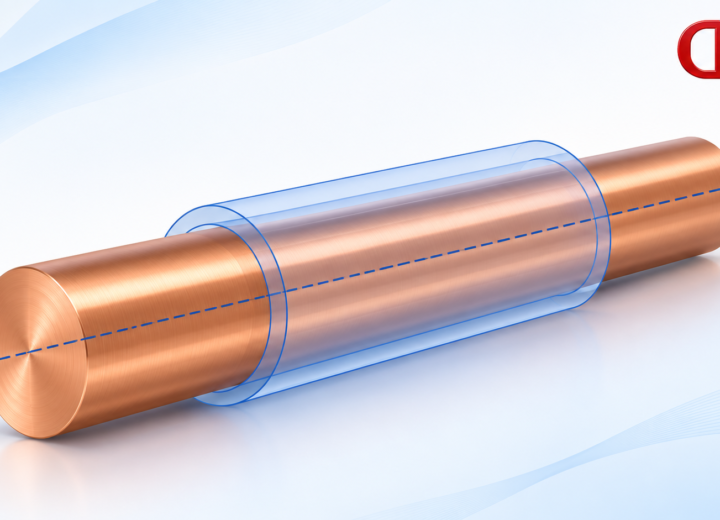
Round stock suits cylindrical parts; square and rectangular stock can reduce removal when the component has flat faces. Selection should account for fixturing, machining sequence and the surfaces that remain after processing. A custom profile can reduce material removal, but its tooling and qualification costs must be justified by the production quantity.
In a simple geometry example, a 20 mm square has a 400 mm² area, while a 20 mm diameter circle has an area of approximately 314 mm². Those numbers describe nominal sections only. Neither tells you whether a component can be machined from the stock: the finished shape must fit inside the available envelope with adequate allowance.
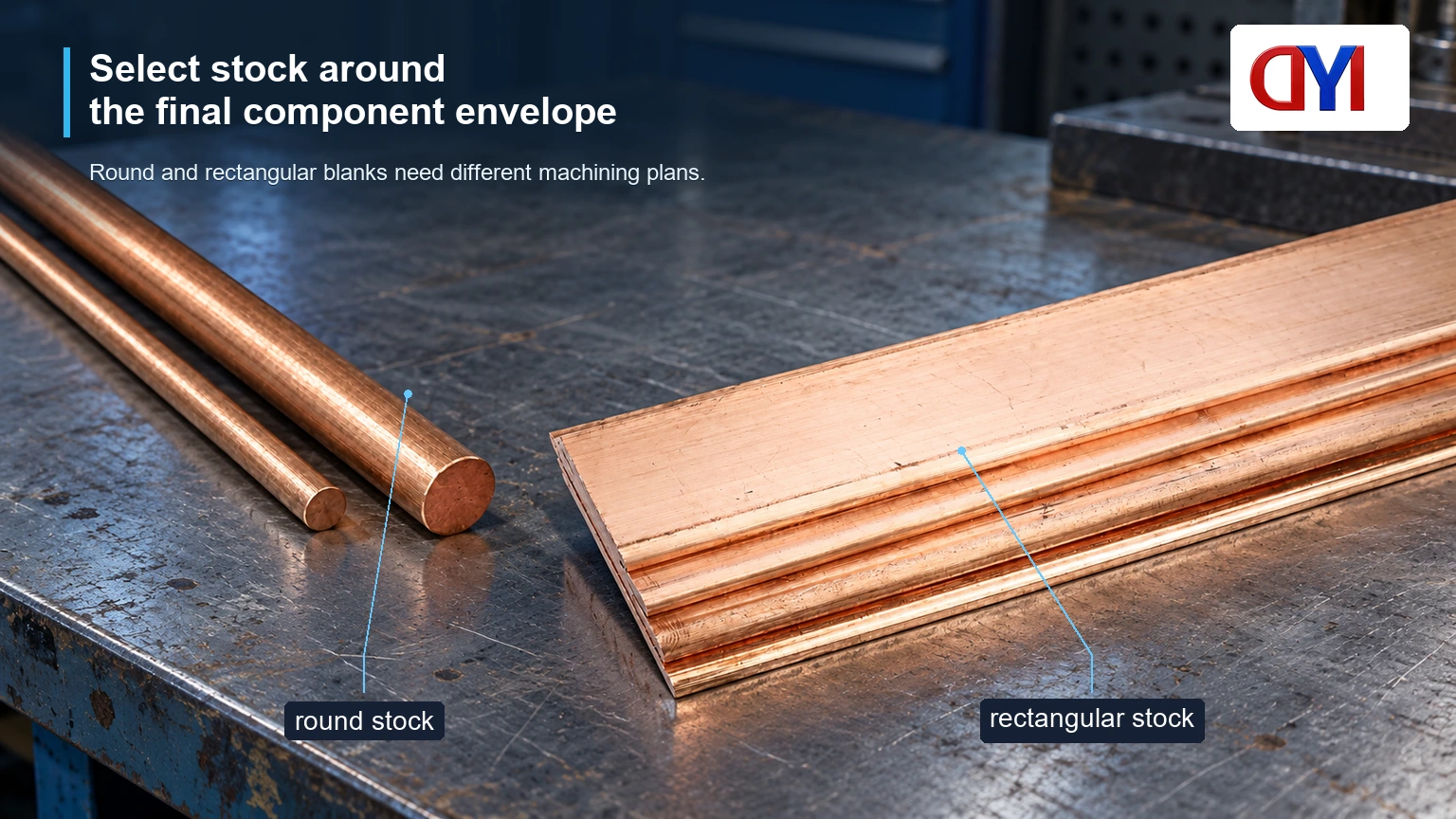
For example, a 20 mm diameter rod cannot supply a finished 20 × 20 mm square cross-section. The square’s diagonal is about 28.3 mm before allowance. This is why equal nominal “20 mm” dimensions are not equivalent purchasing instructions.
| Stock option | Useful starting point | Main trade-off |
|---|---|---|
| Round copper rod | Turned cylindrical components | Flat-sided shapes may require excessive diameter |
| Square copper bar | Components with similar width and thickness | Check corner shape and across-flats tolerance |
| Rectangular copper bar | Flat electrical or mechanical parts | Define edge contour and thickness condition |
| Drawing-based profile | Repeated complex sections | Tooling, minimum quantity and first-article approval |
Specify grade and temper independently of color
“Red copper bar” is a commercial description. It does not establish oxygen content, chemical limits or the material’s mechanical condition. ASTM B187/B187M identifies copper grades such as C10100 and C11000; these should not be treated as interchangeable solely because both appear copper-colored.
Temper affects forming, handling and machining. The public B187/B187M abstract identifies soft-annealed and hard conditions and describes mechanical, dimensional and resistivity requirements. Confirm the exact condition and product coverage needed for your order. A supplier’s stock hardness should not silently replace the drawing requirement.
Where conductivity matters, specify the relevant material test basis, such as ASTM B193, with the reference temperature and acceptance requirement. Where dimensions drive fit, agree on the measurement method and sampling. These records answer different questions and should retain the same lot identity.
Make edges, ends and length part of the drawing
Cut length alone does not define a usable blank. End squareness, burrs, edge radius, straightness and surface condition affect fixturing and the final contact area. An edge that is acceptable for general stock may be unsuitable for a closely mating assembly.
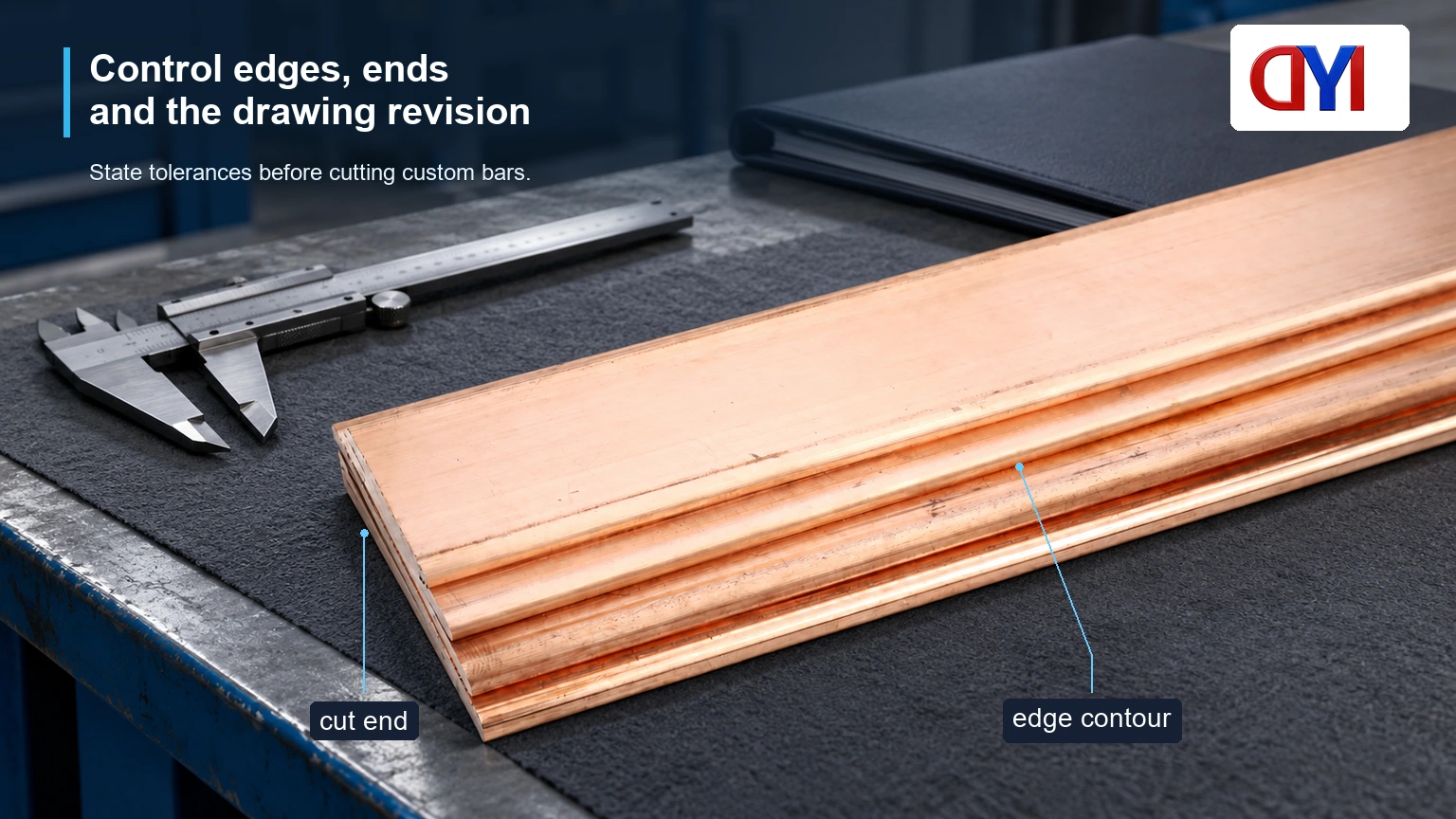
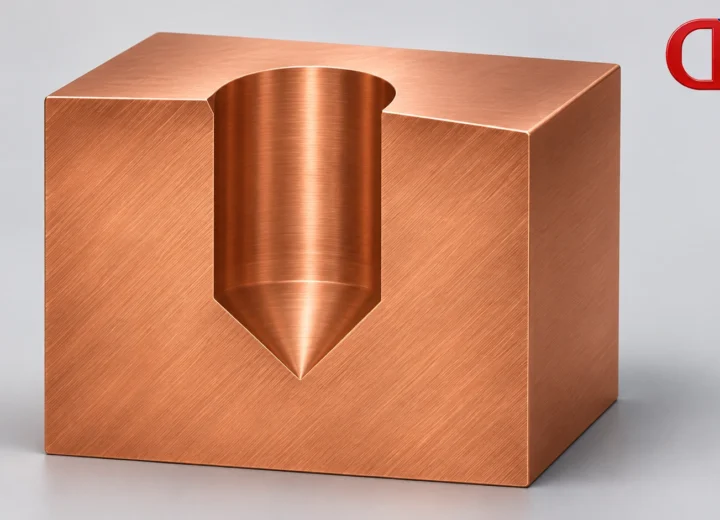
An illustrative finished length of 100 mm with 1 mm facing allowance at each end requires at least 102 mm of nominal blank length before allowing for cut tolerance. If the minimum delivered length falls below that value, the machining plan may fail even though the nominal quotation says “102 mm.” Define the minimum usable envelope explicitly.
| Drawing item | Necessary detail | Acceptance consequence |
|---|---|---|
| Section | Width/thickness, diameter or across-flats dimensions | Establishes the usable blank envelope |
| Length | Nominal, tolerance and facing allowance | Prevents undersized finished parts |
| Edges | Radius or contour and burr requirement | Controls assembly and handling |
| Holes or plating | Locations, process and protected areas | Requires separate processing approval |
| Identity | Grade, temper, lot and drawing revision | Prevents mixed-material production |
Compare total delivered part cost
Compare standard stock plus machining with a near-net custom section using actual tooling, processing and inspection quotations. Include scrap recovery on an agreed basis, not as an assumed full credit. If custom tooling costs 600 currency units and saves 2 per accepted part, the simple illustrative break-even quantity is 300 parts before financing, yield or extra inspection. These are hypothetical inputs, not supplier prices.
ASTM B187/B187M is a material/product specification; it does not approve a customer’s finished component or provide a universal current rating. Additional finished-part requirements may apply. Coating, hole-pattern and assembly inspection must remain visible in the purchase documents rather than being hidden behind a material-standard reference.
Request a comparable quotation
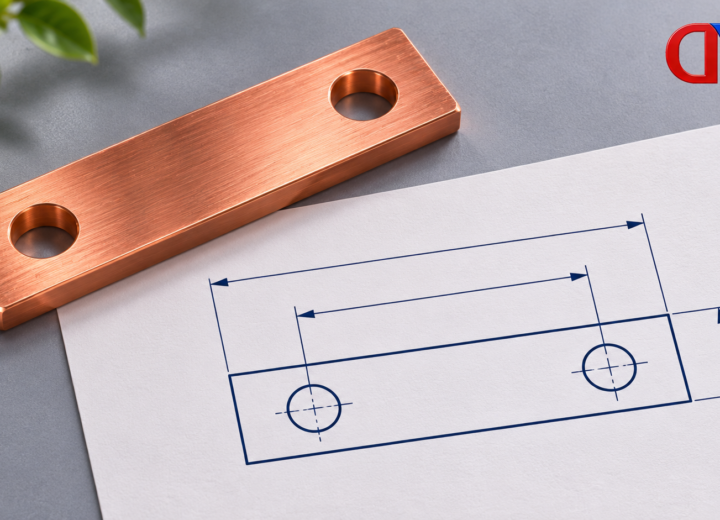
- Supply the finished drawing and identify which dimensions are blank dimensions.
- Fix the copper grade, temper and permitted stock route.
- Define tolerances, surface condition, processing and packaging.
- Approve first-article evidence before committing to repeat production.
DONGYAO’s copper bar stock and round copper rods provide two starting forms for a drawing review. Confirm each proposed processing operation and its acceptance criteria in the quotation.
Frequently asked questions
What grade of copper is used for electrical bars?
C11000 is one recognized electrical copper, while other grades may be specified for particular requirements. ASTM B187/B187M lists multiple copper types. Use the grade approved for the application rather than a generic purity label.
How are copper rectangular bars different from copper round rods?
The cross-sectional shape changes the machining envelope and available flat contact surfaces. Equal nominal dimensions do not mean equal area or interchangeable stock. Select the shape around the finished part and its allowances.
Which dimensions are needed to order custom-cut copper bars?
Specify section dimensions, cut length and their tolerances. Add edge shape, straightness, end condition and any machining allowance. Include the quantity and controlled drawing revision.
How do copper temper and edge shape affect fabrication?
Temper affects forming response and material handling. Edge shape influences fit, contact and the likelihood of damage during assembly. Approve the combination with the fabrication process rather than treating these details as optional.
Can copper bars be supplied with drilled holes and plated contact areas?
Such processing may be available, but it must be agreed for the specific product and drawing. Specify hole geometry, finish, masking and inspection requirements separately. Do not assume a stock-bar quotation includes them.
What material and dimensional records should accompany custom copper bars?
Request lot-linked material identification, applicable test results and dimensional inspection against the drawing. Include coating or processing records where required. Retain traceability through cutting and packaging.
References
- ASTM B187/B187M: copper bar, rod and shapes
- ASTM B152/B152M: copper flat-product grade distinctions
- ASTM B193-25: conductor resistivity measurement
Specify the usable blank, not only the nominal metal size. Contact DONGYAO with the drawing, allowances and quantity for a documented custom-stock quotation.
For related conductor products, view the product categories.