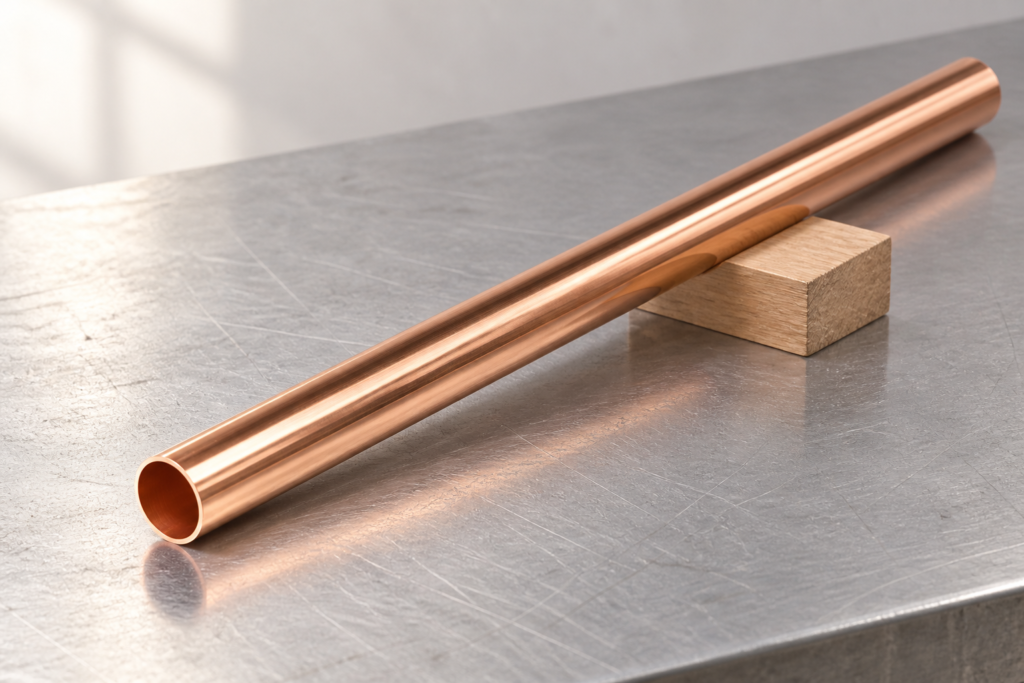
Why should you identify the tube before choosing a copper pipe cutter?
Copper tube is hollow and intended to carry a fluid or gas; solid copper rod is a different product. Check outside diameter, wall condition, temper, route, and next joint. A search for copper pipe cutter can return compact wheel cutters and unrelated tools.
Establish the job state first. HVAC and plumbing lines may contain refrigerant, water, oil, or pressure; equipment may hold stored energy. Shut down, isolate, drain or recover through the approved procedure, and verify isolation. OSHA lockout/tagout principles apply where unexpected energization could injure the installer.
How can a fine-tooth hacksaw make a controlled cut without a copper pipe cutter?
A fine-tooth hacksaw is a fallback when the tube is empty, accessible, and firmly supported. Mark the cut with a square or paper wrap, use padded support, and keep the blade aligned. Light strokes reduce ovalizing thin-wall tube and protect nearby components.
Finish with three checks: squareness, burrs, and roundness for the fitting. Remove internal and external burrs with suitable hand tools, then clean filings. Visual inspection and a dry trial fit can expose deformation before assembly.
Compared with a dedicated copper pipe cutter, this method creates more wandering cuts, burrs, and cleanup; use it only as a controlled contingency.
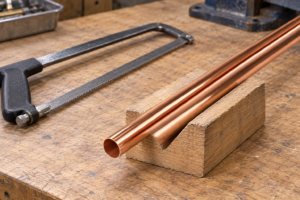
When is a rotary tool appropriate when a copper pipe cutter is unavailable?
A guarded rotary tool with a suitable disc can help when access prevents hand-tool rotation and the tube is short, empty, and stable. Control sparks, heat, dust, and alignment; follow the tool maker’s guard and PPE instructions.
Do not use it around refrigerant circuits, combustible vapors, insulation, or energized equipment. Never introduce an open flame near insulation or refrigerants. After cutting, check for heat damage, fragments, ovality, and burrs. If support or visibility is poor, obtain the correct tool.
Why does a copper pipe cutter provide better repeatability than a hacksaw?
A tubing cutter uses a wheel and guide rollers to score around the circumference. With correct adjustment, it produces a more consistent end and less loose swarf than a hacksaw. Excessive tightening can distort the tube, so deburring, cleaning, and inspection remain necessary.
The phrase cutter pipe copper is common in procurement searches, but it does not define compatibility. Confirm tube range, wheel material, access clearance, replacement parts, and suitability for the wall and temper. A compact tool can fit the space yet be wrong for the joint.
| Method | Controlled use | Primary limitation | Finish check |
|---|---|---|---|
| Fine-tooth hacksaw | Accessible, isolated tube with firm support. | Wandering cut, burrs, and filings. | Square face, roundness, deburring, cleaning, trial fit. |
| Guarded rotary tool | Short, stable tube with restricted access. | Heat, sparks, dust, and disc control. | Inspect heat marks, fragments, dimensions, and fit. |
| Tubing cutter | Planned work requiring repeatable cuts. | Needs clearance and correct wheel adjustment. | Check distortion, deburr, clean, and follow the joint method. |
Which tube dimensions and applications change a copper pipe cutter decision?
There is no universal fallback. Outside diameter, wall thickness, temper, support length, fitting access, and joint type change the risk. Thin-wall or soft tube can crush under a clamp; flare, braze, press, and mechanical joints impose different preparation needs.
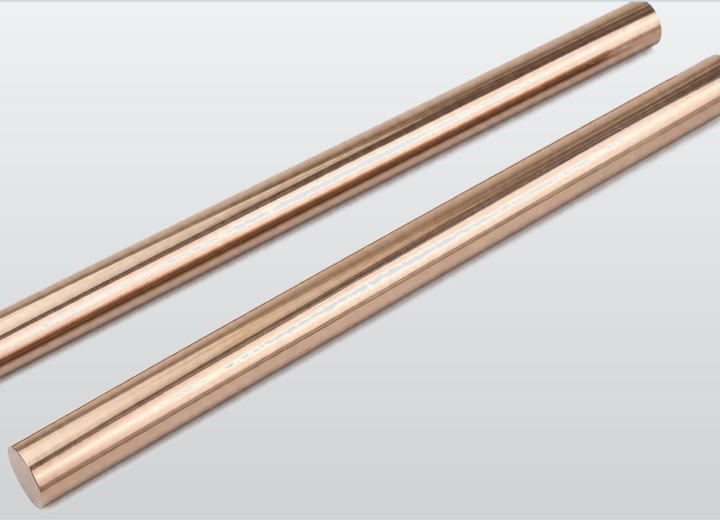
For buyers comparing pipe cutter copper options, document the tube specification rather than ordering by a generic phrase. Keep tube work separate from solid copper procurement; DONGYAO’s solid copper rod information is relevant to rod selection, not proof that a rod can replace tube.
| Application | Cutting concern | Decision |
|---|---|---|
| HVAC or refrigeration | Residual pressure, refrigerant, oil, contamination, ignition. | Use approved isolation and recovery; obtain the proper cutter if safety cannot be verified. |
| Plumbing repair | Water, movement, access, and existing fittings. | Drain and support the line; preserve the next joint’s geometry. |
| Panel or equipment assembly | Nearby conductors, swarf, enclosure damage, repeatability. | Prefer a controlled bench cut and protect the assembly. |
| High-volume production | Operator variation and traceable quality checks. | Specify the correct production tool or process, not a field workaround. |
Which standards and safety controls should govern copper pipe cutter work?
Use the Copper Tube Handbook for tube preparation and joining guidance, and follow instructions for each tool and fitting system. These references do not certify an improvised cut.
OSHA 29 CFR 1910.147 provides a lockout/tagout framework for hazardous energy. In the United Kingdom, PUWER addresses work equipment. NFPA 70, where adopted, governs electrical installation within its scope. Market, authority, equipment state, and intended use determine what applies.
A poor cut can create rework, leakage, inspection failure, or a warranty dispute. Where traceability is required, record isolation, tool choice, cleaning, inspection, and joint acceptance.
What should procurement teams document before ordering a copper pipe cutter?
Use this five-question selection guide:
- Is the workpiece copper tube, and what are its diameter, wall condition, temper, and joint type?
- Can the line be isolated, depressurized, drained, and verified before cutting?
- Is there enough clearance and support for the selected tool?
- What will receiving or field inspection check: dimensions, visual condition, cleanliness, or fit-up?
- When must the installer stop and obtain the correct tool or specialist service?
DONGYAO supports industrial electrical component sourcing, while the installer and designer control cutting and joining. The applications overview places a copper component in its intended system; a T2 copper block reference separates solid-component material discussions from tube-tool selection. For documentation and sourcing questions, use the copper pipe cutter selection support route.
What do buyers ask about a copper pipe cutter?
What is a copper pipe cutter?
A copper pipe cutter is a wheel-and-roller hand tool that scores around copper tube to create controlled separation. It differs from a hacksaw, which removes material across the tube in an open kerf. The end still needs inspection and deburring.
Why use a tubing cutter instead of a general saw?
A tubing cutter is generally selected for repeatable geometry and limited loose swarf. A fine-tooth saw can work on an isolated, supported tube, but creates more opportunity for wandering, burrs, filings, or deformation.
How does a copper pipe cutter work?
The wheel is adjusted against the tube, the tool is rotated around it, and the wheel is advanced gradually until the wall separates. Excessive tightening can distort the tube; follow the instructions and deburr and clean the end.
What is a standard adjustable pipe cutter?
It is a cutter with an adjustable wheel and guide rollers intended for a stated range of tube sizes. “Standard” is not a universal certification claim; verify range, wheel type, clearance, and compatibility. The phrase cutter pipe copper does not replace those checks.
What is a mini copper pipe cutter?
It is a compact cutter for smaller tubes or restricted spaces. Its range and access are limited by design, so confirm fit, rotation space, and tube condition.
In procurement searches, pipe cutter copper may describe the same category, but the actual tube diameter, wall condition, and available clearance determine whether the tool is suitable.
References
- Copper Development Association, Copper Tube Handbook
- Klein Tools, Professional Mini Tube Cutter
- OSHA 29 CFR 1910.147, control of hazardous energy
- UK HSE, PUWER work equipment requirements
- NFPA 70, National Electrical Code landing page
A workaround is acceptable only when the system is safe to open, the tube is supported, the cut can stay square, and the end can be deburred, cleaned, and inspected. Cut for the joint you must make, not merely for the separation you can achieve. When pressure, access, ignition, contamination, or repeatability cannot be controlled, stop and obtain the correct tool.
For copper material and sourcing questions, contact DONGYAO with the tube or component specification, application, and required documentation.
For related conductor products, view the product categories.