When a field service supervisor in Suzhou encountered a loose cable transition during a panel repair, he measured the joint, cut a sleeve, and heated it in place. The sleeve wrinkled, its edge pulled away, and the jacket showed a glossy mark within seconds. This illustrative scenario is not a customer case study: selection and process control—not a defective product—were the root causes.
How do you select heat shrink tubing before cutting and installation?
Heat shrink tubing is a recoverable polymer sleeve used to insulate, protect, bundle, identify, or strain-relieve cable and connector transitions. It is not universal repair tape: wall thickness, recovery ratio, recovered diameter, flexibility, chemical resistance, and flame behavior vary. In production, treat it as one part of a defined process alongside the conductor, terminal, connector, enclosure, and inspection record.
Start with the largest dimension the sleeve must pass over, then compare it with the supplied diameter and recovery ratio. A nominal 2:1 sleeve can reduce to roughly half its supplied diameter under specified conditions; 3:1 can cover a wider step. These ratios do not guarantee final wall thickness or fit. Measure the largest point, confirm the minimum recovered diameter, and allow coverage without stretching the sleeve.
Define temperature, voltage, abrasion, oils, solvents, moisture, UV exposure, and whether a label must remain visible. Heat shrink tubing chosen only by color or diameter can fail if the wall is too thin, adhesive is absent where sealing is needed, or the polymer conflicts with the cable jacket. For visibility, compare optical and electrical data for clear heat shrink tubing; a clear appearance does not identify a resin or flame class. Confirm that the clear heat shrink tubing remains legible after recovery and cleaning.
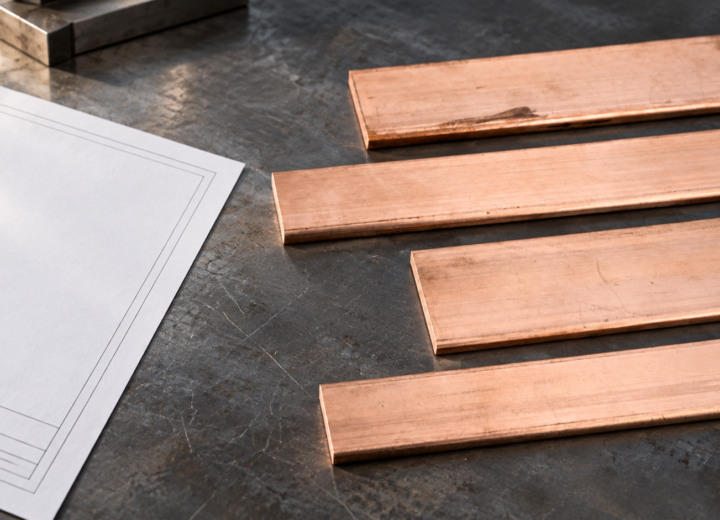
Request the datasheet, lot traceability, recovery conditions, and evaluation report. UL 224 can apply to a specified extruded insulating-tubing construction, but citing it is not blanket certification for an assembly. For a copper interface, map sleeve clearance and creepage to the drawing and review DONGYAO’s copper plate applications or copper busbar interfaces.
How should you cut and position heat shrink tubing without damaging the cable?
Use a clean, sharp blade or tubing cutter and make a square cut. A ragged diagonal edge concentrates stress and can expose a sharp corner after recovery. Measure the required finished coverage, add the specified overlap or strain-relief allowance, and cut one test piece before releasing a batch. For an illustrative 100 mm transition, a drawing might call for 20–30 mm of coverage beyond the transition on each side; that is a design example, not a universal rule.
Before heating, slide the sleeve over cool, dry surfaces. Confirm passage over the largest feature, then center it with the intended overlap visible at both ends. Keep it away from hot solder joints, sharp terminal edges, and moving mechanisms unless the datasheet supports those conditions. If the fit is tight, select a different supplied diameter or ratio; pulling the material lengthwise changes recovered coverage and can leave a thin spot.
For a repeatable line, record cut length, orientation, station, and fixture setting. A 100% visual check is inexpensive; if the assembly is safety-critical, pair it with the test named on the drawing. A sleeve can look neat while a terminal remains under-crimped, so this operation cannot replace workmanship inspection. With clear heat shrink tubing, confirm that marks remain readable rather than relying on appearance alone.
How can you heat heat shrink tubing evenly and control the result?
Use a calibrated hot-air tool when controlled heating is required. Set it within the supplier’s range, begin at one end, and move continuously around the circumference toward the other. Many products start recovering around 90–120°C, but onset, full recovery, dwell time, and maximum exposure vary; the datasheet and cable-jacket limit take priority. A naked flame adds soot, hot spots, and ignition risk unless an approved process permits it.
Heat the sleeve—not the conductor—until it recovers uniformly. Bubbles, splits, char, displaced adhesive, or a jacket gloss change signals excessive heat, contamination, or incompatibility. Let the assembly cool without movement, then check the ends. If adhesive-lined heat shrink tubing is specified, allow adhesive flow as instructed; do not infer a seal from a visible bead.
IEC 60695-11-10 describes a 50 W flame test method and classification approach for certain plastics; it does not prescribe the installation temperature for a sleeve and does not prove that a heated assembly is fire-safe. Keep the hot-air station away from flammable cleaners and use ventilation appropriate to the material. For workplace controls, OSHA guidance on heat and ignition hazards may apply in the destination facility, but the employer’s risk assessment and local rules determine the operating procedure.
How do you inspect clear heat shrink tubing after recovery?
Inspect the complete 360° circumference under consistent lighting. Look for full contact where specified, a smooth transition at both ends, no split, exposed conductor, debris, or movement when the work instruction calls for a light manual check. Clear heat shrink tubing can help an operator view an underlying label or joint, but transparency does not remove dimensional, insulation, or void checks.
Compare the recovered length and diameter with the drawing or approved sample, and record the tool setting, batch, and inspection result when traceability is required. Do not accept a sleeve solely because it looks tight: the required dielectric withstand, insulation resistance, tensile, flammability, or environmental test belongs to the product specification and risk assessment. UL 224 may support a tubing evaluation, but its scope and conditions must be checked in the actual supplier documentation.
Reject and rework when the sleeve is off-center, cut into the cable, overheated, under-recovered, contaminated, or unable to cover the specified transition. Rework should use a new sleeve unless the approved procedure explicitly allows another method; reheating a damaged polymer can conceal the defect rather than restore the original performance.
How should a buyer compare heat shrink tubing options and document the job?
The lowest unit-cost option is not always lowest total cost. Consider application time, scrap, rework access, field replacement, documentation, and the consequence of hidden insulation failure. Use the matrix for supplier review; confirm every property against a current datasheet and intended end use.
| Option or decision | Useful strength | Trade-off to manage | Typical verification |
|---|---|---|---|
| Standard recoverable sleeve | Simple insulation, bundling, and color identification | May not seal against moisture or accommodate a large step | Ratio, recovered wall, temperature window, visual fit |
| Adhesive-lined construction | Can support a specified environmental seal when correctly processed | More heat, clean-up, and process control may be required | Adhesive flow, end seal, jacket compatibility |
| High-ratio construction | More tolerance for a connector-to-cable diameter change | Recovery and wall-thickness limits still govern the result | Largest pass-over dimension and minimum recovered diameter |
| Transparent sleeve | Can preserve visibility of an underlying marking or joint | Optical clarity does not establish flame, voltage, or chemical performance | Viewing requirement plus electrical and environmental tests |
Stage-by-stage dimension check. Use the following matrix to turn the process into measurable acceptance points:
| Stage | Dimension to control | Evidence to retain | Failure signal |
|---|---|---|---|
| Select | Supplied diameter, recovered diameter, ratio, wall, environment | Approved datasheet and drawing revision | Sleeve cannot pass over the largest feature or cannot recover onto the smallest feature |
| Cut | Square ends and finished coverage allowance | Cut-length sample or gauge record | Diagonal, nicked, crushed, or contaminated edge |
| Position | Centerline and end overlap | Pre-heat visual check | Sleeve slides during heating or leaves an uncovered transition |
| Heat | Tool temperature, movement, dwell, and jacket limit | Station setting and operator instruction | Bubbles, split, char, adhesive displacement, or jacket gloss |
| Inspect | 360° coverage, recovered profile, cleanliness, and movement | Inspection result and any required test report | Void, exposed conductor, off-center sleeve, or unverified claim |
Standards and safety. IEC 60695-11-10 concerns flame testing and classification; UL 224 concerns extruded insulating tubing and its conditions of evaluation. RoHS and REACH address chemical-substance restrictions and communication duties in applicable markets, but they do not certify installation workmanship. A supplier declaration, test report, or certification mark must identify the exact product, construction, conditions, and destination-market scope. For clear heat shrink tubing, request evidence for the exact construction rather than relying on appearance.
For procurement, request the current datasheet, compliance declaration, lot traceability, and limitations. Do not write “UL certified,” “RoHS approved,” or “fireproof” unless evidence supports that exact claim. OSHA requirements may govern worker exposure, hot tools, ventilation, and ignition controls in the United States; they are workplace rules, not a material label. Apply local law and the customer’s specification before shipment.
Procurement actions. At the sourcing decision, use these practical steps:
- Measure the actual assembly, including the largest connector or terminal, and state the recovered diameter, wall, length, and ratio required.
- State the environment and performance need—temperature, voltage, chemicals, abrasion, moisture, visibility, flame behavior, and any copper interface—rather than ordering by color alone.
- Approve a sample installation with the actual cable jacket and tool, then define cut, centering, heating, cooling, and inspection acceptance points.
- Keep the supplier evidence with the revision-controlled drawing; distinguish a test result or declaration from a certification that covers the exact product.
DONGYAO can be considered at this decision point when a buyer needs configurable component sourcing or documentation support. Review the relevant heat shrink tubing selection with the intended assembly details, and ask for the evidence needed by the project rather than assuming a generic material will fit every interface.
Frequently asked questions
What temperature does heat shrink tubing need to shrink?
Many general-purpose products begin recovering around 90–120°C, but the required tool setting and full-recovery condition depend on the product datasheet, wall, ratio, and cable-jacket limit. Use controlled hot air and a calibrated process where repeatability matters; never substitute a generic temperature for the supplier’s instructions.
Is there clear heat shrink tubing?
Yes, transparent constructions are available for applications that need visibility of a label, splice, or underlying component. For clear heat shrink tubing, confirm optical clarity, recovered wall, temperature, electrical, chemical, and flame data separately; “clear” describes appearance, not a universal performance class.
What is the required shrink ratio for heat shrink tubing?
Choose a ratio that lets the supplied sleeve pass over the largest feature and recover onto the smallest required diameter; common nominal choices include 2:1 and 3:1. The correct value is determined by the measured assembly and the product’s minimum recovered diameter, not by ratio alone.
Can you cut heat shrink tubing and still use it?
Yes, provided it is cut squarely to the approved length and the cut does not nick, split, crush, or contaminate the material. Recheck coverage after cutting and discard any piece that cannot meet the drawing, overlap, or inspection criteria.
References
- IEC 60695-11-10, fire hazard testing: 50 W horizontal and vertical flame test methods
- UL 224, extruded insulating tubing standard
- European Commission: REACH regulation
- European Commission: RoHS Directive
- U.S. Government Publishing Office: 29 CFR Part 1910, General Industry
Need help matching a protective component to a cable, plate, or busbar interface? Contact DONGYAO with the assembly dimensions, environment, and documentation requirements so the next sourcing decision starts with evidence.
For related conductor products, view the product categories.