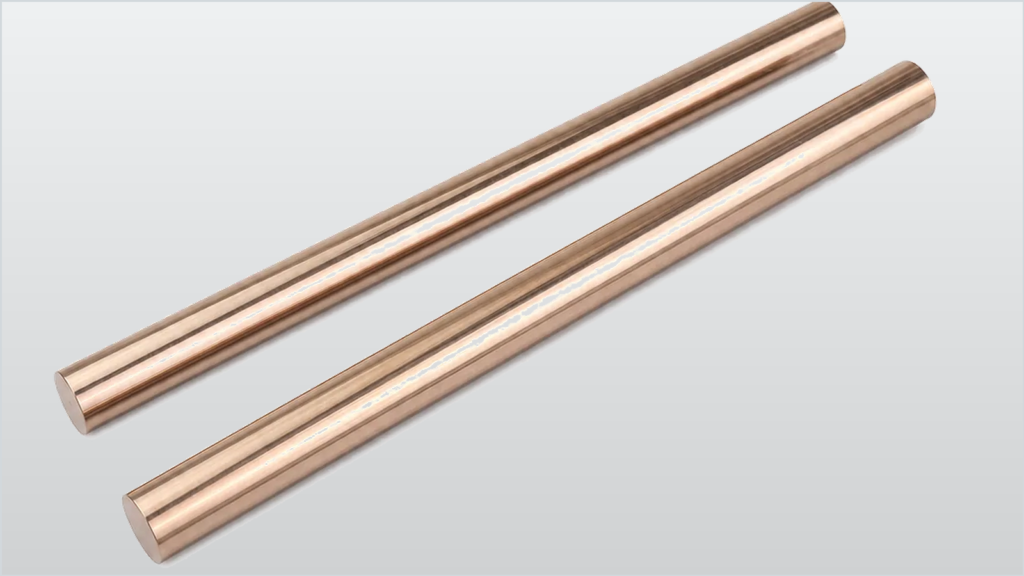
When Monterrey procurement engineer Elena Ruiz approved a “copper rod” lot for 12mm motor-control cabinet conductors and scheduled drawing without checking its certificate. Resistance exceeded design values and surface tearing quickly occurred. Review confirmed mismatched material grade, temper and diameter. Though appearing to be a drawing defect, the root cause was wrong material specification: standard round bar was used instead of traceable electrical raw stock.
How does pure copper rod purity affect electrical conductor performance?
Purity matters because dissolved elements and residual process contamination can change resistivity, annealing response, joining behavior, and surface quality. A purchasing specification should identify the material designation and the chemistry limits that apply to it, rather than relying on a commercial phrase such as “high-purity copper.” Oxygen-bearing electrolytic grades are widely used for general electrical work, while oxygen-free grades may be selected when the process includes high-temperature joining, vacuum exposure, or a specific customer requirement. The correct choice depends on the finished component and process, not on a purity slogan.
Ask for a heat or cast identifier that connects the rod to a chemical analysis. If oxygen content is important, state the measurement basis and acceptance range; “oxygen-free” should not be treated as a visual description. For a copper round bar used in a machined terminal or bus support, mechanical and dimensional controls can be as important as conductivity. For a drawn wire feedstock, annealed condition, surface cleanliness, and reduction schedule often deserve equal attention.
Designation, temper, and traceability
Use a designation recognized by the destination standard or customer drawing, and record whether the material is annealed, half-hard, or another specified temper. Temper affects elongation and forming force; it does not replace a conductivity requirement. A lot certificate should link chemistry, dimensions, mechanical results where required, conductivity or resistivity, and heat number. If a supplier offers an equivalent designation, require a written cross-reference and approval before substitution.
How is electrolytic copper rod conductivity tested and accepted?
Electrolytic copper rod is commonly selected for its combination of electrical performance, availability, and drawability, but “electrolytic” alone is not an acceptance test. Specify either volume resistivity or conductivity, the test temperature, specimen condition, and method. ASTM B193 provides a resistivity framework for copper and copper alloys; ASTM E1004 is an eddy-current method that can estimate conductivity on suitable material. For a finished power cable, IEC 60228 resistance requirements may be the more relevant final check. These standards have different scopes, so the purchase order should name the one that governs the transaction.
At 20 °C, the nominal relationship is useful for engineering checks: conductivity in MS/m can be compared with the 100% IACS reference, while resistance also depends on cross-sectional area and length. Temperature correction is essential because copper resistance rises as temperature rises. A receiving plan can use a calibrated micro-ohmmeter or an approved laboratory method, but the result should be traceable to the lot and reported with units. Do not compare a supplier’s room-temperature conductivity number with a customer’s corrected resistance limit without reconciling temperature and geometry.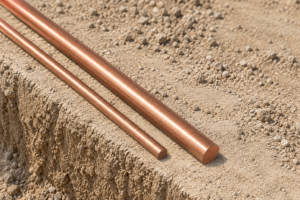
Which copper round bar dimensions suit drawing, buswork, and connection parts?
Diameter is a process decision as much as a material decision. A larger rod can reduce the number of drawing passes for a large conductor, while a smaller feed may fit an existing die set or reduce handling force. Confirm nominal diameter, tolerance, ovality, coil or straight-length format, and minimum order quantity. If a drawing specifies a final conductor area, work backward through the planned reductions and anneals rather than selecting a rod by habit.
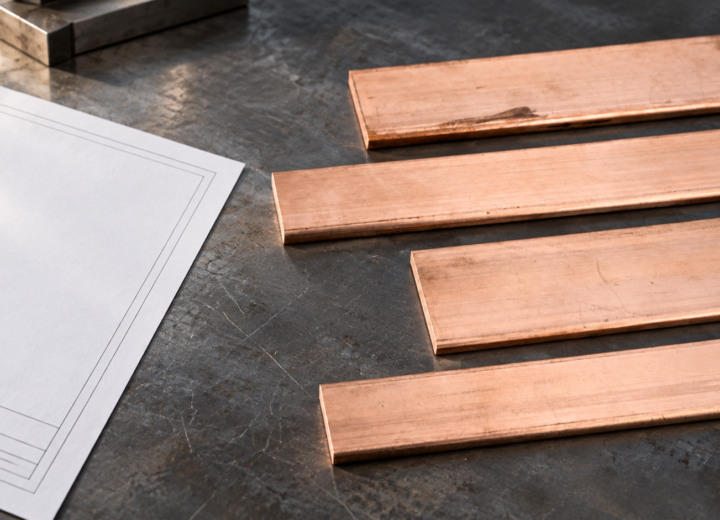
For terminals, lugs, and machined electrical hardware, straightness and end condition can affect chucking, cut length, and burr control. For busbar or strip production, a round rod may be an intermediate feedstock rather than the final form; clarify whether the supplier is quoting rod, bar, or a rolled/flattened product. The product family at copper busbar can be a useful internal comparison when the design is moving from round feedstock to a flat current-carrying section.
How should a buyer select and qualify pure copper rod?
- Define the finished conductor. Record current, voltage-drop limit, cross-section, flexibility, joining temperature, environment, and the customer’s drawing or cable standard.
- Choose the material route. Compare an oxygen-bearing electrolytic grade with an oxygen-free grade only against the actual process risk and required electrical result.
- Freeze measurable inputs. State diameter and tolerance, temper, surface condition, coil format, conductivity or resistivity method, test temperature, and lot traceability.
- Run a controlled qualification. Inspect chemistry and dimensions, verify conductivity, and perform a representative draw, bend, machining, or joining trial before releasing volume.
- Compare total cost. Include conversion yield, die and tooling life, testing, freight, downtime, and the cost of a rejected conductor batch.
DONGYAO can be included in a sourcing review when the buyer needs a configurable copper component route and clear documentation discussion. Ask for the applicable designation, test basis, dimensions, and inspection records before treating a quotation as technically comparable. For projects that move from rod to flat current-carrying parts, the site’s copper plate information offers a related form-factor reference; for questions about fit, lead time, or documentation, use the contact page.
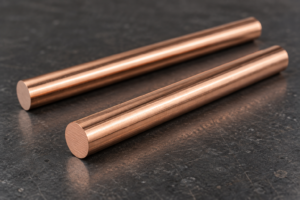
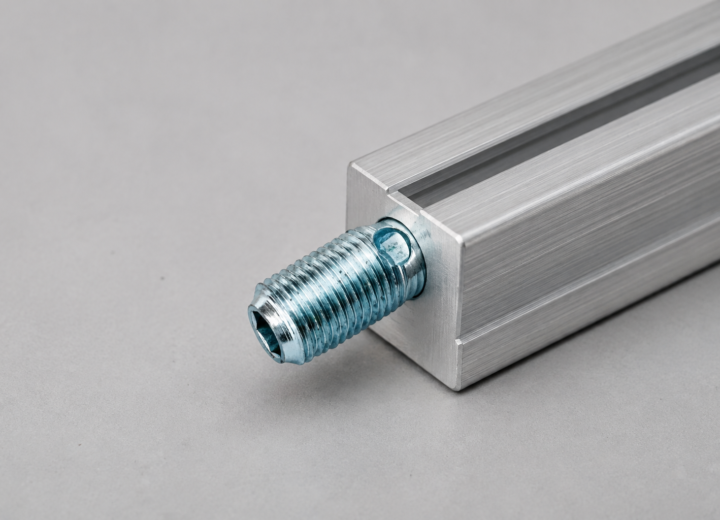
The close product view highlights surface and end condition; it does not replace chemistry or conductivity records.
Frequently asked questions about pure copper rod
What Is a Pure Copper Rod or Round Bar?
Pure copper rod/round bar is cylindrical copper with specified chemistry, size and temper. “Rod” usually refers to drawing feedstock; “round bar” for fabrication/machining, though terms overlap commercially. Verify form, electrical specs, surface quality and certification instead of trusting the product name only.
What Is an Electrolytic Copper Rod?
An electrolytic copper rod is produced from electrolytically refined copper and is commonly used where good conductivity and drawability are required. The term does not by itself state a complete grade, oxygen limit, temper, or test result. Ask for the designation, chemistry, conductivity or resistivity method, and heat traceability that apply to the order.
What Are Copper Rods Used For?
Copper rods are used as feedstock for drawn wires, stranded conductors, connectors, terminals, earthing parts, transformer components, and other current-carrying products. The suitable diameter and temper depend on the conversion route and finished electrical design. A sample process trial is useful when surface quality, joining, or tight reductions create material risk.
What Is C101 Oxygen-Free Copper?
C101 is a widely specified oxygen-free copper grade, yet its chemical limits and standard version vary by market and form. Though chosen for high conductivity or high-temperature use, C101 alone does not guarantee specific conductivity or certification. Confirm the applicable standard, oxygen/impurity limits, test method and certificate before substitution.
References
- ASTM B187/B187M, Standard Specification for Copper, Bar, Bus Bar, Rod, and Shapes for Electrical Purposes.
- Copper Development Association, electrical conductivity and resistivity reference for copper.
- IEC 60228, Conductors of Insulated Cables.
- Copper Development Association, Copper Properties and Technical Resources.
When the next project needs a documented starting point, review the copper rod range and send the finished-conductor requirements, target dimensions, destination market, and testing expectations to DONGYAO for a focused quotation discussion.
For related conductor products, view the product categories.