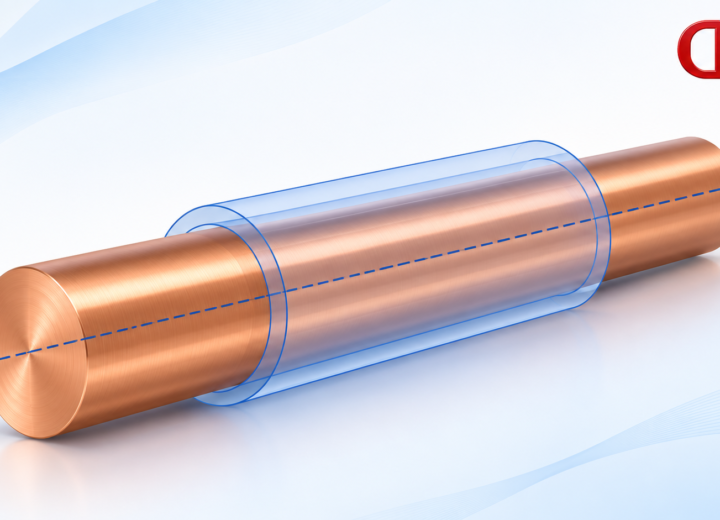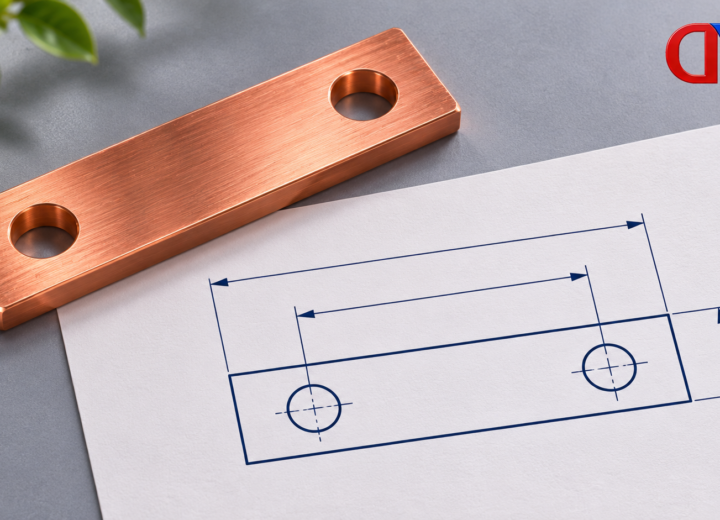
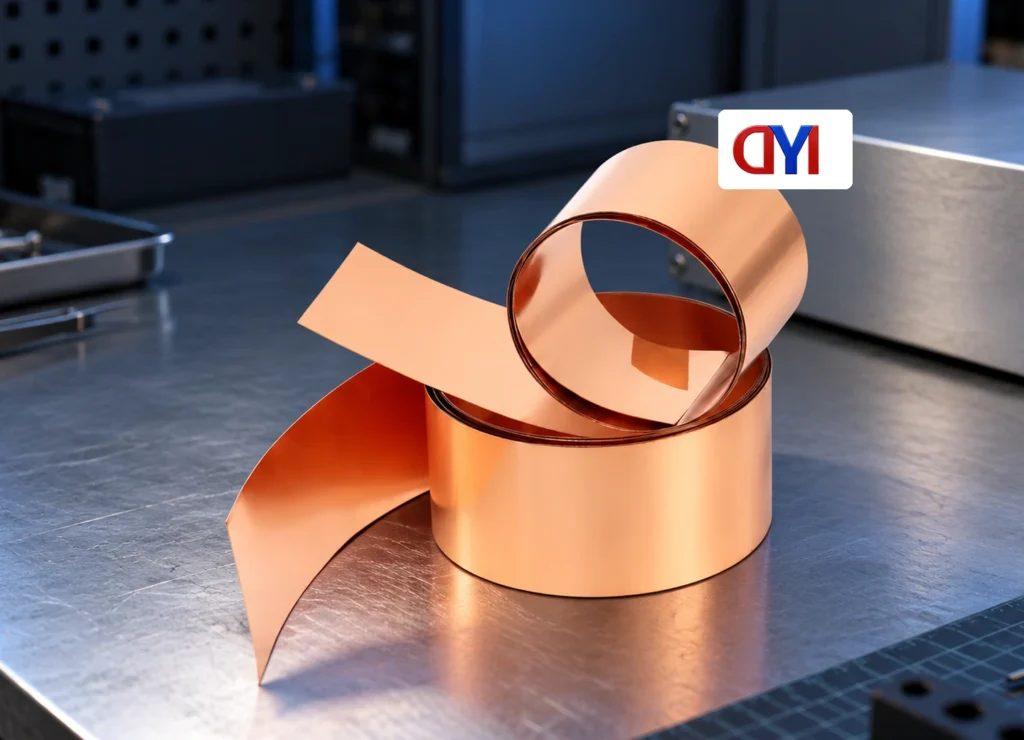
When an electronics buyer in Cambridge, Elena, encountered an enclosure that still failed its emissions test after a copper lining was added, thicker foil seemed the obvious next order. In this illustrative scenario, the critical issue was the seam and enclosure interfaces. The purchasing decision needed to include the complete shielding arrangement.
Summary: Purple copper foil is a commercial description, not a complete purity or shielding specification. Separate metal thickness, width, supply process and any adhesive system. ASTM D4935 measures planar-material shielding under defined conditions; its stated 30 MHz–1.5 GHz range does not turn a foil coupon result into a finished-enclosure rating.
Translate the material name into a verifiable order
“Purple copper” commonly refers to commercially pure copper in Chinese trade terminology. It does not mean that the metal should look purple, nor does it identify a unique international grade. Ask for the recognized material designation, composition requirements, temper or condition, and applicable product specification.
ASTM B152/B152M distinguishes several copper types for sheet, strip and related flat products, including C10100 oxygen-free electronic copper and C11000 electrolytic tough-pitch copper. That distinction matters when the process requires a specific grade. Confirm whether the chosen specification actually covers the ordered foil form and thickness; do not apply a flat-product standard beyond its scope.
The same caution applies to purity claims. A numeric minimum belongs to an identified grade and material record. Visual inspection can detect damage, discoloration or wrinkles, but it cannot establish chemistry. A supplier photograph should be used to identify appearance, not to prove purity or shielding effectiveness.
Bare foil, tape and production method
| Supply form | What is being purchased | What needs separate confirmation |
|---|---|---|
| Bare foil | Metal without an adhesive system | Grade, thickness, width, condition and surface |
| Adhesive foil tape | Foil plus adhesive and possibly release liner | Metal thickness, total thickness and adhesive conductivity |
| Rolled foil | Foil produced through rolling operations | Directional and forming requirements for the application |
| Electrodeposited foil | Foil produced by electrodeposition | Surface sides, treatment and specified mechanical requirements |
An adhesive tape can be easy to position but may create a different seam resistance from a bare-metal joint. “Copper tape” does not establish that the adhesive conducts through its thickness. Obtain the tape manufacturer’s construction and test information when that behavior matters.
For repetitive flexing, describe the actual bending duty rather than assuming that one manufacturing route guarantees life. The finished assembly, bend radius, foil condition and interfaces all affect the result. Qualify the construction using a representative trial.
Specify thickness and width without mixing units
A useful RFQ separates nominal metal thickness, its tolerance, usable width, width tolerance, coil length and any splice allowance. State the units on every dimension. For example, 0.05 mm equals 50 µm; confusing 0.05 mm with 0.05 µm creates a thousandfold difference. This is a unit-conversion example, not a recommended shielding thickness.
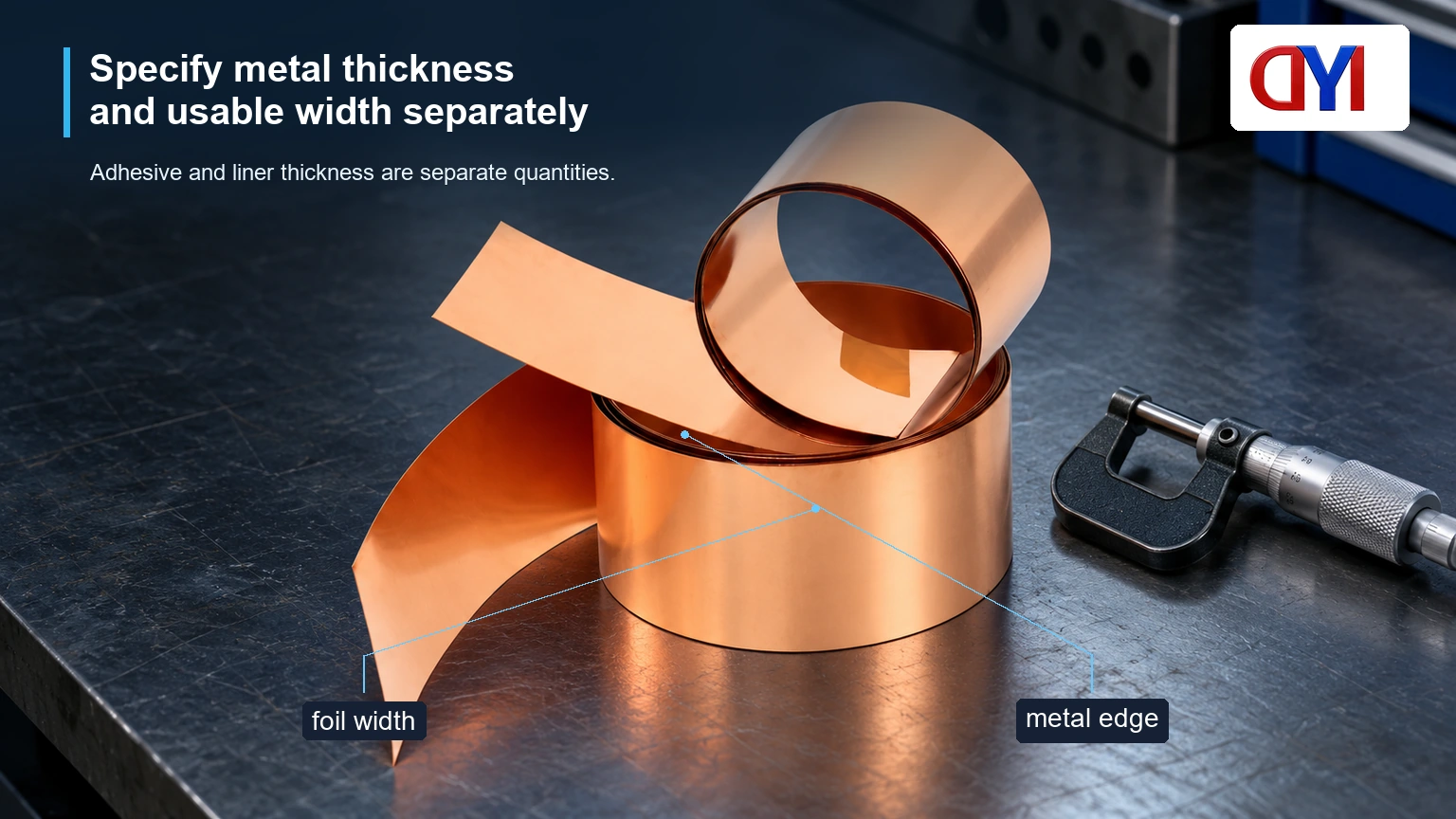
Measurement pressure, instrument resolution and sample condition matter for very thin stock. Agree on the method and sampling points with the supplier. If adhesive tape is ordered, do not accept a total-thickness measurement as proof of the copper layer thickness. ASTM B193 can support material resistivity assessment where its specimen requirements are applicable, but a conductivity result does not establish coating, adhesive or seam performance.
Treat seams and openings as part of shielding
A continuous sheet and a practical enclosure are different test objects. Overlaps, joints, apertures, cable entries and connections to the enclosure can govern the system result. Adding copper without controlling these interfaces may leave the original leakage path essentially unchanged.
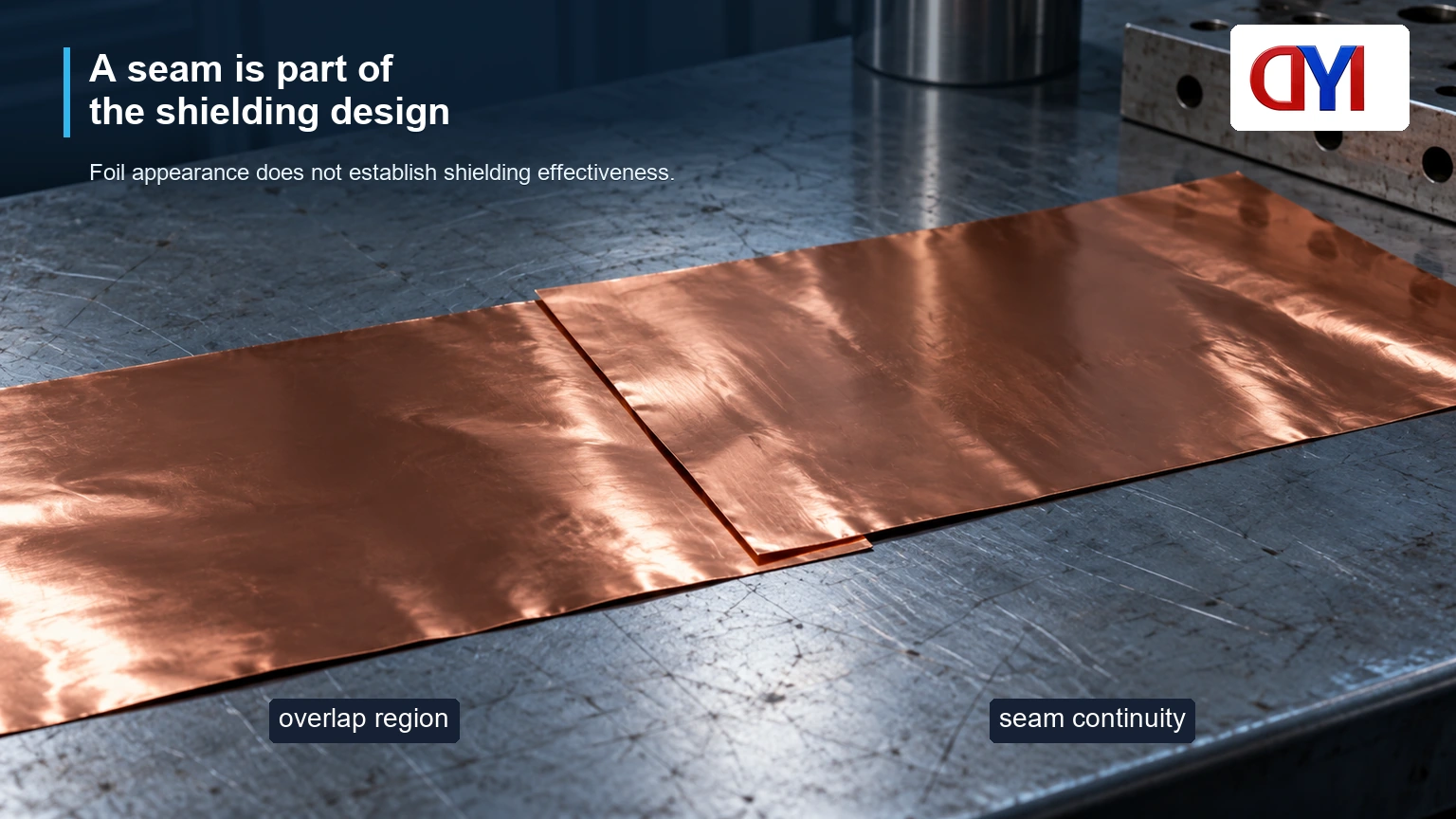
ASTM D4935-18(2026) describes a planar-material test under normal-incidence, far-field conditions and specifies a method range of 30 MHz to 1.5 GHz. A report should identify the specimen, fixture, frequencies and measured result. It is not a universal approval for magnetic shielding, every frequency or a complete device.
| Application detail | Specify before ordering | Evidence needed |
|---|---|---|
| Foil material | Grade, condition and manufacturing route | Material and dimensional records |
| Seam | Overlap geometry and joining method | Representative continuity and shielding assessment |
| Adhesive tape | Copper layer and adhesive behavior | Manufacturer construction and relevant test data |
| Enclosure interfaces | Openings, cable entries and bonding arrangement | Finished-assembly evaluation |
The economic comparison should include handling, scrap from damaged foil, seam labor and retesting. A low price per roll may be outweighed by difficult installation or inconsistent seam preparation. Compare cost per accepted enclosure using project-specific quotations, not an assumed shielding improvement.
Selection and compliance checks
- Define the interference problem, frequency range and equipment test requirement.
- Specify material grade, metal thickness, width and surface condition.
- Resolve seams, adhesives and enclosure connections before the production order.
- Review material records and test the representative finished construction.
DONGYAO lists ultra-thin copper foil as a material supply option. Confirm the exact thickness, process and documentation offered. The existing copper foil purchasing guide provides additional sourcing context; neither a catalog listing nor a test-method reference is product certification.
Frequently asked questions
What does purple copper mean?
It is a trade description commonly used for commercially pure copper. It does not define one grade or guarantee a particular purity. Translate it into a recognized designation and a material record.
What are copper foils used for?
Uses include electrical, electronic and shielding-related constructions. The suitable foil depends on thickness, condition, surface and the finished application. A material suited to one use is not automatically qualified for another.
What are the different types of copper foil?
Buyers distinguish rolled and electrodeposited foil, as well as bare foil and adhesive-backed products. These categories describe different aspects of manufacture and supply. Specify each relevant characteristic separately.
Is copper foil real copper?
Bare copper foil should be copper through the specified metal thickness, but a trade name alone is insufficient evidence. Request composition and product records. Copper-colored coatings and laminates should be identified separately.
How is bare copper foil different from adhesive copper foil tape?
Bare foil has no adhesive system. Tape adds adhesive and may include a removable liner, changing handling and total thickness. Adhesive conductivity must be verified for the intended joint.
What thickness and width information is needed when ordering copper foil for shielding?
State nominal metal thickness and tolerance, usable width and tolerance, length or coil quantity, and surface requirements. For tape, specify the adhesive and total construction separately. Tie the choice to the tested shielding design.
References
- ASTM B152/B152M: copper flat-product material distinctions
- ASTM D4935-18(2026): planar-material shielding test
- ASTM B193-25: conductor resistivity test
Specify the foil as material and validate the shield as an assembly. Contact DONGYAO with the grade, dimensions and intended construction for a documented quotation.
For related conductor products, view the product categories.