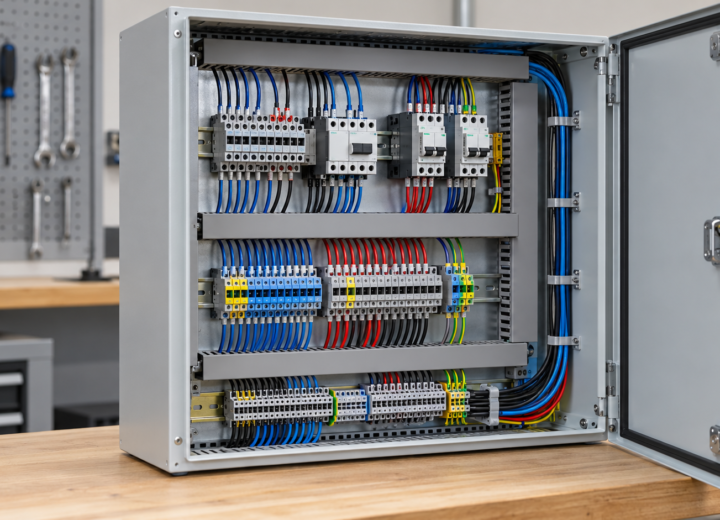
When Li Wei, a switchgear engineer in Suzhou, released a machined contact plate for a 90-minute load test, the joint discolored and exceeded its temperature limit. A material review reversed the diagnosis: it was copper-plated steel, not the specified solid copper grade, so machining exposed a weak current path. This is a selection and traceability problem before it is a machining problem.
Summary: A round copper plate for industrial use should be quoted by grade, temper, diameter, thickness, flatness, edge condition, and inspection evidence rather than by appearance alone. ASTM B152/B152M is a common product specification for copper sheet, strip, plate, and circles, while electrical service still requires a defined conductivity or resistance test. Lock the material and acceptance criteria before cutting, then request heat or lot traceability and a report that matches the delivered part.
How does a round copper plate carry heat and current in industrial service?
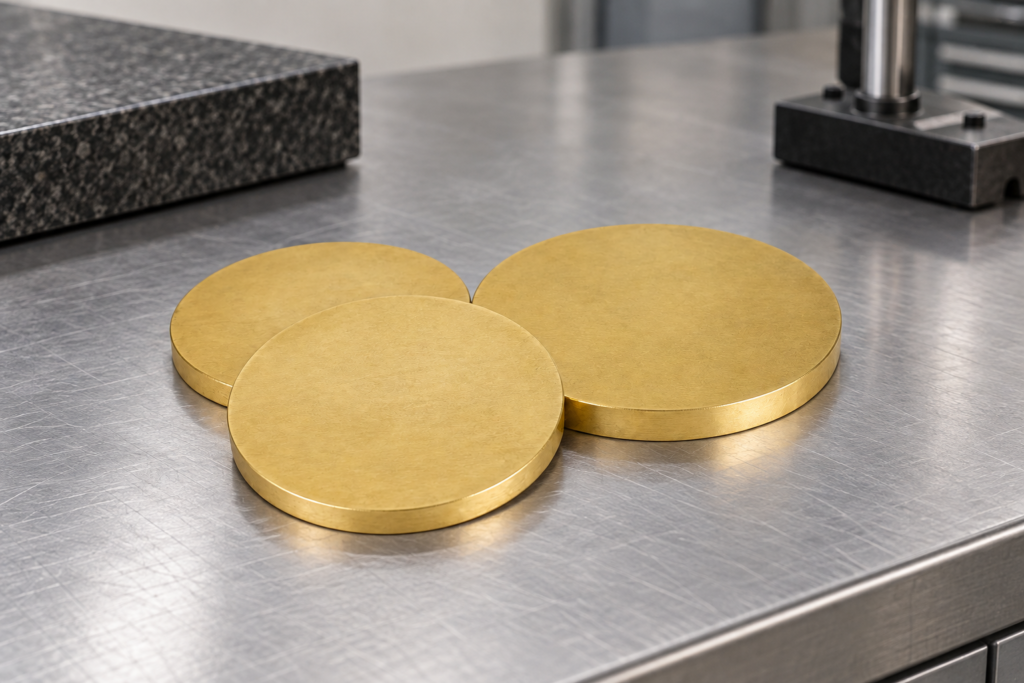
In a busbar joint, grounding interface, heat spreader, or contact assembly, bulk resistivity affects I²R loss, thermal conductivity affects heat removal, and surface condition affects contact resistance. A Round copper plate performs well only when grade, temper, thickness, and clamping suit the duty; visually similar brass or plated steel can behave differently. The Copper Development Association’s Copper 101 reference helps separate properties from marketing descriptions.
Specify current, duty cycle, temperature-rise limit, mating material, joining method, atmosphere, roughness, flatness, and any plating layer. Use a defined resistance or conductivity method on a sample; color is not a material test.
How does copper plate geometry change machining and joining?
Diameter and thickness control stiffness, drilling depth, heat flow, and bolt engagement. A copper plate that is too thin may dish during clamping or brazing; excessive stock adds machining time. Put finished dimensions, tolerances, hole position, finish, and blank-versus-finished size on the drawing.
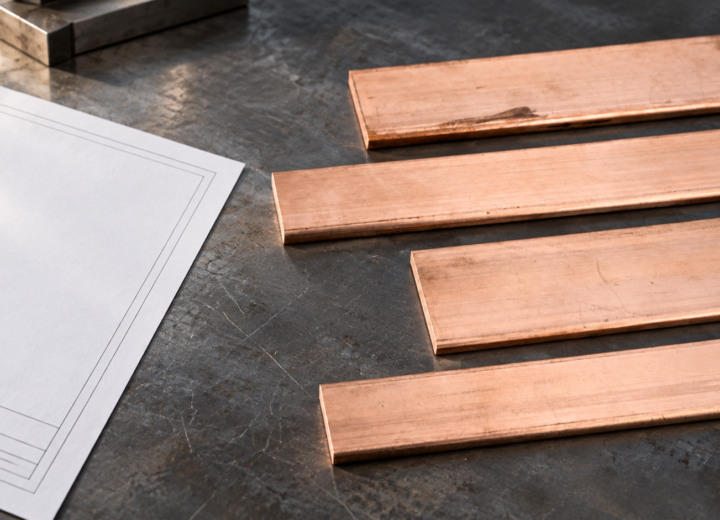
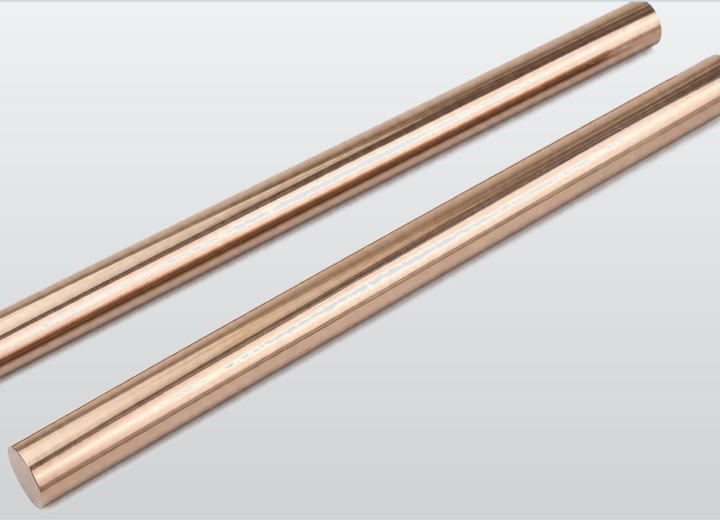
For CNC turning, milling, drilling, or punching, confirm temper and tooling before production. Inspect diameter, thickness, flatness, hole location, and burr height; use CMM or optical inspection when fit depends on position. DONGYAO’s copper plate and copper rod pages are sourcing examples, not lot certification.

How do solid copper, copper alloy, and plated substrates compare?
Choose construction around the electrical, thermal, mechanical, and environmental requirement. Final acceptance should use the drawing, purchase specification, and test evidence.
| Construction | Electrical and thermal service | Machining and durability | Verification focus |
|---|---|---|---|
| Solid copper | Low resistance and high heat transfer; grade and temper still matter. | Predictable machining when temper is known; may oxidize. | Grade, temper, conductivity/resistance, dimensions, lot traceability. |
| Copper alloy | Trades some conductivity for strength, wear, spring, or corrosion performance. | Useful for threaded, sliding, or loaded features. | Alloy designation, temper, mechanical data, composition. |
| Copper-plated substrate | Conductive surface, but paths depend on substrate, coating thickness, and continuity. | Damage, edge exposure, and mismatch can change service behavior. | Substrate, plating thickness/adhesion, cross-section, continuity test. |
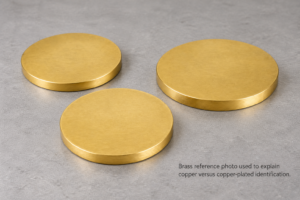
A magnet test is not sufficient: copper and most copper alloys are non-ferromagnetic, while plating may hide a substrate. When identity is disputed, request records and use XRF, conductivity, cross-section, or laboratory chemistry as required.
Which dimensions and standards should procurement lock before quoting?
Put application and acceptance logic in the RFQ so the supplier quotes a finished component rather than ambiguous stock.
| Application | Dimensions to define | Process and acceptance notes |
|---|---|---|
| Electrical contact/busbar | Diameter, thickness, holes, flatness, contact area. | Current, duty, temperature rise, conductivity/resistance, burr limit. |
| Thermal spreader | Diameter, thickness, parallelism, roughness, mounting. | Heat load, interface, distortion, thermal test method. |
| Machined insert/terminal | Blank allowance, profile, threads, counterbores, position. | Temper, edge condition, torque/pull-out, inspection record. |
| Outdoor/corrosive assembly | Exposed area, joint, coating thickness, drainage. | Atmosphere, mating metals, cleaning, corrosion test, packaging. |
ASTM B152/B152M covers copper sheet, strip, plate, and circles; it does not approve every electrical assembly. ASTM B193 covers conductor resistivity and ASTM E8/E8M tensile testing; ISO 9001 describes quality management, not material grade. RoHS/REACH declarations depend on destination, scope, and evidence.
How can buyers verify copper plate material, traceability, and total cost?
Before approving a copper plate quote, procurement should:
- Name standard, alloy, temper, and conductivity/resistance requirement.
- Separate finished from blank dimensions; state tolerances, finish, holes, threads, and burrs.
- Require lot/heat linkage to mill certificate, inspection, and test results.
- Define approval for plated or alloyed alternatives; compare yield, machining, testing, packaging, rework, and access—not only unit price.
The honest answer is that a Round copper plate quote has no universal price: grade, temper, dimensions, tolerance, quantity, machining, testing, finish, logistics, and market conditions all matter. DONGYAO is a configurable sourcing option through its copper busbar and product pages; the drawing, tests, and material records govern acceptance.
Frequently Asked Questions
What is a copper plate worth?
There is no responsible price without grade, temper, dimensions, quantity, processing, testing, and delivery terms. Request a line-item quote and compare documentation and finished-part yield, not only the metal basis.
Where can I buy copper plates?
Buy through a mill, service center, or qualified fabricator that identifies grade and provides traceability. For a machined Round copper plate, send a drawing to DONGYAO and condition acceptance on agreed material and inspection records.
What are copper plates called?
Suppliers may say copper plate, sheet, strip, circle, disc, blank, or machined copper component. Specify standard/alloy, temper, dimensions, tolerances, and process, not a trade name alone.
How to tell the difference between copper and copper plated?
Color and a magnet check are screening clues, not proof of a solid part or substrate. Verify plating records and use XRF, conductivity, resistance, or laboratory chemistry as required.
References
- Copper alloys: properties and uses
- Copper 101
- Copper standards and specifications
- Copper in building and architectural applications
- Copper busbar applications
Specify the metal you need, prove the metal you receive, and let the drawing—not appearance—control the decision.
For review of dimensions, machining, testing, and documentation, contact DONGYAO with the application and RFQ; acceptance remains governed by the buyer’s specification.
For related conductor products, view the product categories.