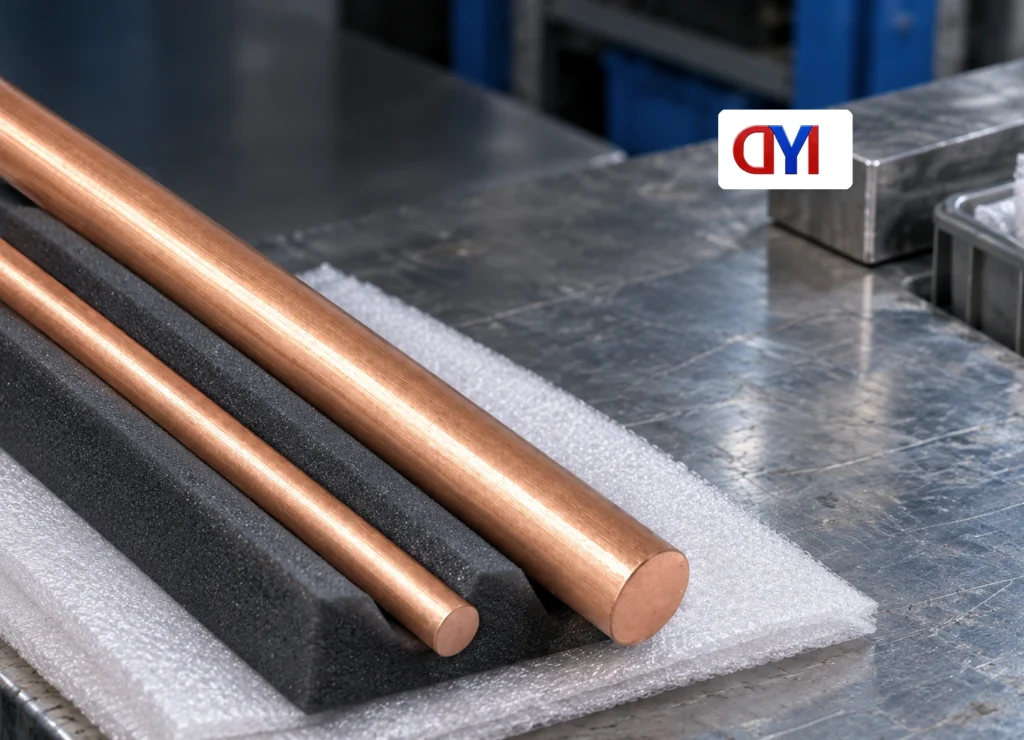
When a component manufacturer in Coventry, James, encountered unexpected material during a trial turning operation, the incoming rods had looked uniformly copper-colored. In this illustrative scenario, the order had relied on a commercial description without a controlled material designation. The remedy was to verify construction and lot identity before releasing stock to machining.
Summary: A pure copper rod order should identify the grade, temper and solid construction, then define diameter, length and straightness. ASTM B187/B187M distinguishes C10100 oxygen-free electronic copper from C11000 electrolytic tough-pitch copper. Surface color does not establish either grade or prove that a rod is solid copper throughout.
Separate solid copper from copper-clad construction
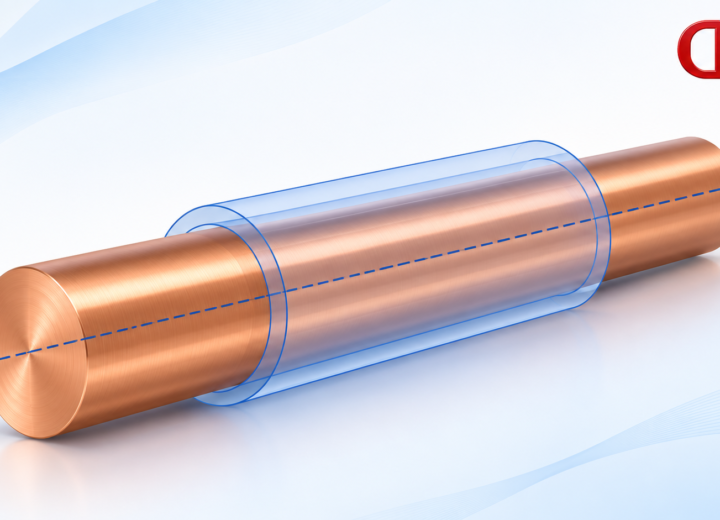
A solid copper rod is copper through its cross-section. Copper-clad or copper-bonded material has a different core construction. The distinction changes machining behavior, electrical properties and the intended application. A coating or outer layer should never be silently substituted for the specified solid material.
Do not determine construction by scratching production parts or assuming that a cut end is representative of the entire delivery. Agree on material documentation and any sampling or verification required for the lot. Keep the supplier’s material identity with the stock after cutting.
| Description | What it tells the buyer | What remains to be specified |
|---|---|---|
| Solid cylindrical copper rod | Basic construction and shape | Grade, temper and dimensional requirements |
| Pure copper rod | Commercial material description | Recognized designation and composition limits |
| C10100 rod | Oxygen-free electronic copper designation | Product form, temper, dimensions and records |
| C11000 rod | Electrolytic tough-pitch copper designation | Product form, temper, dimensions and records |
| Copper-clad rod | Composite construction | Core, layer, application and applicable specification |
C101 and C110 are not interchangeable labels
Buyers often abbreviate C10100 and C11000 as C101 and C110. Confirm the full designation and standard on the order. ASTM B187/B187M lists these as different copper types; ASTM B152/B152M also distinguishes their oxygen-related material categories for its covered flat products.
The right choice follows the component’s electrical, thermal and processing requirements. Do not select oxygen-free material solely because “purer” sounds preferable, or substitute tough-pitch material into a process that requires another copper type. Ask the drawing owner to approve any change.
Conductivity acceptance requires a defined measurement basis. ASTM B193 addresses resistivity of conductor materials, including dimensional and resistance measurements and temperature correction. It does not replace composition identification or certify a finished component.
Diameter and straightness define the machining envelope
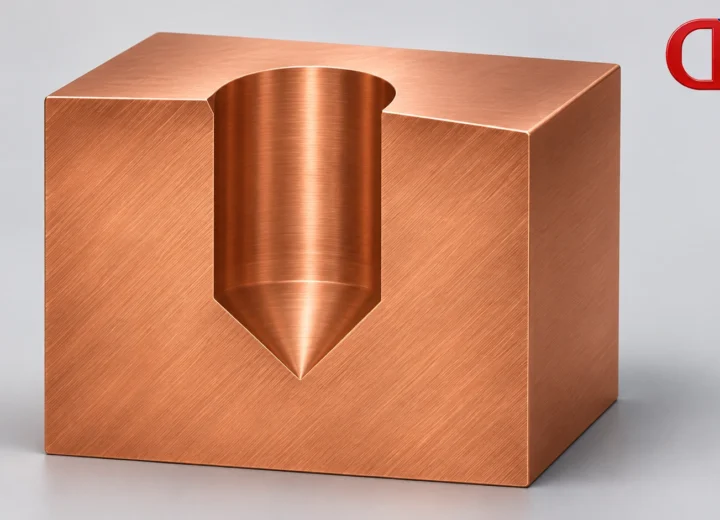
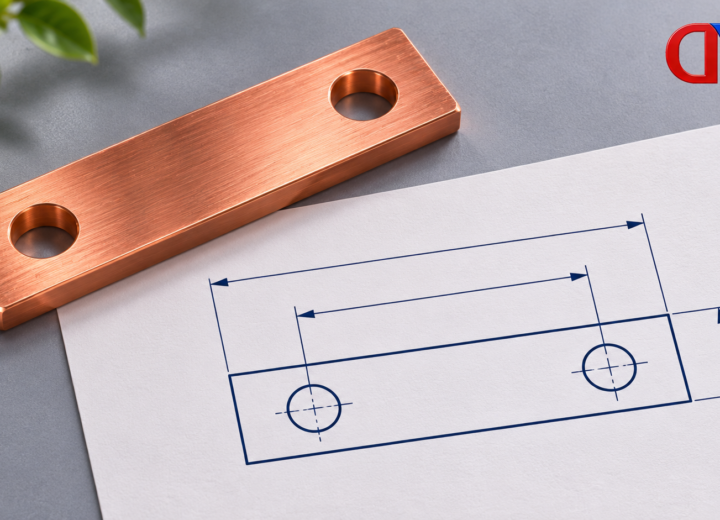
Diameter tolerance, ovality, straightness and surface condition affect how much material remains after cleanup. A nominal dimension is not necessarily the minimum usable dimension. State whether the stock is intended for turning, drilling, threading or another operation and identify the clamping requirements.
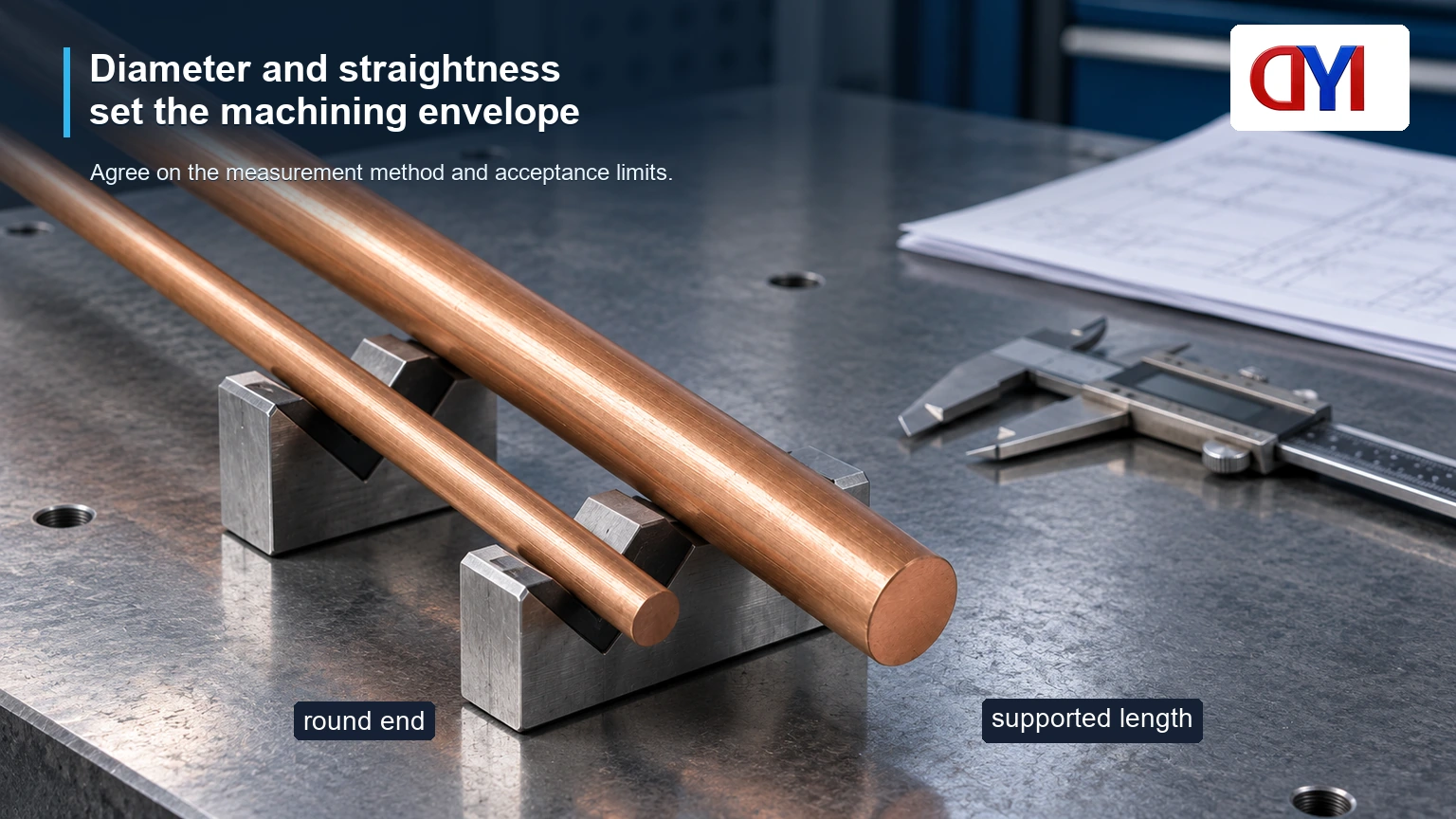
For illustration, a finished 20 mm diameter with a planned 0.5 mm radial cleanup allowance needs a minimum usable stock diameter of 21 mm before considering stock tolerance or other process allowance. The radial allowance is applied twice across the diameter. This example is not a general machining recommendation.
| RFQ field | Specify | Why it matters |
|---|---|---|
| Diameter | Nominal size and tolerance | Determines cleanup stock and finished yield |
| Straightness | Method and gauge length | Affects feeding, clamping and turning |
| Length | Cut length, tolerance and end allowance | Prevents loss of finished length |
| Condition | Temper and permitted surface defects | Influences process setup and acceptance |
| Delivery | Quantity, identification and end protection | Preserves traceability and usable stock |
Keep inspection and packaging linked to the lot
Inspect the dimensions relevant to the manufacturing plan and record their actual values. Check for damage to the supplied surfaces and ends without inferring material chemistry from appearance. Sampling frequency and acceptance limits should be agreed before receipt, not invented after a problem appears.
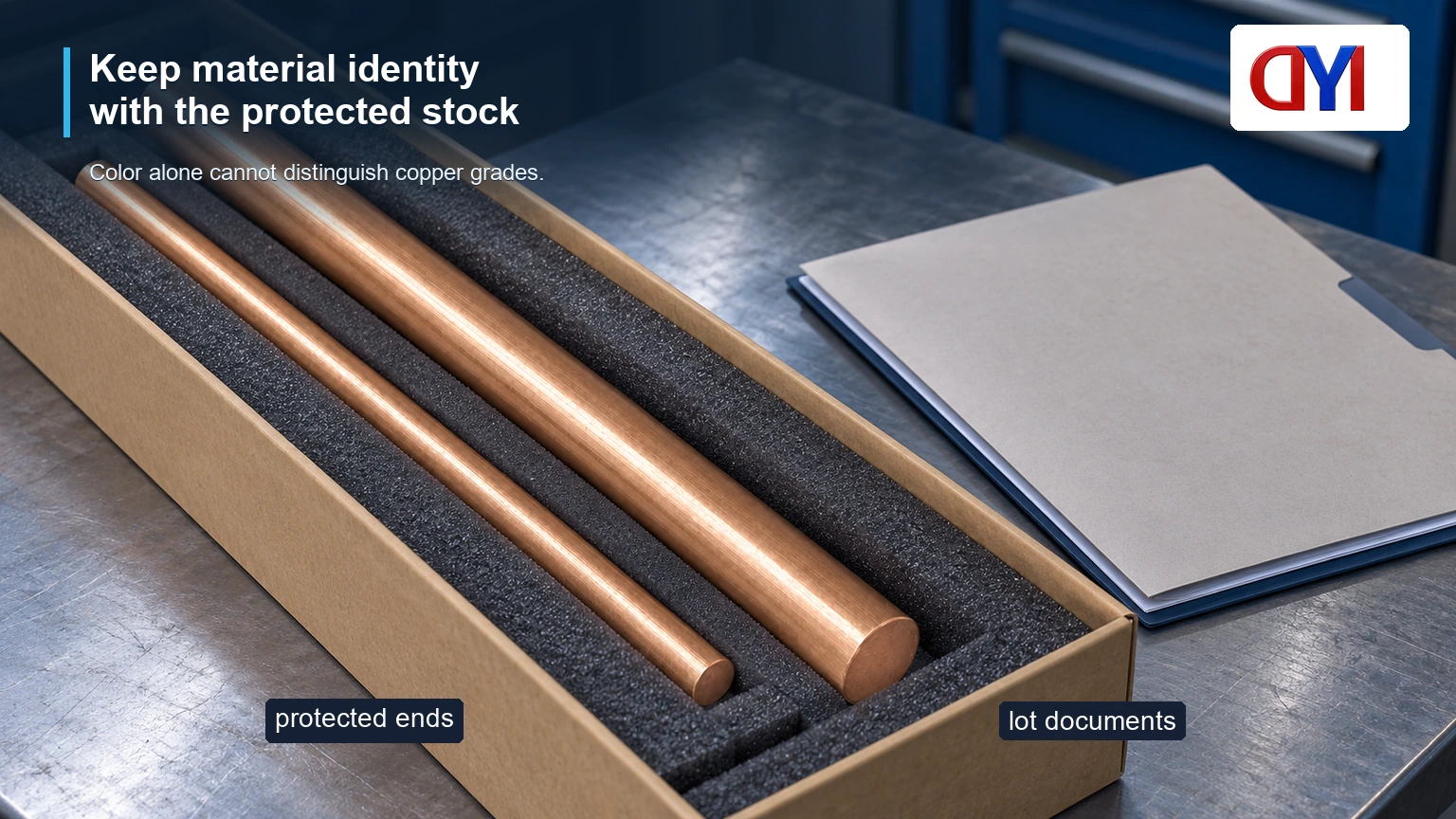
Use supports and packing that prevent bending and end damage during transport. Separate cut lots and maintain their labels through the workshop. A material certificate is useful only when it can be connected to the actual rods being machined.
Compare delivered usable length, processing time and rejected-piece cost alongside the metal price. For a hypothetical order of 100 blanks, five unusable blanks create a 5% piece loss before considering replacement freight or machine downtime. That arithmetic is a planning example, not a claim about supplier performance.
Standards and purchasing sequence
ASTM B187/B187M supplies a framework for copper bar and rod requirements. The contract must specify the grade and condition needed for the component. A B193 resistivity result answers a material-property question; it is not a rating for a grounding electrode or a complete electrical assembly.
Before ordering, approve the full material designation, the minimum machining envelope, the lot inspection requirements and the packaging plan. DONGYAO’s solid copper rod listing is a supply reference. Confirm the exact grade and condition offered rather than relying on broad catalog descriptions. The related copper rod conductor guide provides electrical-use context.
Frequently asked questions
Do they make solid copper rods?
Yes, solid round copper stock is supplied for component manufacture and other specified uses. Confirm that the order requires copper throughout the section. Rod shape alone does not prove solid construction.
Are copper rods pure copper?
Some are commercially pure copper, while others are copper alloys or composite constructions. The phrase “copper rod” is not enough to identify the material. Request the grade and lot-linked documentation.
How do C101 and C110 copper round rods differ?
C10100 is oxygen-free electronic copper; C11000 is electrolytic tough-pitch copper. Their material definitions differ, and the appropriate choice depends on the process and service. Verify the full designation rather than assuming a universal equivalence.
What is the difference between a solid copper rod and a copper-clad rod?
Solid copper is copper through the section. Copper-clad rod has copper over another core material. Construction must be specified because the two forms may behave differently during machining and in service.
How do diameter and straightness affect a machined copper component?
They determine whether the stock can clean up to the finished geometry and be held consistently. Insufficient diameter or excessive curvature may reduce yield. Define the minimum usable envelope and inspection method.
Which copper rod dimensions and quantities should be included in an RFQ?
State diameter and tolerance, cut length and tolerance, straightness requirements and quantity. Include facing or radial allowances where applicable. Add grade, temper, surface condition and packaging requirements.
References
- ASTM B187/B187M: copper bar, rod and shapes
- ASTM B152/B152M: copper grade distinctions
- ASTM B193-25: resistivity measurement
Reliable components begin with identifiable stock and a usable machining envelope. Contact DONGYAO with the drawing and material specification for a confirmed rod quotation.
For related conductor products, view the product categories.