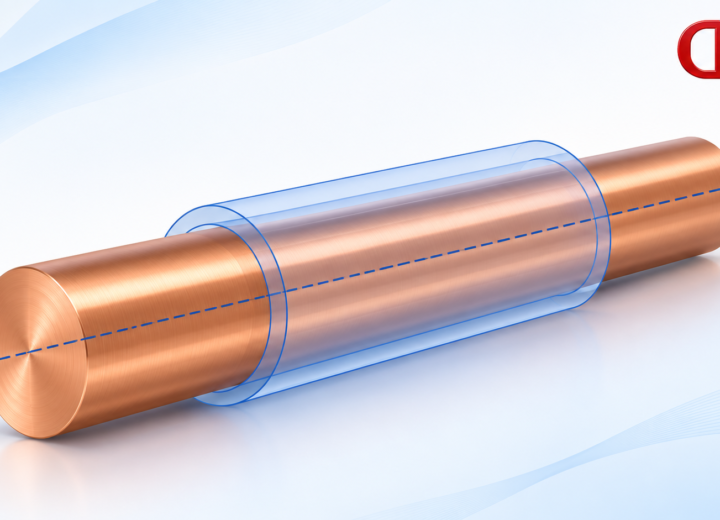
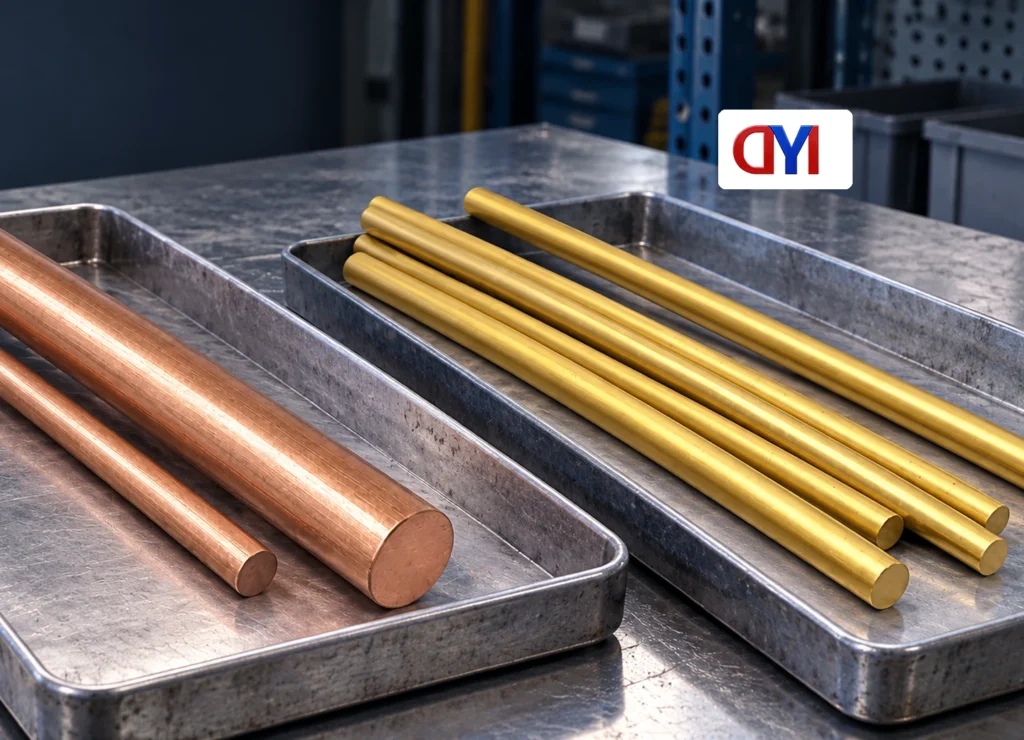
When an electrical buyer in Newcastle, Samira, encountered a delivery of smooth copper-colored rods for an earth-electrode project, the shape appeared plausible. In this illustrative scenario, the order had described only metal stock, with no electrode specification. The correction was to separate the electrode requirement from material used to machine connection parts.
Summary: A grounding copper rod, a copper-bonded steel electrode and H62 brass rod are different purchasing items. Rod stock does not become an approved electrode because it conducts electricity. Verify construction, intended use and installation requirements. US construction rule 29 CFR 1926.404 includes a specific 25-ohm supplemental-electrode provision, not a universal design target for every installation.
Distinguish the electrode from connection stock
An earth electrode makes the intended connection to the ground. Connection stock is raw material for components such as terminals or machined fittings. The finished component and its intended service must be specified before choosing the metal.
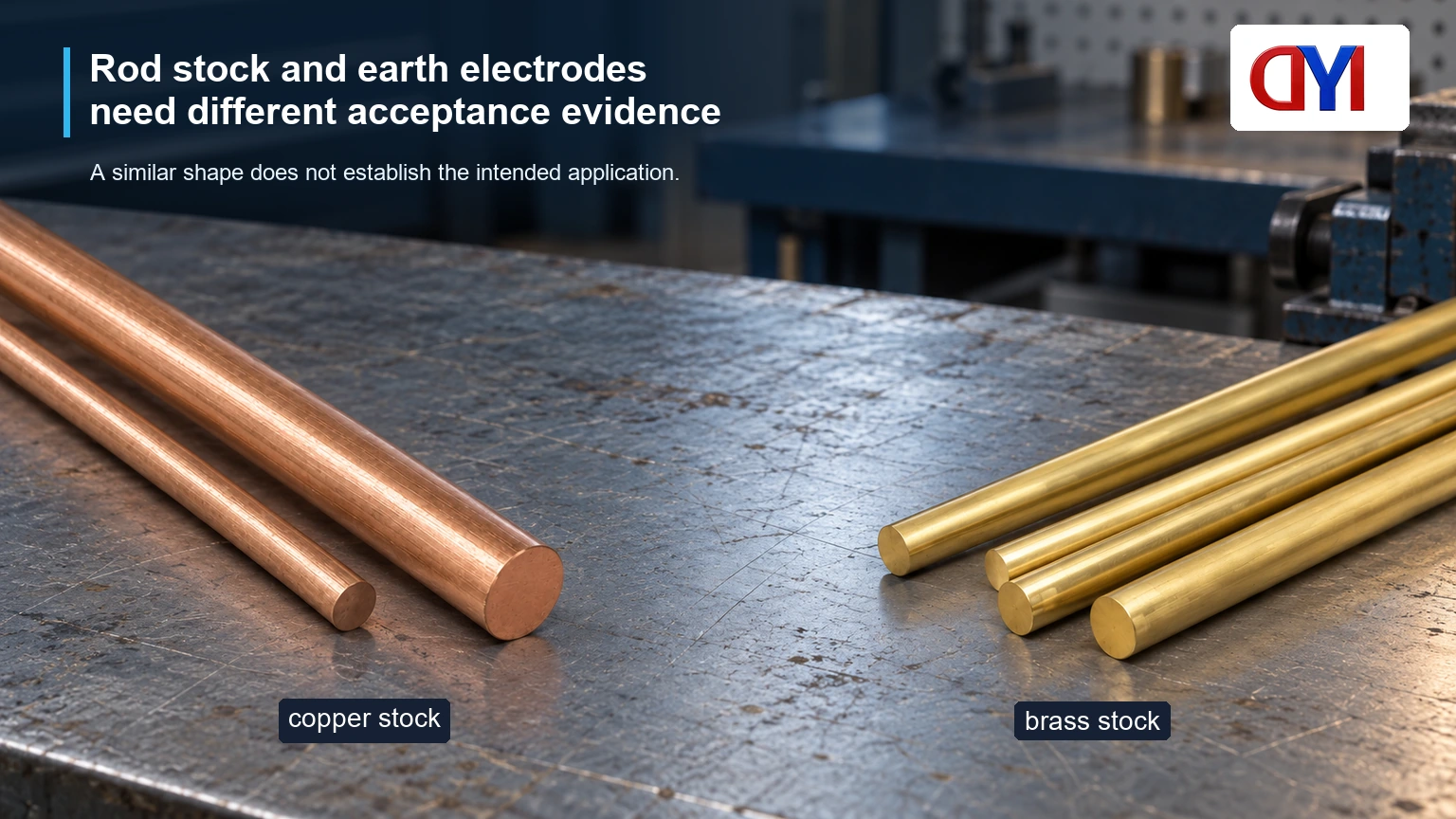
“Purple copper wiring rod” is a commercial description that can be ambiguous. Translate it into a recognized grade, product form and application. If the order is for an electrode, require the electrode’s applicable specification, marking and installation documentation. A certificate for general copper rod is not automatically enough.
| Item | Construction or role | Required verification |
|---|---|---|
| Solid copper stock | Copper through the section | Grade, temper and component requirements |
| Copper-bonded steel electrode | Steel core with specified copper layer | Electrode standard, construction and application |
| H62 brass rod | Named brass grade under an agreed material standard | Composition, condition and approved component use |
| Finished grounding electrode | Product designed for ground contact | Applicable installation and acceptance evidence |
The solid versus copper-clad ground-rod discussion provides background, but procurement still needs the actual construction and product requirements. Appearance alone cannot establish the copper layer, substrate or qualification.
H62 brass is not a substitute for a copper electrode
H62 is a brass designation, not an alternative name for pure copper. Confirm the governing standard and edition, composition limits and supplied condition. Do not translate it into a UNS or other national grade without a reviewed equivalence basis.
ASTM B16/B16M-24 illustrates why standard names matter: its scope specifies particular free-cutting brass grades, including C36000 and C36010. That does not establish H62 equivalence. Likewise, ASTM B187/B187M covers specified copper bar and rod products, not every copper-colored alloy.
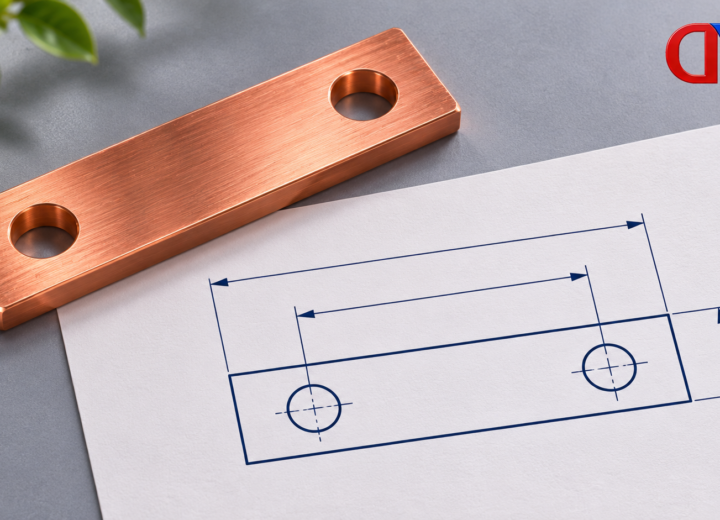
If brass is proposed for a connection component, evaluate the approved design’s electrical, mechanical and environmental requirements. A similar diameter or easier machining does not authorize a material substitution. The drawing owner should approve changes before manufacture.
Depth and layout follow the installation rules
The necessary electrode length and installation depth depend on the adopted electrical rules, electrode construction and site conditions. There is no reliable universal answer based only on the word copper. The designer must identify the governing provisions, permitted installation arrangements and any testing requirements.
US OSHA 29 CFR 1926.404(f)(10), within its construction scope, says a single rod, pipe or plate electrode with resistance to ground greater than 25 ohms must be augmented by another electrode installed no closer than 6 feet (1.83 m). This is a specific regulatory provision; it is not evidence that 25 ohms is acceptable for every system or that one rod will achieve it.
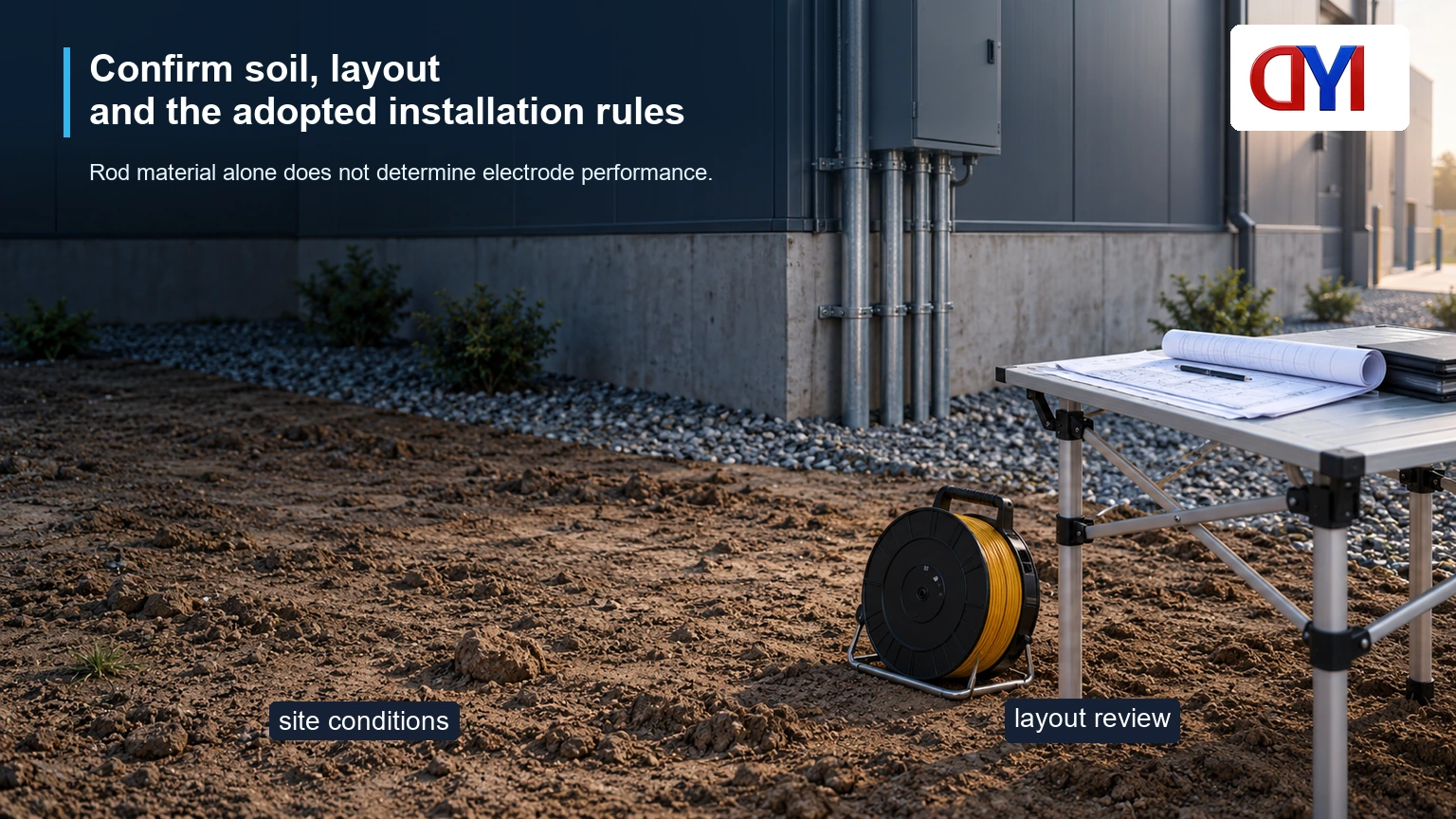
Soil conditions, moisture, electrode geometry and interactions between electrodes affect the result. Before driving or excavating, locate underground services and use qualified installation procedures. This article does not prescribe a site-specific driving depth or substitute for the adopted electrical code.
Documentation and acceptance checklist
| Procurement stage | Required information | Reason |
|---|---|---|
| Application definition | Electrode, conductor stock or machined connection | Prevents ordering the wrong product class |
| Material identity | Solid/composite construction and recognized grade | Prevents appearance-based substitution |
| Installation design | Layout, adopted rules and connection method | Establishes the complete system requirement |
| Product acceptance | Dimensions, coating/construction and required markings | Links delivery to the approved specification |
| Site verification | Applicable inspections and measured results | Confirms the installed arrangement, not just the metal |
An earth-resistance test and a protective-path continuity test answer different questions. Keep them distinct in the inspection plan. The permanent, continuous and effective grounding-path requirement in 29 CFR 1910.304 also cannot be demonstrated simply by looking at the electrode surface.
The cost comparison should include compatible clamps, installation access, site testing, protective measures and documentation. A low raw-rod price can be misleading if the product lacks the required electrode evidence or cannot use the approved connection hardware.
Confirm the product before requesting a quote
Specify the application, construction, applicable standard and required records first. Then state dimensions, quantity, connection details and packaging. For an existing approved electrode design, provide the exact approved product requirement rather than inviting a visual substitute.
DONGYAO’s copper rod stock and brass rod listing are material-sourcing references. Confirm separately whether a proposed item meets an electrode specification; these stock listings alone do not establish that qualification.
Frequently asked questions
What is a copper grounding rod used for?
An appropriately specified grounding rod serves as an earth electrode in its designed system. It should not be confused with general copper machining stock. Verify the electrode product and installation requirements.
How deep should a copper grounding rod be?
Use the depth and arrangement required by the adopted electrical rules and approved design. Electrode type, ground conditions and permitted alternatives matter. Do not select depth from material name alone.
Can you completely bury a grounding rod?
Some approved arrangements permit an electrode and suitable connections below grade, subject to the applicable rules. Accessibility, connection suitability and protection still matter. Confirm the specific installation detail with the designer and authority having jurisdiction.
How is copper-bonded steel different from solid copper rod?
Copper-bonded steel has a steel core and a specified copper layer. Solid copper is copper through the section. Their construction and intended acceptance requirements must be identified on the order.
Is an H62 brass rod interchangeable with a copper grounding electrode?
No equivalence follows from the rod shape or electrical conductivity. H62 brass is a different material and must be evaluated for the actual approved use. Do not substitute it without a documented design decision.
Which material and application details should be verified before ordering grounding rods?
Verify electrode versus stock use, solid or composite construction, applicable specification, dimensions and compatible connection method. Include required markings and test records. Confirm the adopted installation rules and site design separately.
References
- 29 CFR 1926.404: construction grounding requirements
- 29 CFR 1910.304: workplace grounding paths
- ASTM B187/B187M: copper bar and rod
- ASTM B16/B16M-24: specified free-cutting brass products
Specify the electrical function before selecting the rod. Contact DONGYAO with the approved material and application requirements for a clearly bounded supply review.
For related conductor products, view the product categories.