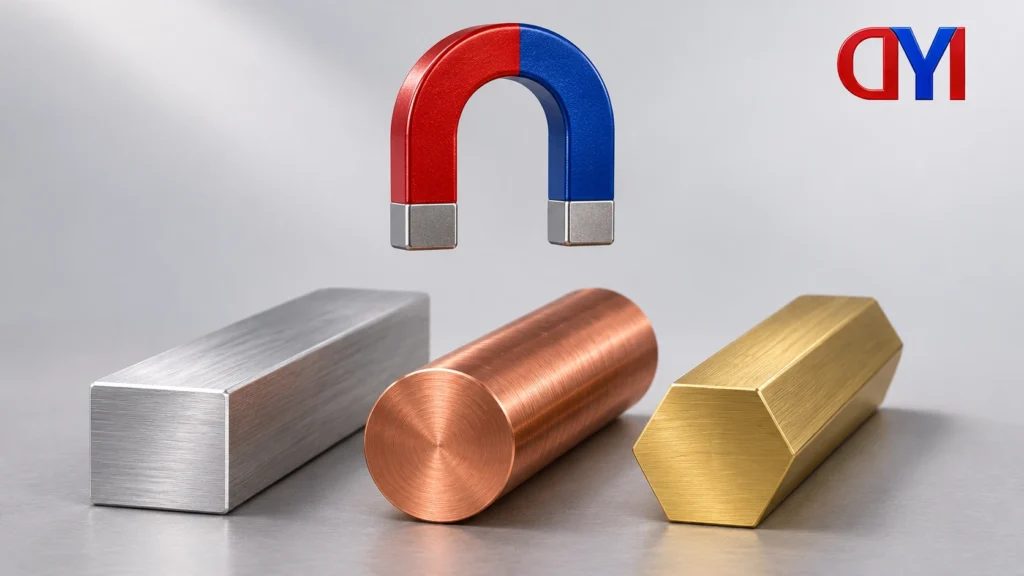
Aluminum does not cling to an ordinary hand magnet the way iron or common carbon steel does. Copper and ordinary copper-based brass are also poor choices for magnetic attachment. That does not mean these materials have no magnetic response, and it does not mean a moving magnet cannot interact with them.
A useful answer to “is aluminum a magnetic metal” separates three questions: whether a magnet sticks, whether a changing field induces currents, and whether the material meets the ordered grade. Each question needs a different interpretation.
Is aluminum a magnetic metal?
Aluminum is weakly paramagnetic: an applied magnetic field produces a weak attractive response. Aluminum is not ferromagnetic like iron. In an ordinary workshop check, that weak response does not make an aluminum part behave like a steel part held against a magnet.
The American Chemical Society’s simple metals-and-magnetism activity illustrates the practical distinction: aluminum objects do not respond like the familiar iron-containing objects in the activity. A hand-magnet observation is useful for screening, but it is not a measurement of magnetic susceptibility.
| Material | Useful description | What not to conclude |
|---|---|---|
| Aluminum | Weakly paramagnetic; does not normally cling to a hand magnet. | “No strong pull” does not mean no electromagnetic interaction. |
| Copper | Diamagnetic; its weak response differs from ferromagnetic attraction. | A negative magnet check does not prove copper purity. |
| Ordinary brass | A copper-based alloy that is not normally used for magnetic attachment. | A family name does not verify the grade or the construction of a finished part. |
Copper, brass and bronze need different levels of description
Copper is diamagnetic, meaning its weak response opposes the applied magnetic field. This differs from the strong attraction people usually mean when they ask whether a metal is magnetic. Calling copper “non-magnetic” can be a useful practical shorthand, provided it is not taken to mean that every electromagnetic effect disappears.
For brass, the useful starting point is the same workshop distinction: ordinary copper-based brass does not provide the familiar sticking behavior of common steel. A buyer should still identify the actual alloy and part construction rather than accept “brass” as a complete magnetic specification.
The question “is bronze magnetic?” needs particular care because bronze names cover different alloys. A general family label is not an acceptance limit for magnetic behavior. Where magnetic response matters to the application, the drawing should identify the approved material and the property that must be demonstrated.
A changing field can act on a conductor without making it cling
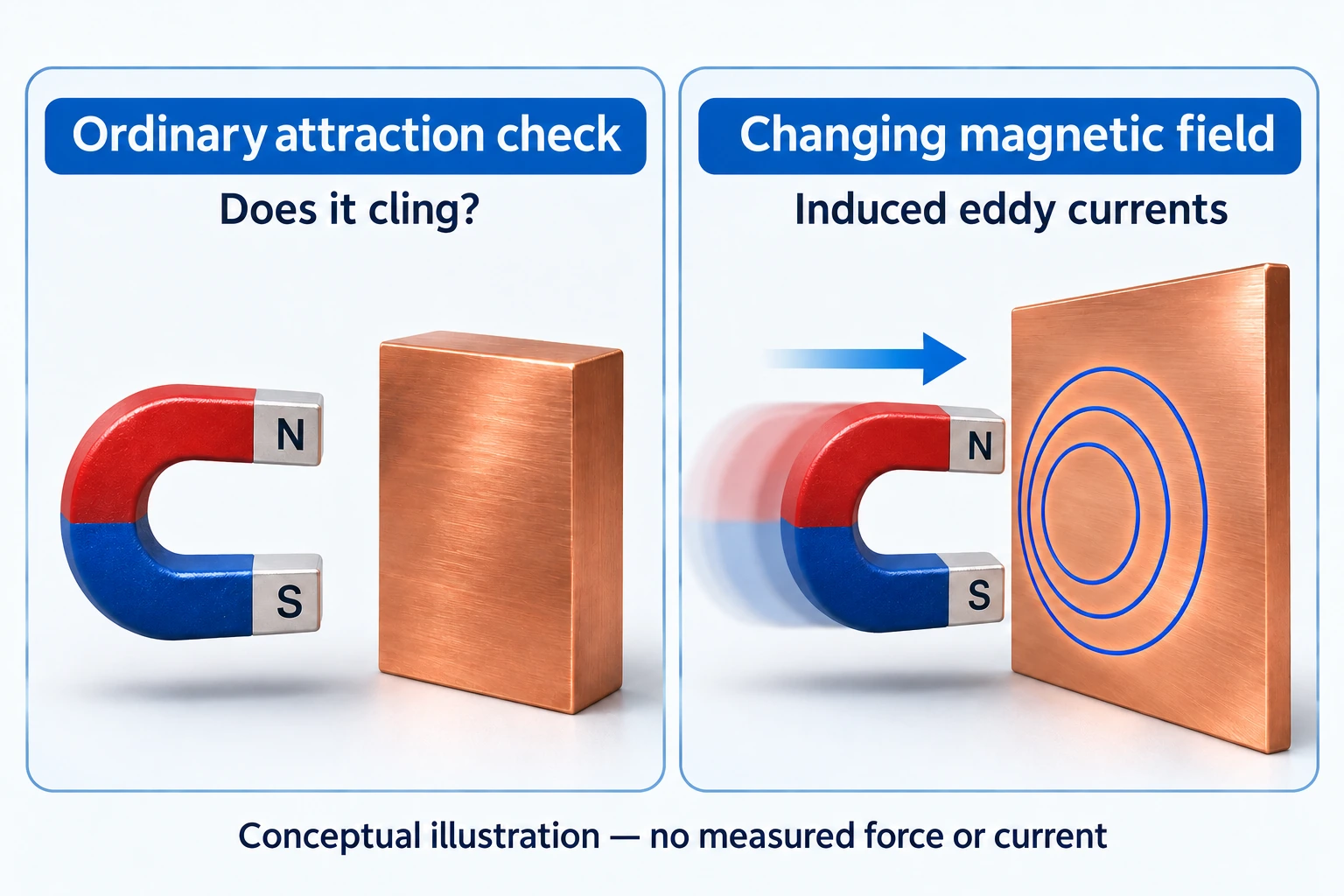
A moving or changing magnetic field can induce an electric current in a conducting path. That induced current creates a magnetic field of its own. The interaction is different from a stationary magnet holding a ferromagnetic object.
UC Berkeley’s aluminum-can teaching activity demonstrates the distinction. A magnet is rotated near an aluminum can, and the changing field induces current in the conducting can. The interaction can produce motion even though the can does not behave like a steel object sticking to a hand magnet.
This explains why the observations can seem contradictory. One check asks about strong attraction; the other involves a changing field and electrical conduction. Neither observation, by itself, supplies an alloy certificate, a conductivity value or an electrical current rating.
Why two aluminum observations can both be correct
Imagine a workshop note saying that a stationary magnet did not cling to an aluminum item. A second note describes motion when a magnet is rotated near a conducting aluminum can. These observations do not cancel one another. The first describes the familiar attraction check; the second describes the changing-field arrangement in the educational demonstration.
Before comparing such notes, identify what changed during each observation. Was the magnet stationary or moving? Was the discussion about holding force, weak material response or induced-current interaction? Recording those distinctions makes an apparent disagreement understandable without assigning a measured force, current or susceptibility that neither observation supplied.
For material identity, use the ferrous and non-ferrous classification to distinguish families, then the copper, brass and bronze comparison to frame an alloy-selection question.
Turn a magnet observation into the right follow-up
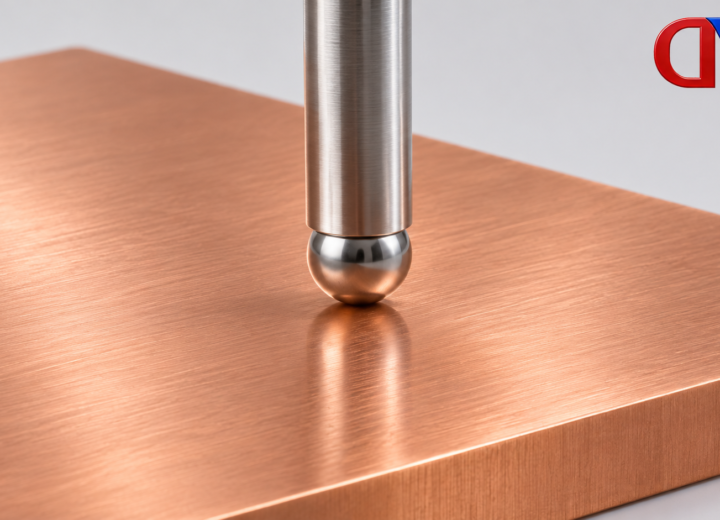
A useful receiving note records what happened without promoting that observation into a material identification. The following matrix separates a screening observation from the document or question needed next.
| Observation | What it can tell you | Useful follow-up |
|---|---|---|
| No obvious attraction | The part did not show strong attraction in that check. | Compare its identification and material records with the drawing. Do not mark “verified pure copper.” |
| Unexpected strong attraction | The response differs from what the purchaser expected. | Review the approved grade, the part’s construction and any attached pieces before accepting or rejecting it. |
| Motion near a changing field | The setup may involve an induction effect. | Describe the setup separately from a hand-magnet check; do not use the motion as proof of grade. |
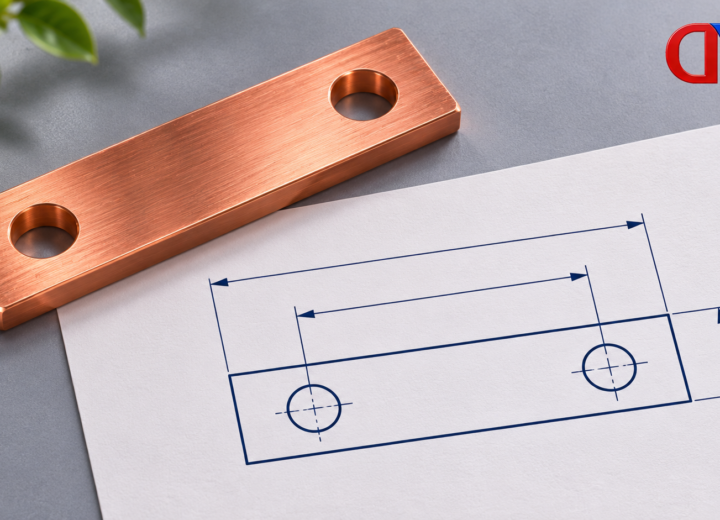
These are interpretation steps, not a substitute for a specified inspection method. The drawing owner decides which property matters and what evidence establishes acceptance. Keeping the observation separate from the acceptance decision prevents a quick screening tool from becoming an unsupported material claim.
Keep material identity separate from the finished part’s function
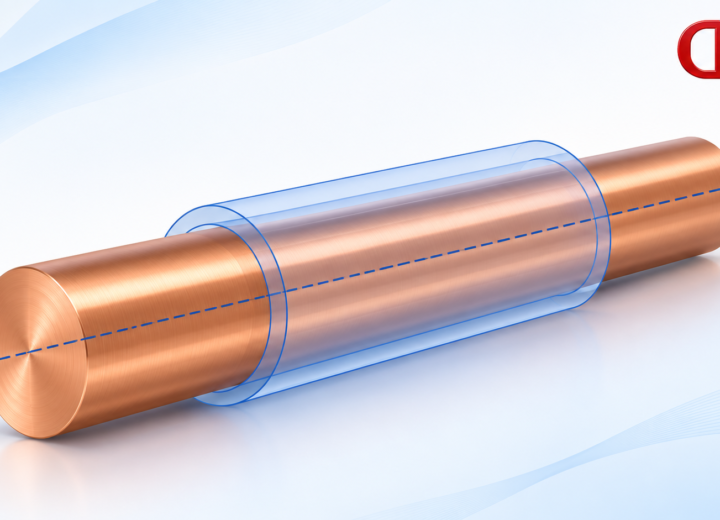
Consider a buyer selecting a pure-copper rod for a machined component. The product form identifies the starting material, while the order still needs an approved grade and relevant drawing requirements. A magnet not sticking does not confirm that those requirements have been met.
If the component will operate near a changing field, that application question belongs in the design discussion as well. A useful material description and a useful electromagnetic assessment are related, but they are not interchangeable. Record the observation, verify the material identity, and evaluate the actual operating condition separately.
References
- American Chemical Society — Metals & Magnetism activity
- UC Berkeley — Induction in an Aluminum Can
- Langley Alloys — Is copper magnetic?
- Metal Supermarkets — Which Metals Have Magnetic Properties?
For related conductor products, view the product categories.