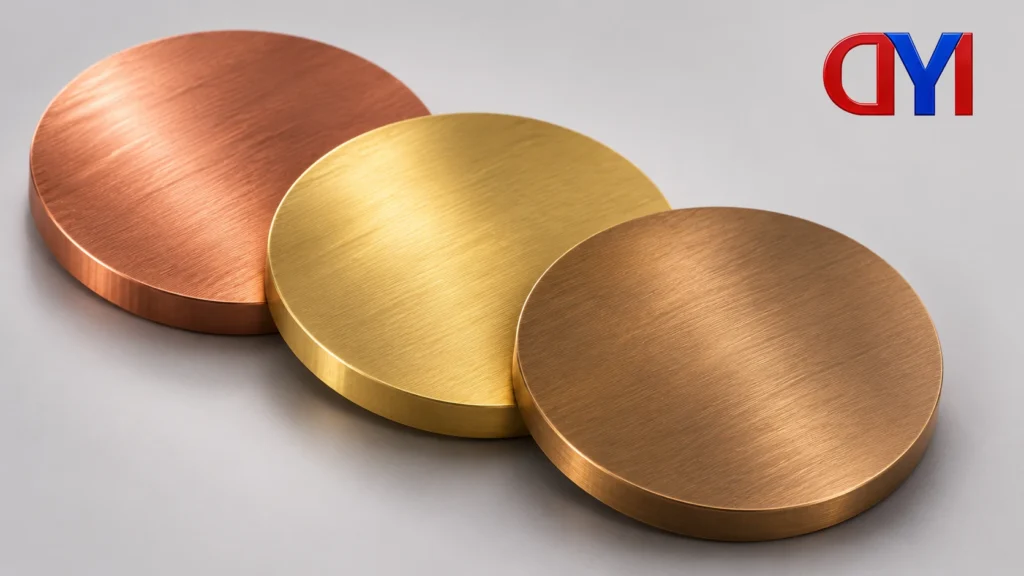
Copper is the base metal; brass and bronze are families of copper alloys. In a bronze vs brass comparison, the usual starting distinction is copper-tin versus copper-zinc. Bronze also includes other alloy families, such as aluminum bronze. For an industrial part, the exact grade and condition matter more than the family name.
A useful comparison therefore asks what the component must do. Conductivity, forming behavior and wear requirements can lead to different choices, even within the same alloy family.
Bronze vs brass vs copper: the composition distinction
Brass is principally a copper-zinc alloy family. Traditional tin bronze combines copper and tin, while other bronze families use different additions. Copper itself is available in different grades, so even an order described as “copper” needs a more precise material designation.
| Material | Family description | Selection question |
|---|---|---|
| Copper | The base metal, supplied in specified grades and conditions | Which grade meets the conductivity, forming and other requirements? |
| Brass | Copper-zinc alloys, sometimes with additional elements | Which alloy suits the intended machining or forming route? |
| Bronze | Traditional copper-tin alloys and other named copper-alloy families | Which specific bronze suits the component and exposure? |
The names describe families rather than interchangeable materials. Neither “brass” nor “bronze” establishes a single hardness, strength or corrosion rating. The same caution applies when comparing a cast product with wrought stock: product form and processing history belong in the material comparison.
Compare the property that controls the part
Electrical and thermal functions
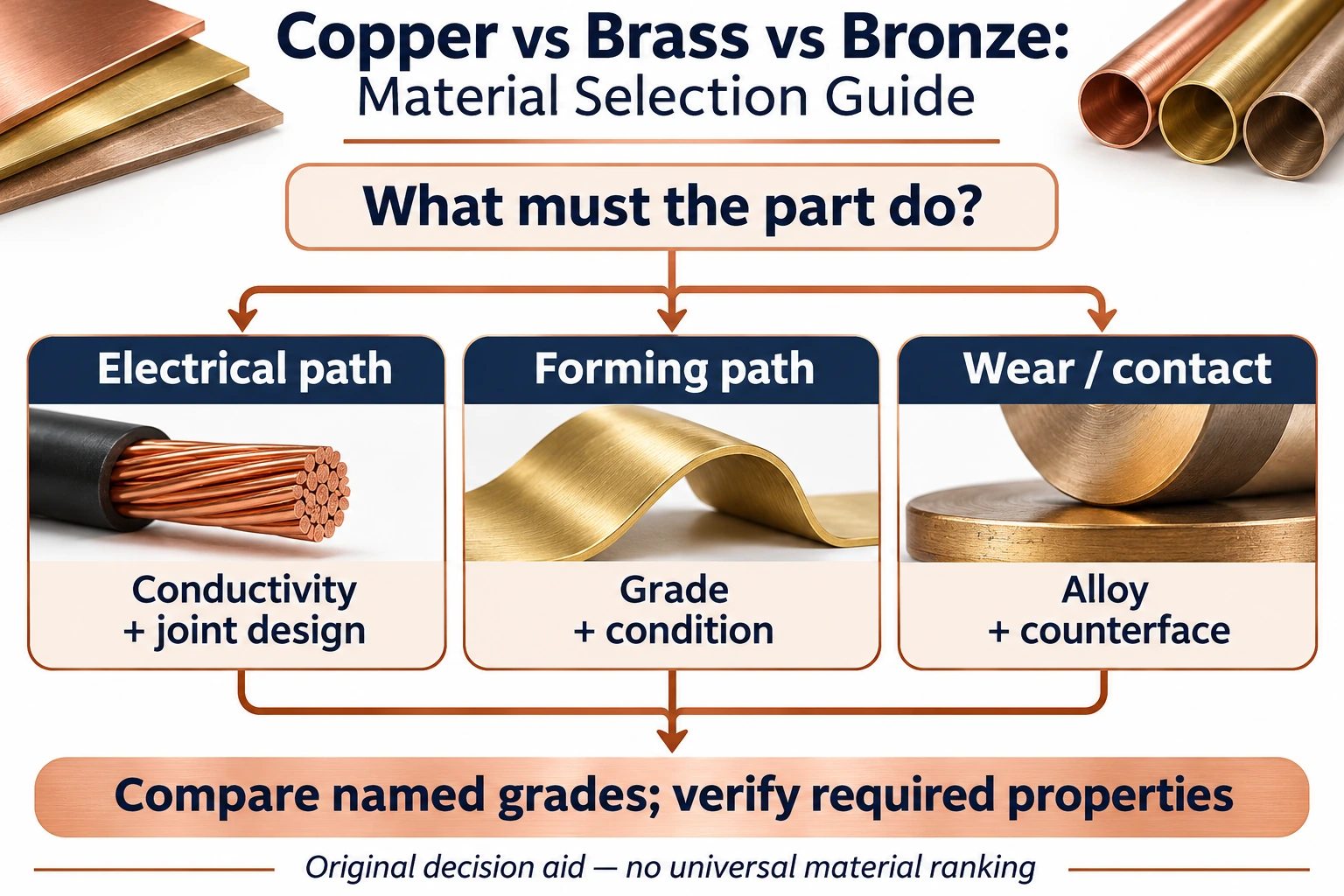
Copper is widely used where electrical or thermal conduction matters. Alloy additions can change conductivity alongside mechanical properties, so a stronger or easier-to-machine alloy is not automatically an equivalent conductor. A designer should compare the published conductivity of the named grades in the required condition, then evaluate the component geometry and connections.
Forming and machining
Composition and condition influence how a material responds to processing. Different brass grades suit different forming and machining requirements; cold work also changes properties. A comparison should identify whether the part will be turned from rod, formed from sheet or made through another route. “Easy to machine” is insufficient without the specific alloy and the intended operation.
Wear and mechanical contact
For a sliding or contacting part, the comparison needs the actual alloy and operating conditions. Calling a material bronze does not establish its suitability for every bearing or wear surface. The designer also needs the counterface, loading and service environment. These inputs make a grade-level comparison meaningful.
Compare strength, corrosion and price at grade level
A question such as “Is bronze stronger than brass?” needs a named pair of materials before it can support a design decision. The family names cover different compositions and conditions. Ask which mechanical property matters, then compare values for the proposed grades in the required supplied condition. A hardness value alone is not the same requirement as a specified tensile property.
The same method applies to corrosion questions. Describe the exposure and the component’s function before asking which material is preferable. A color change on an exposed surface and a requirement at a working interface are different comparison tasks. A general family label cannot settle either one.
Price comparisons need an equally specific basis. Request quotations for the same required form, dimensions, quantity and processing scope, with each proposed grade identified. This does not predict which quote will be lower; it makes the differences visible. If mass enters the comparison, use the density of the named material, as explained in the brass density and mass-estimation guide, rather than assuming one weight for every copper alloy.
Can color tell copper, brass and bronze apart?
Color can suggest a material family, but it cannot confirm an exact alloy. Copper is associated with a reddish appearance, while brass color changes with composition. Additional alloying elements can alter that appearance further. Bronze names likewise cover materials with different compositions, making a simple bronze-versus-copper color rule unreliable for acceptance.
For purchasing or replacement work, use the drawing, material designation and traceable documentation. If the material is unknown, agree on an appropriate identification method rather than accepting a visual match. A polished surface or similar-looking sample does not establish equivalent composition or condition.
Three replacement decisions need different evidence
The following hypothetical examples apply the comparison to different component jobs. They illustrate the information needed for review, rather than recommending an alloy or describing a customer project.
A conducting connection part
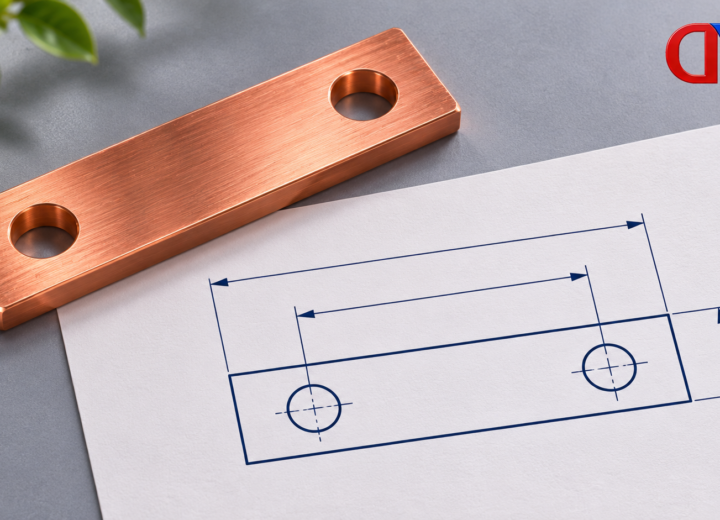
A replacement proposal matches the outline of an existing copper part but changes its material description to brass. A dimensional match answers only part of the question. The designer needs the proposed grade and condition, its relevant conductivity data and the connection requirements before reviewing the change. “Both contain copper” does not establish an equivalent electrical component.
A cylindrical part machined from rod
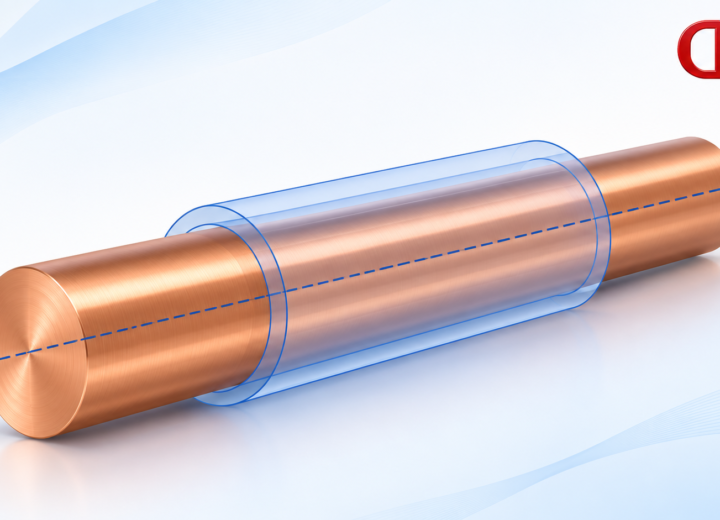
A buyer compares a brass-rod offer with a copper-rod offer for the same drawing. The useful questions concern the specified grade, supplied condition, required features and intended manufacturing route. A statement about one alloy’s machining behavior should not become a recommendation for every part in that material family. If a process or property is mandatory, identify it alongside the drawing.
A sliding or contacting component
A proposal describes a replacement only as bronze. That leaves the alloy family and grade unresolved, along with the counterface and operating conditions. The design review should compare the identified candidates against that duty, rather than approve the replacement because bronze is associated with wear applications. Once a candidate is agreed, carry the complete designation into the order.
Copper, brass and bronze are all within the wider non-ferrous material category. That classification helps organize materials, while the component decision still depends on the particular grade and requirement.
A useful inquiry names the stock and the grade
For a turned cylindrical component, DONGYAO’s brass rod product is a relevant stock-form reference. The inquiry should still identify the required alloy, condition, diameter, length and drawing requirements. A general copper-versus-brass comparison does not authorize substituting one material for the other.
When the grade is undecided, provide the component’s function and manufacturing route before asking for alternatives. Compare candidates against the properties that control that job, then record the agreed material in the drawing or purchase specification. That turns a broad family comparison into a reviewable material decision.
References
International Copper Association: copper attributes and alloy families; Struers: copper and copper-alloy characteristics; Kupferverband: brass composition and grade-dependent properties.
For related conductor products, view the product categories.