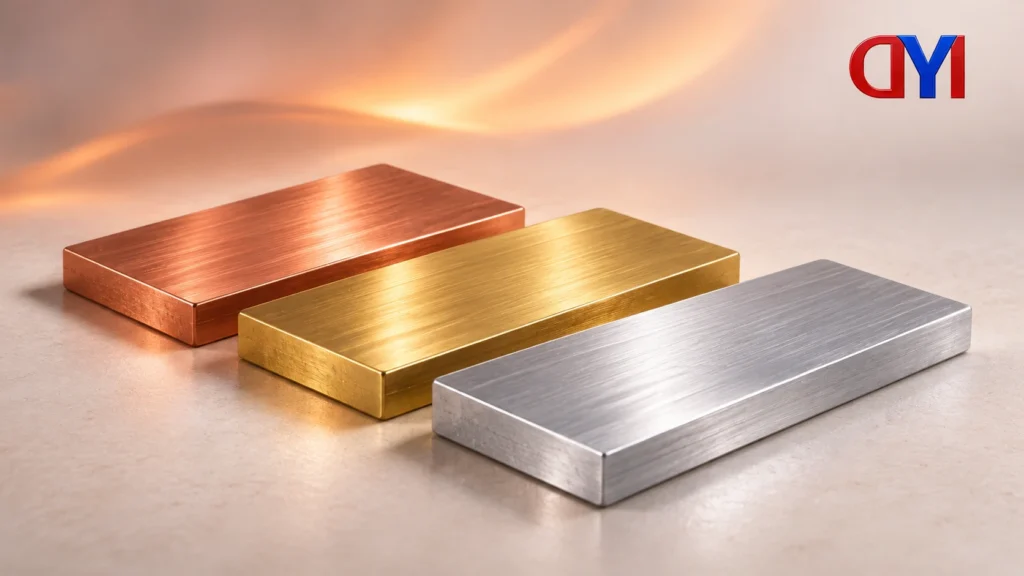
The elemental copper melting temperature is approximately 1084.6°C (1984.3°F). Pure aluminum melts at approximately 660.3°C (1220.6°F). Brass needs a grade-specific answer: many alloys melt over a range, so one generic “brass melting point” can conceal an important distinction.
Use these figures for reference lookup. They do not establish the composition of an unidentified part, a furnace setting or an allowable operating temperature for an assembly.
Copper melting temperature and comparison values
| Material identity | Reference temperature | What the figure means |
|---|---|---|
| Elemental copper | 1084.6°C / 1984.3°F | Rounded pure-element melting point |
| Elemental aluminum | 660.3°C / 1220.6°F | Rounded pure-element melting point |
| C26000 brass example | Solidus: about 916°C / 1680°F Liquidus: about 954°C / 1750°F |
One grade-specific reference range, not all brass |
The copper and aluminum values come from the Royal Society of Chemistry’s element fact boxes and are rounded here. Commercial alloys should be checked against their own material data rather than assigned the pure-element value automatically.
The C26000 example comes from thyssenkrupp Materials NA’s physical-property table. Its original Fahrenheit entries are converted to rounded Celsius values above. That source explicitly states that its information is not for design purposes. The example illustrates how to read a range; it is not a design limit or evidence that DONGYAO supplies that grade.
Why brass can have a melting range
For a pure material at constant pressure, the equilibrium solid-to-liquid transition occurs at a particular temperature. Many systems containing more than one component instead have a temperature interval in which solid and liquid coexist. Alloy composition matters, and special compositions can behave differently.
The solidus is the boundary below which the material is entirely solid. The liquidus is the boundary above which it is entirely liquid. Between them, solid and liquid can coexist. A table that lists both boundaries is giving more information than a single melting-point number.
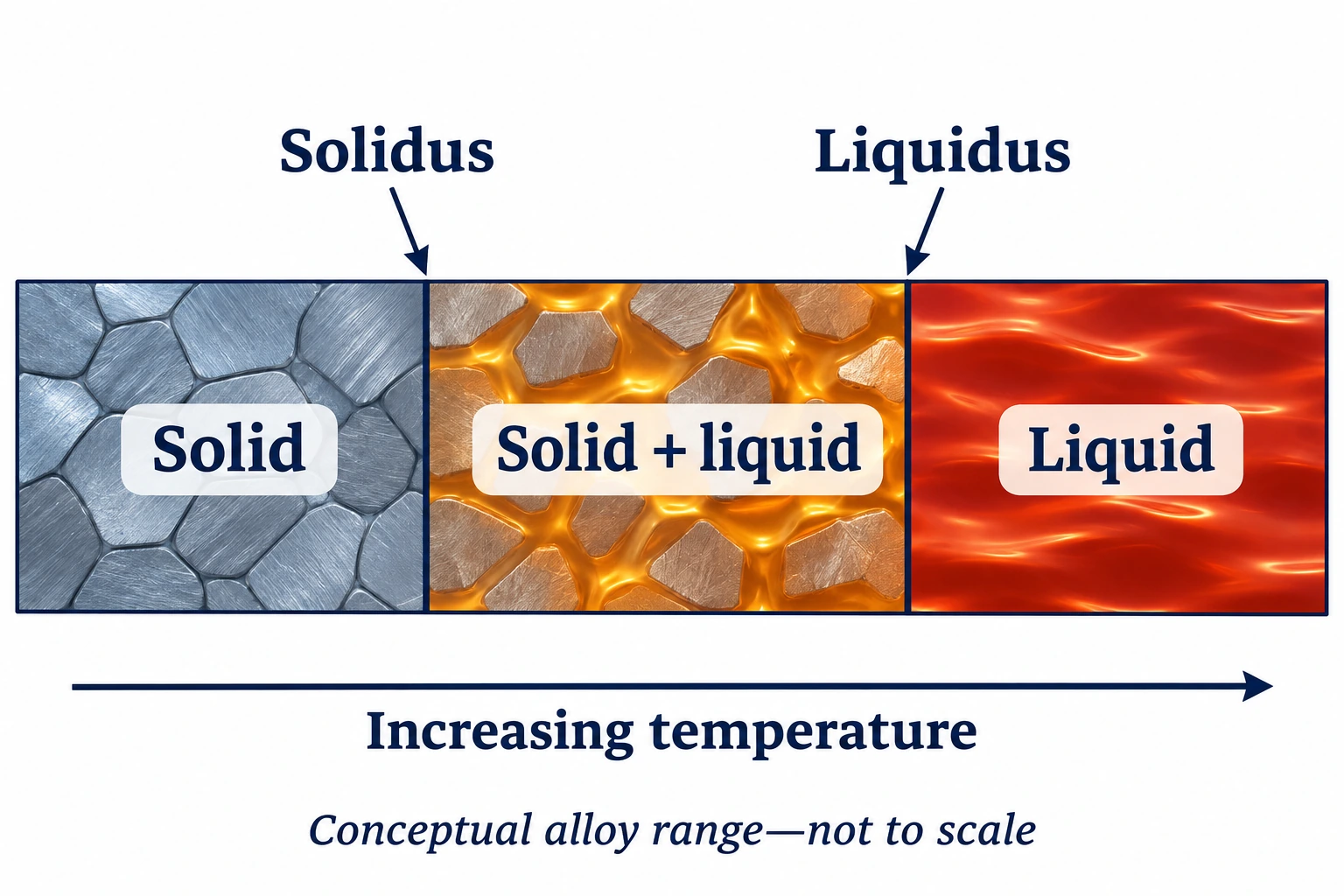
For the listed C26000 example, the lower boundary and upper boundary are different. Reading only the upper number would omit the start of the melting interval. Reading either number as a universal value for every brass would omit the grade identity.
Copper melting temperature in Celsius and Fahrenheit
Temperature conversion changes the unit, not the material or the property being reported. For these lookup values, the relationships are °F = (°C × 9/5) + 32 and °C = (°F − 32) × 5/9. Keep the source value until the final rounding step.
For example, converting the rounded copper reference gives 1084.6 × 9/5 + 32 = 1984.28°F, displayed as 1984.3°F. Those extra arithmetic digits do not create a more precise material measurement. The RSC’s underlying element entry provides the reference; the displayed result remains a rounded lookup.
The same caution applies to the brass example. Converting the source’s 1680°F and 1750°F boundaries gives approximately 916°C and 954°C after rounding. Preserve both boundaries and their solidus/liquidus labels. A copied number without its unit or boundary name can change the meaning of an otherwise correct material table.
When recording a converted figure, keep the material designation, source, original unit and rounding convention together. This makes a later comparison traceable to the same entry rather than to a second, apparently more precise value.
Check identity and units before using a lookup
When two sources appear to disagree, compare like with like before choosing a value. One may describe an element while another describes a commercial alloy. One may report the solidus while another reports the liquidus. Rounding and unit conversion can also produce different-looking numbers without changing the underlying distinction.
Keep the source units with the value. Celsius and Fahrenheit figures should be labelled explicitly, and a converted value should not imply more precision than the original data. Preserve the grade name beside an alloy range when copying it into a technical discussion.
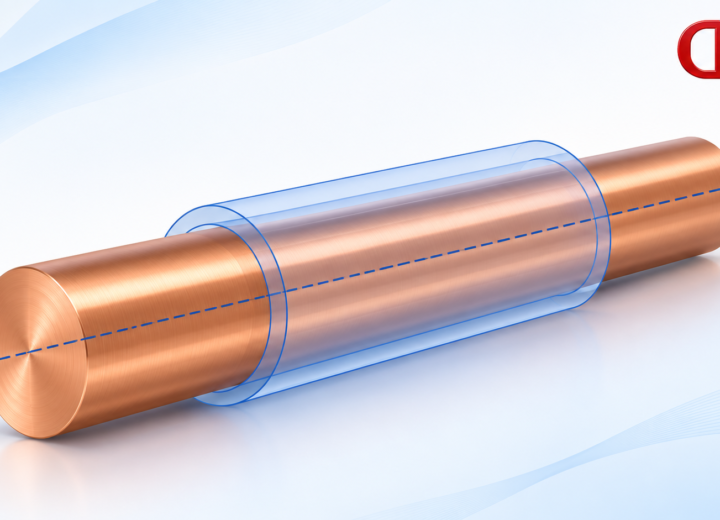
For a copper rod inquiry, DONGYAO’s copper rod product is a relevant starting point. Confirm the actual material specification and composition rather than assuming the listing represents an ideal pure element.
Read an alloy interval without inventing one melting point
Solidus and liquidus answer different questions. The lower boundary identifies where an entirely solid state ends in the stated equilibrium interpretation. The upper boundary identifies where an entirely liquid state begins. An average of the two is an arithmetic midpoint, not a replacement physical property supplied by the reference.
For that reason, a question such as “What temperature does brass melt at?” needs both a grade and an explanation of which boundary the source reports. The C26000 row is useful because it keeps those distinctions visible. It cannot establish the melting range of another brass grade or an unidentified copper alloy.
The pure-element rows answer a narrower comparison: the listed reference melting point for copper is higher than the listed reference for aluminum. That numerical order does not decide which material is appropriate for a component. The broader copper-alloy material comparison explains why composition, condition and the component’s function need separate consideration.
A melting point is not a service-temperature rating
A reference melting point describes a phase transition. It does not, on its own, qualify a loaded part, joint, coating or assembled component for a particular thermal exposure. Those are separate requirements that need applicable material and design evidence.
For an engineered part, document the actual grade, condition, temperature exposure and functional requirements. Use the lookup to identify the property being discussed, then obtain the relevant qualification data. Do not turn the difference between an operating temperature and a melting point into an invented safety margin.
References
- Royal Society of Chemistry: Copper
- Royal Society of Chemistry: Aluminium
- thyssenkrupp Materials NA: Copper and Alloys Physical Properties
- Cambridge DoITPoMS via LibreTexts: Cooling-curve interpretation
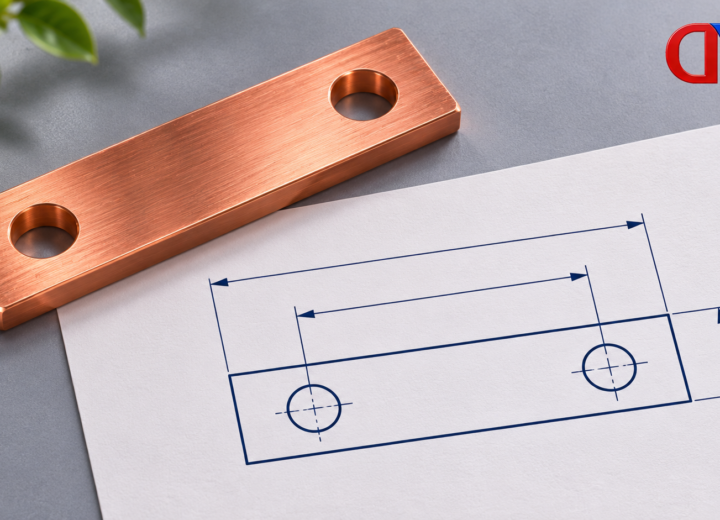
For related conductor products, view the product categories.