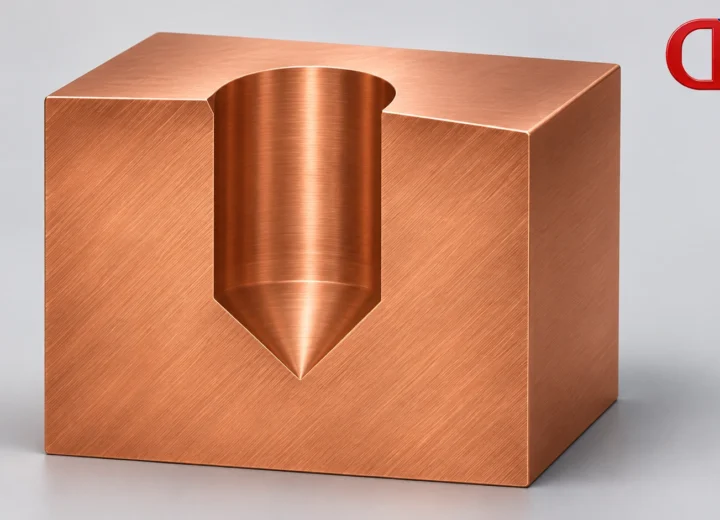

A tapped hole is an internally threaded hole produced with a tap. “Threaded hole” describes the finished feature more broadly; it does not identify one manufacturing method. A tapped hole is therefore a threaded hole, while a thread-milled hole reaches a threaded result through a different route.
What is a tapped hole?
Tapping uses a tap to produce an internal screw thread. Sandvik’s technical guidance distinguishes cutting taps, which remove material and generate chips, from forming taps, which form the thread without generating cutting chips. Tapping does not always mean cutting.
Forming also has conditions. The material needs suitable ductility, and the prepared hole and lubrication matter. A description such as “copper component” does not establish that a particular forming tap is appropriate. The specific material and feature still need review.
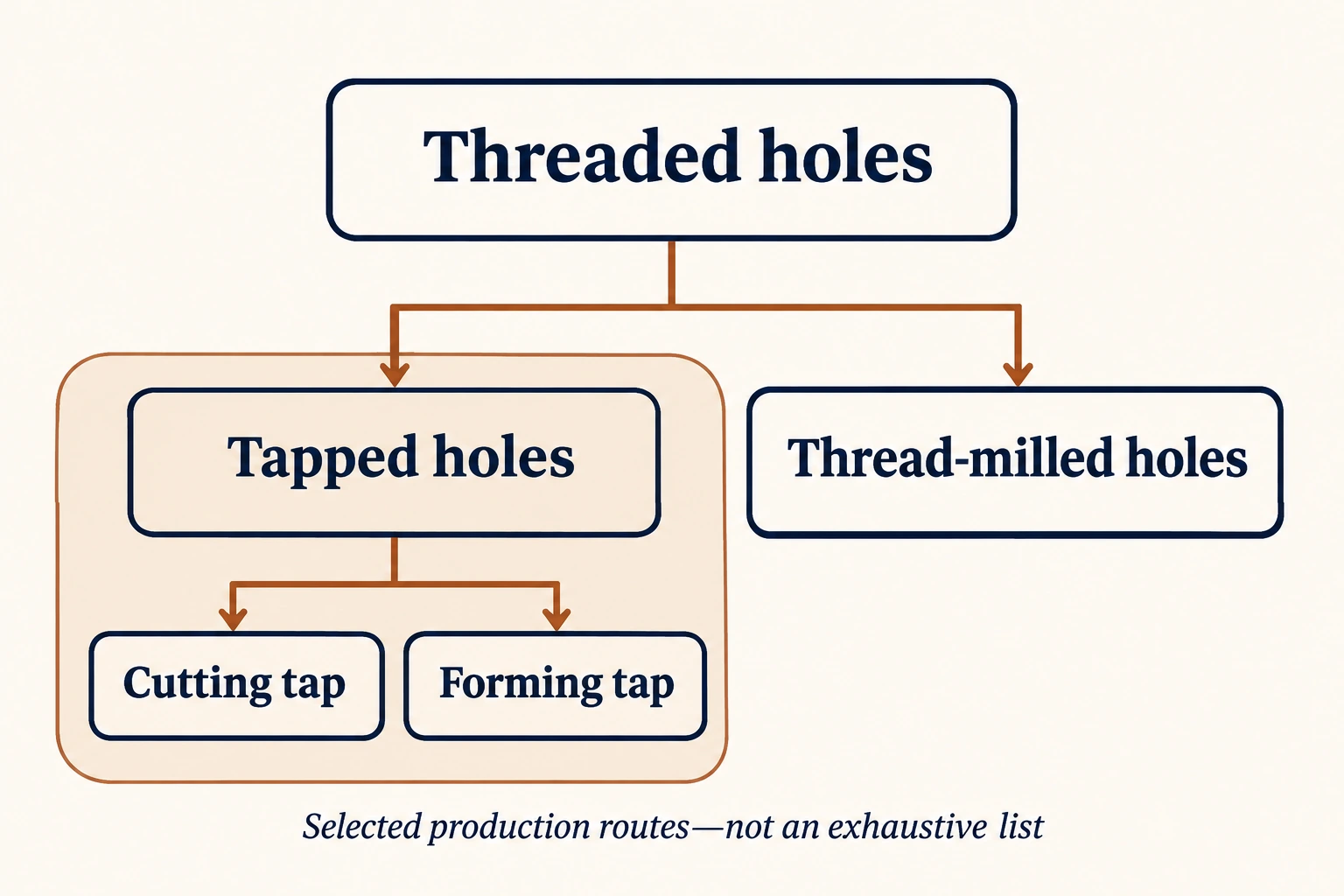
Thread milling uses a rotating cutter following a circular ramping movement to create the thread. Thread milling is separate from tapping. Sandvik describes it as a threading method with its own application requirements; the presence of a finished internal thread does not prove that a tap made it.
The comparison is therefore between a broad feature description and a more specific process description. The descriptions overlap rather than naming mutually exclusive hole geometries. That distinction matters when a drawing or purchase order uses “tapped” casually but the production route is important to the buyer.
Tapped hole vs threaded hole: compare the wording
The terms become easier to use when each description is tied to what it actually identifies. The table compares terminology; it does not prescribe a preferred manufacturing route or an inspection limit.
| Description | What the wording identifies | What still needs confirmation |
|---|---|---|
| Threaded hole | A finished internal thread | Designation, class, extent and any required process |
| Tapped hole | An internal thread made with a tap | Cutting or forming route and application conditions |
| Cut-tapped hole | A tap removes material and generates chips | Suitability for the specified material and hole |
| Form-tapped hole | A tap forms suitable material without cutting chips | Material suitability, prepared hole and lubrication |
| Thread-milled hole | A rotating cutter creates the thread by circular ramping | Whether this route meets the drawing and process restrictions |
A quotation can therefore describe the correct thread while proposing a different process. Conversely, the word “tapped” can agree with the requested process family while leaving the actual thread specification incomplete. Review both parts of the description before treating two offers as equivalent.
Separate the thread note from the drilled hole
A useful thread description identifies the thread family or series, size, pitch or threads per inch, and required class. PTC’s hole-note documentation treats these as separate information fields. A diameter by itself does not describe all of those requirements.
Extent is another distinct input. PTC provides separate drill-depth and thread-depth fields and includes through-drilled holes with a limited thread depth. A hole can consequently continue beyond the threaded portion. “Through hole” should not be assumed to mean that the thread itself runs through.
For a blind feature, the buyer should identify whether a stated depth refers to the drilled hole or its threaded portion. The drawing discussion must resolve that meaning before production. A visible cavity in a shaded model does not answer an ambiguous thread-depth note.
In a drawing review, also ask whether the intended thread direction and any mandatory production method are explicit. Keep the required finished feature, the hole extent and the process instruction identifiable. This is a communication check rather than a substitute for the applicable thread and drawing specifications.
Make the RFQ clear about result and process
Consider an inquiry that asks for “tapped holes” and gives a depth without naming what that depth measures. This editorial example leaves two questions open: what finished thread is required, and does the buyer require a tap-based process?
The revised inquiry can point to the drawing’s thread designation, class and extent, then identify any process restriction separately. If tapping is mandatory, say so. If the requirement concerns the finished thread, ask the supplier to state the proposed route so any difference can be resolved before the order.
Likewise, replace an unexplained depth value with an identified feature requirement. The supplier should not have to decide whether the number belongs to the thread or the underlying hole. The buyer and designer can clarify that relationship without prescribing a universal engagement length or tap-drill size.
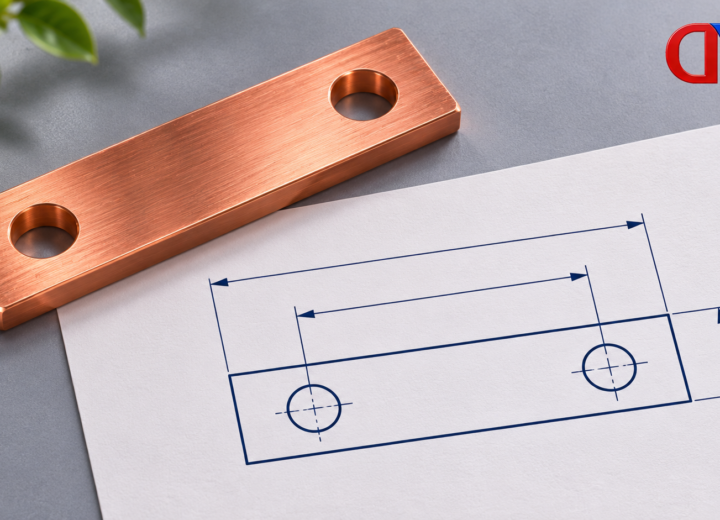
For a custom copper-bar component, include the material and those drawing details with the request. The product category does not verify a threading method, available size range or inspection service. A clear inquiry describes the required result and asks for confirmation of the proposed process and verification approach.
Compare two quotations against the same drawing
In a hypothetical comparison, one supplier proposes a cutting tap for a copper component while another proposes a forming tap. Both proposals describe tapped holes. The difference matters because forming has material, prepared-hole and lubrication conditions; the shared word “tapped” does not resolve whether either proposal suits the actual part.
Suppose a third quotation proposes thread milling. If the drawing controls the finished internal thread and allows the production route to be proposed, that quotation can be reviewed against the same finished-feature requirements. If a tap-based method is mandatory, the supplier must identify thread milling as a proposed deviation and obtain approval. A verbal assurance that the thread is “the same” leaves the process requirement unresolved.
The useful comparison keeps the drawing revision, thread designation, class and threaded extent aligned across the offers. The supplier can then identify the proposed process and any exception beside those requirements. This is the same distinction used when reviewing broader machining processes in manufacturing: the required feature and the proposed route should remain separately visible.
None of these terms supplies an acceptance result. Record the agreed verification approach with the quotation, and check it against the approved drawing when the parts arrive. That closes the purchasing question without treating a process name as proof of thread conformity.
References
- Sandvik Coromant — Tap types, cutting and forming distinctions.
- Sandvik Coromant — Thread milling, process definition.
- PTC Creo — Hole Notes, thread and depth fields.
For related conductor products, view the product categories.