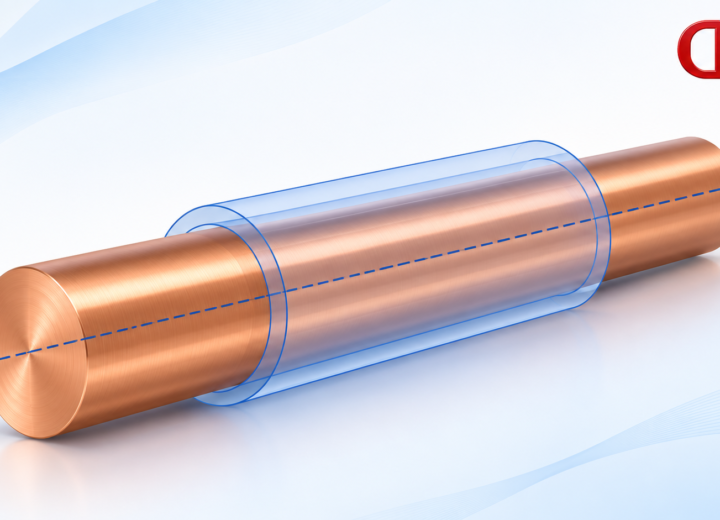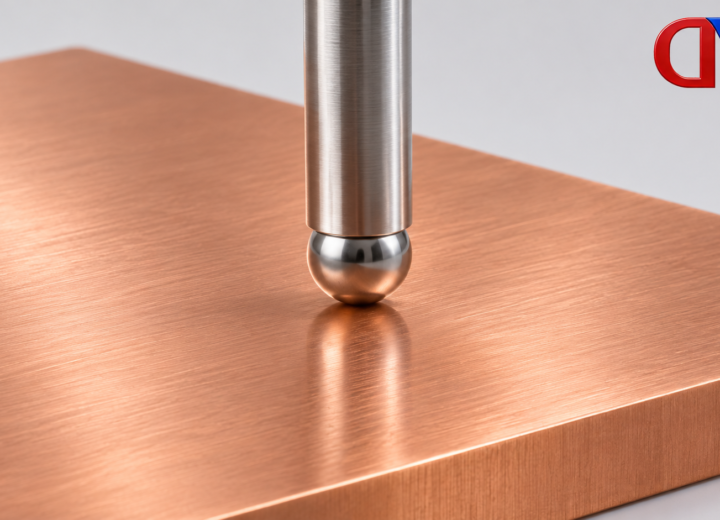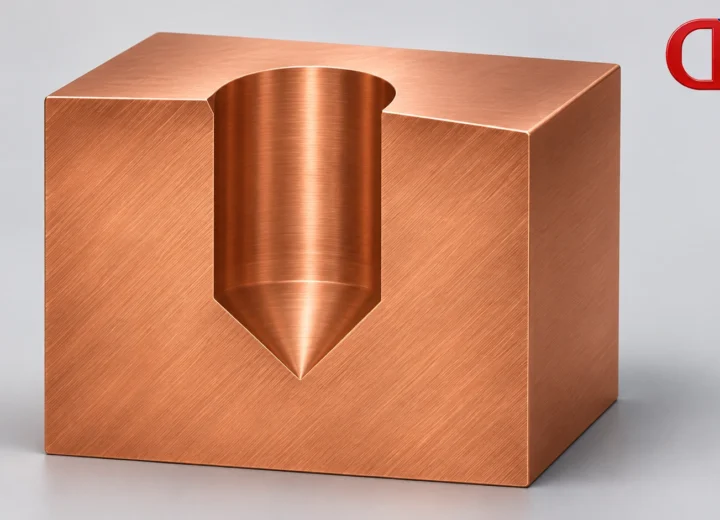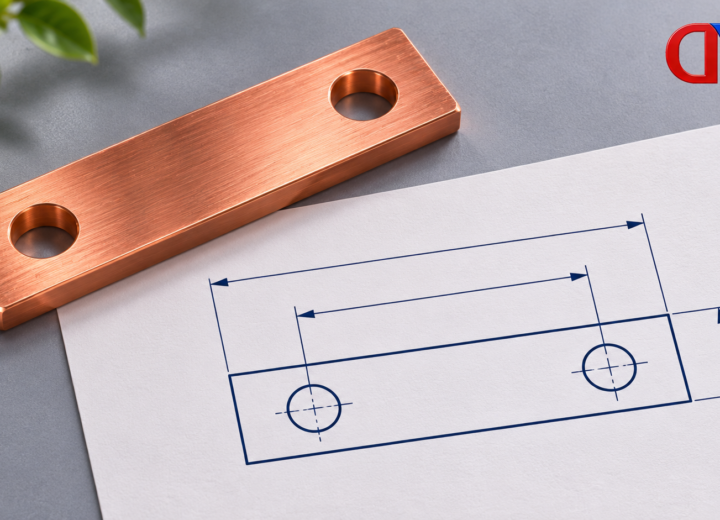
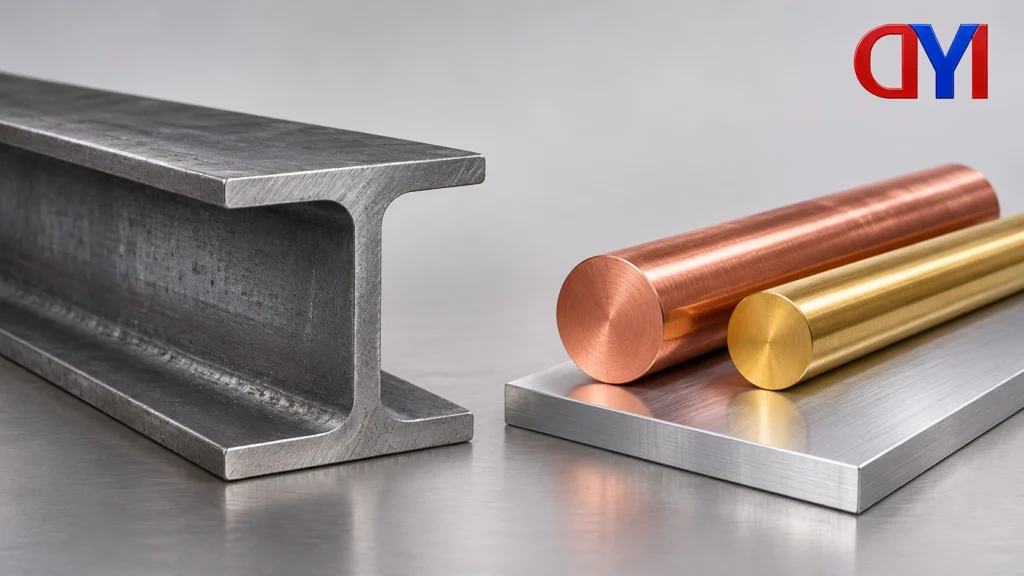
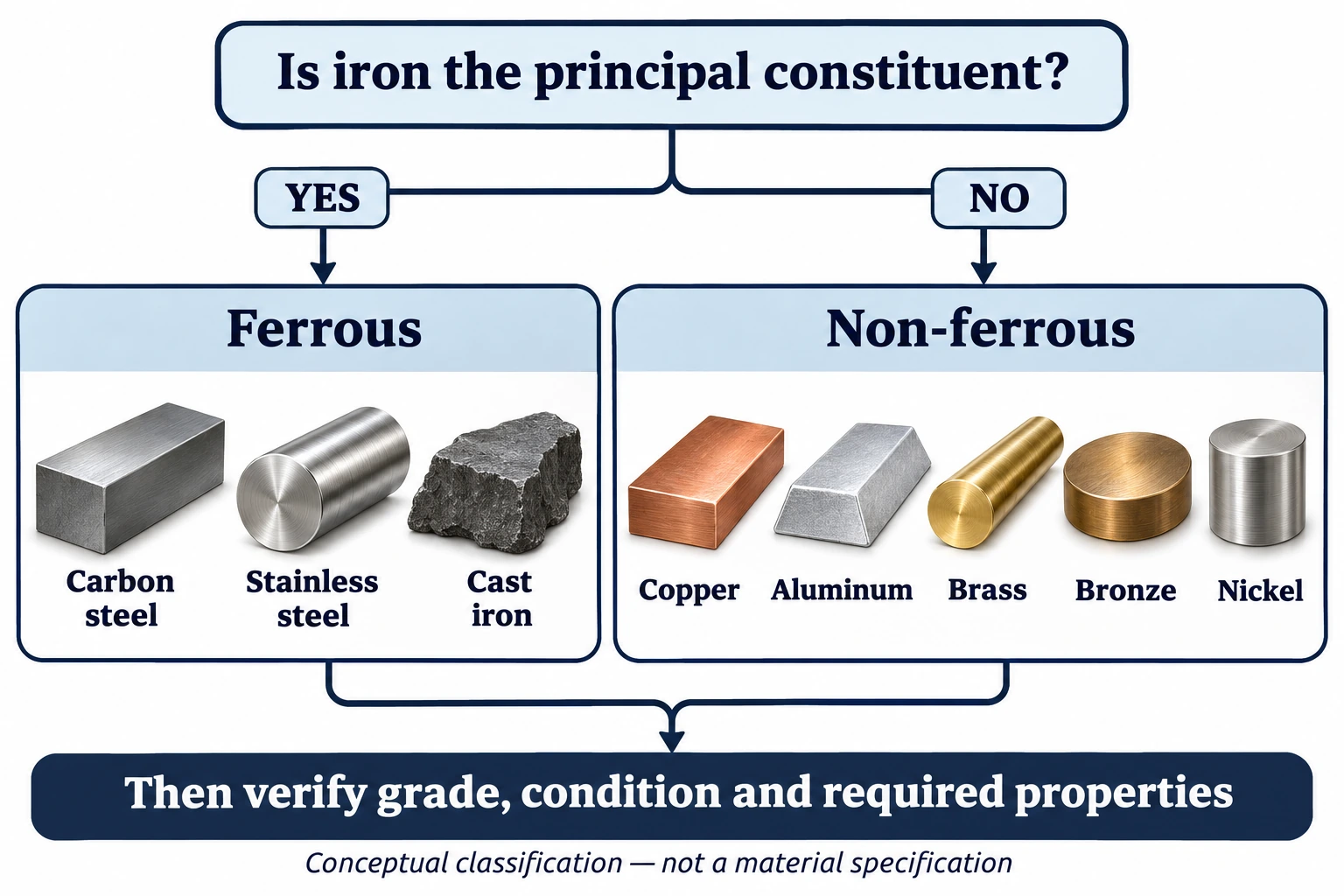
Non ferrous metals are metals and alloys in which iron is not the principal constituent. Copper, aluminum, brass and bronze belong to this family. Ferrous materials are iron-based, including steel and cast iron. The distinction identifies a material family; it does not tell a buyer whether a finished part will be magnetic, corrosion-resistant or suitable for a particular load.
For a drawing or purchase order, the next question is therefore the grade and condition. “Non-ferrous” can narrow a search, but it cannot replace a material specification.
What makes a metal ferrous or non-ferrous?
The base metal determines the family. Steel remains ferrous even when alloying additions change its behavior substantially. A copper-based alloy remains non-ferrous because copper, rather than iron, provides its base. The category does not establish a zero-trace-iron chemical limit; that requires the composition requirements of the named grade.
This distinction also separates a pure metal from an alloy. Copper is a metal; brass is a copper-based alloy commonly associated with zinc. Both are non-ferrous. Bronze includes copper-tin and copper-aluminum families, so the word “bronze” alone is still too broad for ordering a replacement part.
Separate the base material from a coating or assembly
A material family describes the specified metal, not every visible feature of a finished component. For example, a coating described as copper does not, by itself, establish that the underlying component is copper-based. Identify the substrate and the surface layer separately before applying the ferrous or non-ferrous label.
An assembly can also contain more than one material family. A copper part and an iron-based fastener do not become one alloy because they are supplied together. Record the material of each relevant component rather than assigning the whole assembly a chemical identity from its most visible piece.
This distinction matters during identification as well as purchasing. A surface photograph, a finish description and a base-material designation answer different questions. If an order requires a particular non-ferrous substrate, confirm that substrate in the material record; the finish alone does not close the requirement. The family classification can then be followed by the specific grade and supplied condition.
Examples of non ferrous metals and ferrous materials
Common examples help identify the family, but the same family can contain very different engineering materials. The table is a classification aid, not a list of interchangeable substitutes.
“Is aluminum a ferrous metal?” and “Is copper ferrous?” therefore have straightforward answers: neither is iron-based. Their classification does not establish a conductor rating, machining tolerance or corrosion lifetime. Those decisions require more specific evidence.
Why the usual property shortcuts fail
A magnet is not a complete classification test
Non-ferrous does not mean universally non-magnetic. Nickel is a familiar exception to that shortcut. The magnetic behavior of copper, brass and aluminum needs its own explanation. A magnetic response can assist identification, but does not establish the complete chemical identity of an unknown component. Material documentation is the stronger basis for accepting a specified alloy.
Lightweight is a property, not a family definition
Aluminum often brings weight into a material comparison, but the non-ferrous category also includes much denser metals. A designer comparing equal-volume parts should use the density of the actual grade. Comparing only the family names can hide the mass difference that matters to handling or assembly.
Corrosion resistance depends on the exposure
Non-ferrous metals can corrode. Avoiding iron rust does not establish immunity to chemical attack, discoloration or other deterioration. The environment, alloy, surface condition and contact with other materials all belong in the evaluation. Likewise, a ferrous designation alone does not predict the corrosion behavior of a particular stainless steel.
Conductivity and fabrication behavior also require grade-level comparisons. A broad preference for copper or aluminum may begin a design discussion, but a material-family label cannot approve an electrical component or a machining process.
Read a non-ferrous material description from general to specific
A useful material description has several levels. Each narrows a different part of the decision, so a complete lower-level requirement should not be replaced by a broad family label.
- Family: ferrous or non-ferrous identifies whether iron is the principal constituent. It is an organizing category, not a certificate of purity or a statement of performance.
- Material and grade: identify the base metal or alloy family and the required designation. The copper, brass and bronze comparison explains why those names still cover different material choices.
- Product form and condition: identify whether the request concerns rod, sheet, a casting or a finished component, and record the specified supplied condition rather than relying on the category alone.
- Part requirements: connect the material description to the drawing and the properties required for that application. A family classification cannot supply a current rating, load capacity or machining tolerance.
- Evidence: identify the documents or verification needed to connect the supplied material to those requirements. An attractive finish or familiar material name cannot replace an agreed acceptance basis.
These levels also help when a catalog uses a short title. The title can identify a relevant material family or stock form, while the drawing and quotation must settle the more specific requirements before substitution or production.
Turn the category into a useful material decision
A practical selection sequence starts with the part’s job. Identify the required function, environment and manufacturing route, then choose candidate grades. Compare the properties relevant to that job rather than expecting one material family to be superior in every respect.
For a cylindrical copper part, DONGYAO’s copper rod product page identifies a relevant stock form. It does not make every copper grade an equivalent choice. A useful inquiry names the required grade or specification, dimensions, product condition and any property or documentation requirements.
A brass replacement component needs the same discipline: “non-ferrous brass” identifies a family, while the alloy designation and condition establish a much narrower requirement. If the existing drawing lacks those details, resolve them before treating a visually similar material as a substitute.
References
TWI: non-ferrous metals and properties; bedra: non-ferrous metal families; Indian Institute of Metals, Delhi Chapter: non-ferrous metals article.
For related conductor products, view the product categories.