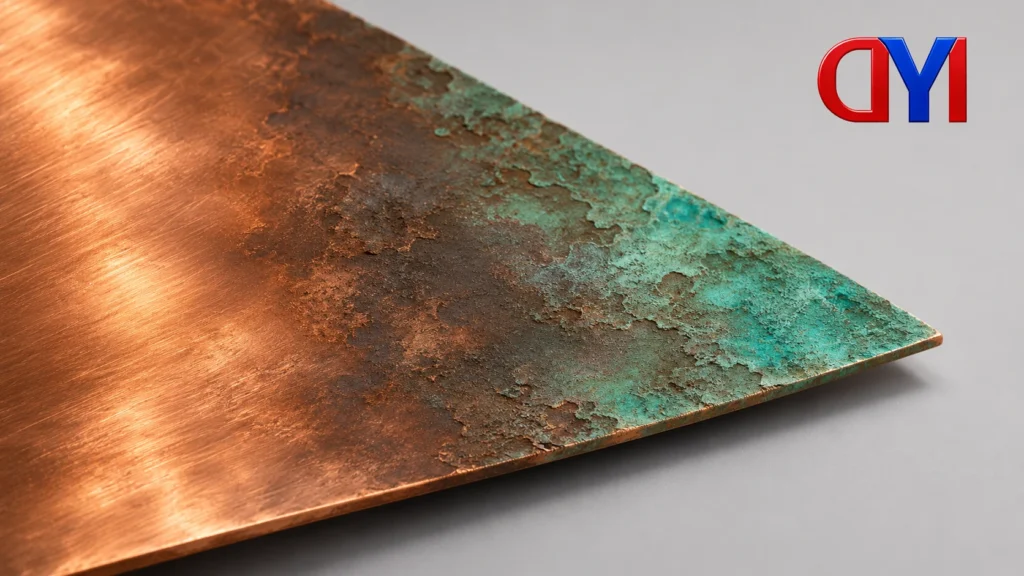
Does copper rust? Copper does not form ordinary iron rust, but it can oxidize and corrode. Its surface may become brown, dark or green as corrosion products develop. That change can be an expected architectural finish, yet color alone cannot tell you whether a working copper part remains suitable for its job.
The useful question is what the surface change means in its particular environment. A roof panel, a decorative item and a functional contact face need different assessments, even when their visible colors look similar.
Does copper rust, tarnish or form patina?
In ordinary materials terminology, rust refers to corrosion products associated with iron. Copper oxidation produces different compounds. Tarnish describes a surface discoloration; patina commonly describes the layer of corrosion products that develops on copper-based materials exposed to the atmosphere. Neither word, by itself, measures how much metal has been lost.
Fresh copper can lose its bright appearance as surface films develop. Green patina is a familiar later appearance in some outdoor exposures. The National Park Service identifies oxidation of the Statue of Liberty’s copper skin as the reason for its green color. That monument illustrates the phenomenon; it does not provide a timetable for another copper part.
There is no universal answer to how long copper takes to turn green. Atmospheric pollutants, local exposure and wet-and-dry cycling affect patina composition and growth. Two pieces installed in different environments need not develop the same color or change at the same rate.
Use “copper rust” as a question, not a material diagnosis
People often search for copper rust when they notice a changed surface. The useful answer starts by separating the visible description from the material process. These words describe related observations, but they are not interchangeable acceptance criteria.
| Term | Meaning in this discussion | What the word does not establish |
|---|---|---|
| Iron rust | Corrosion products associated with iron | The identity of a layer on a copper substrate |
| Copper oxidation | Copper reacting as surface compounds develop | A fixed rate or remaining service life |
| Tarnish | A description of surface discoloration | Whether a functional surface meets its specification |
| Atmospheric patina | A developing corrosion-product layer on the exposed copper-based surface | Universal protection in every environment or application |
This distinction also helps when comparing copper with brass. Brass is a copper alloy, and its corrosion questions require an alloy-specific explanation. The separate guide to brass tarnish and corrosion addresses that difference; a similar visible color does not make the two materials identical.
When does a patina help—and when is that the wrong question?
KTH’s atmospheric-corrosion research explains that many copper patinas act as barriers and reduce the subsequent corrosion rate. This helps explain why a weathered copper surface can remain useful without retaining a bright metallic finish.
However, a barrier effect under atmospheric exposure is not a universal declaration of corrosion resistance. It does not establish remaining section thickness, compatibility with a particular chemical environment or the condition required at a functional interface. Acceptance must follow the part’s purpose and applicable specification.
English Heritage’s guidance on archaeological copper alloys gives a useful caution about visual diagnosis: stable and active corrosion are not always immediately distinguishable. That conservation evidence supports being careful about appearance-based conclusions. Its storage conditions and treatments are not specifications for industrial copper components.
Assess the function before changing the surface
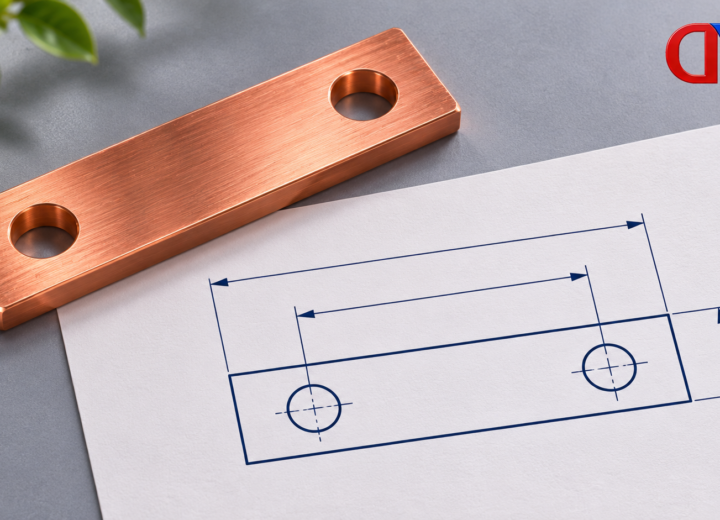
Start with the drawing, intended finish and service history. Identify whether the visible material is bare copper, a coating or another metal within an assembly. Treat an unfamiliar deposit as something to identify rather than assuming every discoloration has the same origin.
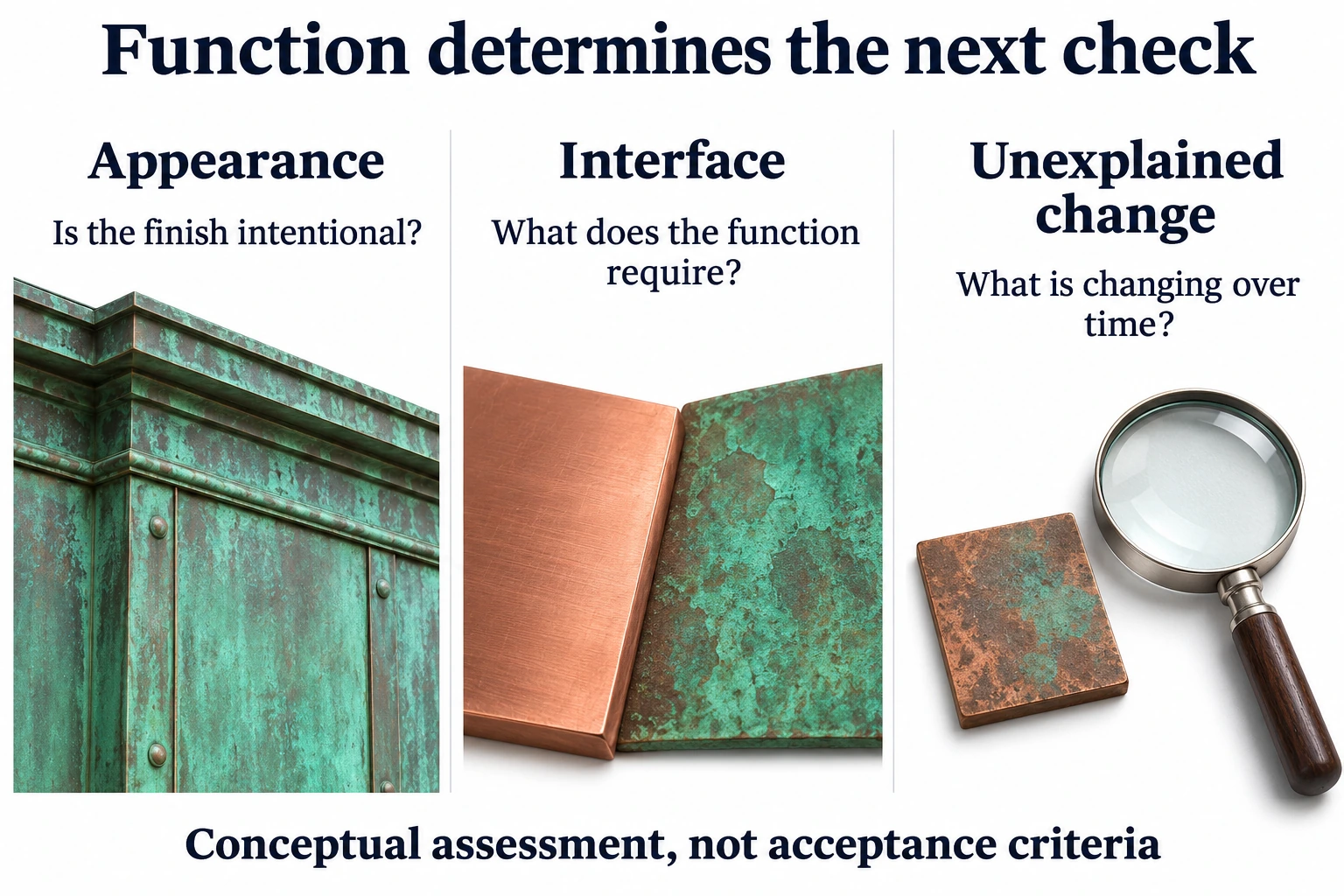
- For an architectural surface: check whether the weathered appearance is intentional and whether its development matches the project’s finish expectations. A request for uniform color is different from a requirement for bright metal.
- For a functional interface: identify the specified surface condition and inspection requirements. Do not carry an architectural “protective patina” argument over to a contact or mating face without the relevant engineering review.
- For unexplained change: record location, exposure and whether the condition is progressing. Decide what examination or testing is needed before choosing cleaning, repair or replacement.
For example, a green outdoor panel may be visually acceptable under its finish specification, while a similarly colored mating face raises a different question about function. The comparison does not declare either part sound or failed; it shows why the same color cannot serve as a shared acceptance rule.
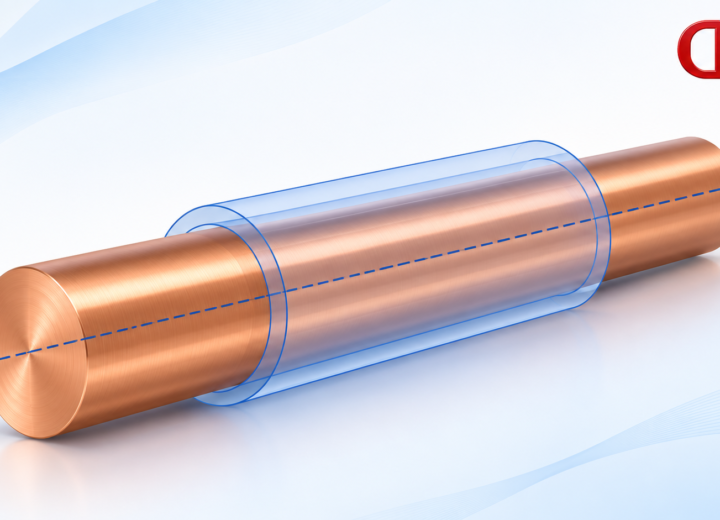
When replacing stock or requesting a new part, identify the substrate and form first. DONGYAO’s copper rod product is a relevant starting point for rod-form material inquiries. Confirm the required grade, condition, finish and exposure separately; a generic copper label does not settle those requirements.
Example: investigate changed copper stock before accepting a remedy
Consider a hypothetical batch of copper stock that arrives darker than the buyer expected. The order calls for a defined surface condition, but the receiving note records only “copper rust.” That phrase does not identify the substrate, the expected finish or where the change occurred. Replacing it with a more precise observation makes the next discussion more useful.
The receiver can record the affected locations, the delivery and storage conditions, the first observation and whether the appearance changes during subsequent observation. The buyer should compare those observations with the specified finish and identify which surfaces have a functional role. Any further examination should be selected for that question rather than inferred from a photograph.
If the drawing requires a particular metal finish or surface condition, compare the supplied part with that requirement. Asking whether a layer can be protective in outdoor air is different from asking whether the delivered surface matches the purchase specification. Neither an attractive patina nor a bright polished surface resolves every functional requirement.
The same record is useful when asking how long copper takes to turn green: it describes one exposure history, not a universal clock. Agree the assessment and disposition before changing the surface. A proposed cleaning operation should follow identification of the material, finish and problem; the word “rust” alone does not select a suitable treatment.
References
- KTH Surface and Corrosion Science: Patina Evolution
- National Park Service: Statue of Liberty FAQs
- English Heritage: Archaeological Metalwork, copper-alloy guidance
For related conductor products, view the product categories.