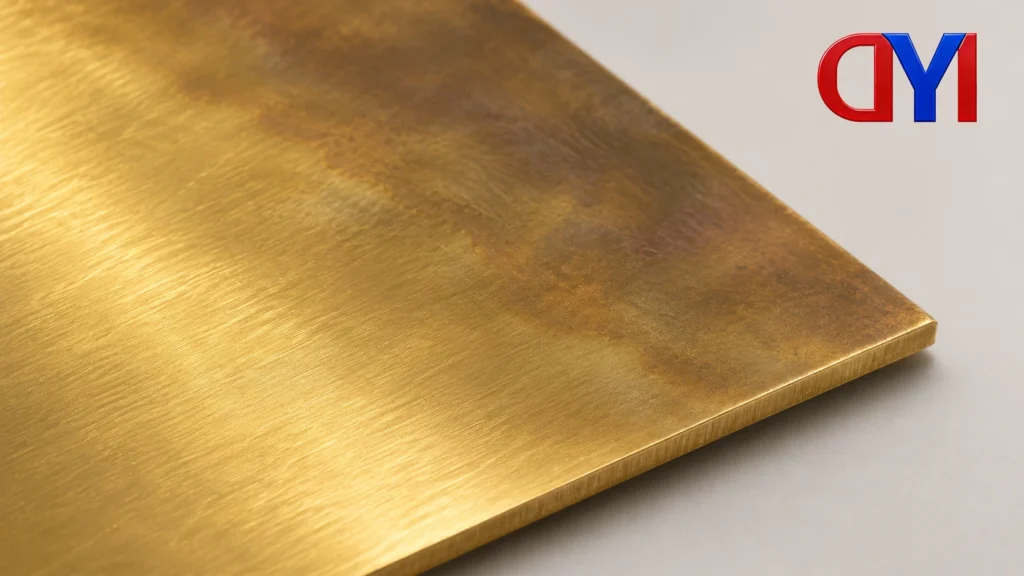
Does brass rust? Solid brass does not form ordinary iron rust, because it is a copper-zinc alloy rather than an iron-based material. It can still tarnish and corrode. A darker surface may be an appearance change, while selective corrosion such as dezincification can affect the metal beneath it.
The useful question is therefore what changed, where it changed and whether the part’s function is affected. “Rust-free” does not mean corrosion-proof, and polishing a surface does not establish the remaining condition of a component.
Does brass rust, or is the surface tarnished?
People often use “rust” for any discolored metal. Technically, brass tarnish and copper-alloy corrosion differ from iron rust. A brass-colored assembly may also contain plated or adjacent iron-based parts. Establish which material carries the deposit before deciding that solid brass is rusting.
Polished brass can darken as it tarnishes. Copper-alloy corrosion products and contaminated polish residues can also appear green or blue-green. These observations help frame an inspection, but color alone cannot identify the compound, the cause or the depth of damage.
A useful inspection record describes the location and distribution of the change. Note whether it is widespread or concentrated at a joint, crevice or handled area. Photographs and the exposure history provide more context than a description such as “brass rust,” which combines several possible conditions.
Describe the observation before naming the corrosion
The same broad description, “corroded brass,” can lead to very different questions. A useful comparison separates what an observer can record from what still needs investigation:
| Visible observation | Question it raises | What it cannot establish |
|---|---|---|
| Darkening over a polished surface | Is this tarnish, and what finish was originally specified? | The remaining condition of the entire component. |
| Green or blue-green material near a recess | Is there copper-alloy corrosion, retained polish or another deposit? | A unique chemical identity or corrosion depth from color. |
| A pink or reddish region | Could copper enrichment be involved, and what alloy and exposure records are available? | The extent of zinc loss or remaining mechanical integrity. |
These are investigation prompts, not a visual acceptance chart. For example, calling a green deposit “patina” does not establish whether it came from the underlying brass or from material left after earlier care. Record the observation before cleaning changes it. The related explanation of copper oxidation and patina helps distinguish the broader copper terminology from brass-specific selective zinc loss.
Dezincification changes the alloy beneath the surface
Dezincification is selective corrosion in which zinc is lost from brass, leaving a copper-rich region. Severe attack can create a porous structure with reduced mechanical integrity. This differs from simply seeing a film over otherwise intact material.
A pink or reddish change can be associated with copper enrichment, but it is not a measurement of damage depth. Selective attack may be localized or extend over a broader layer. The actual alloy and exposure determine susceptibility; a general brass designation cannot settle that question.
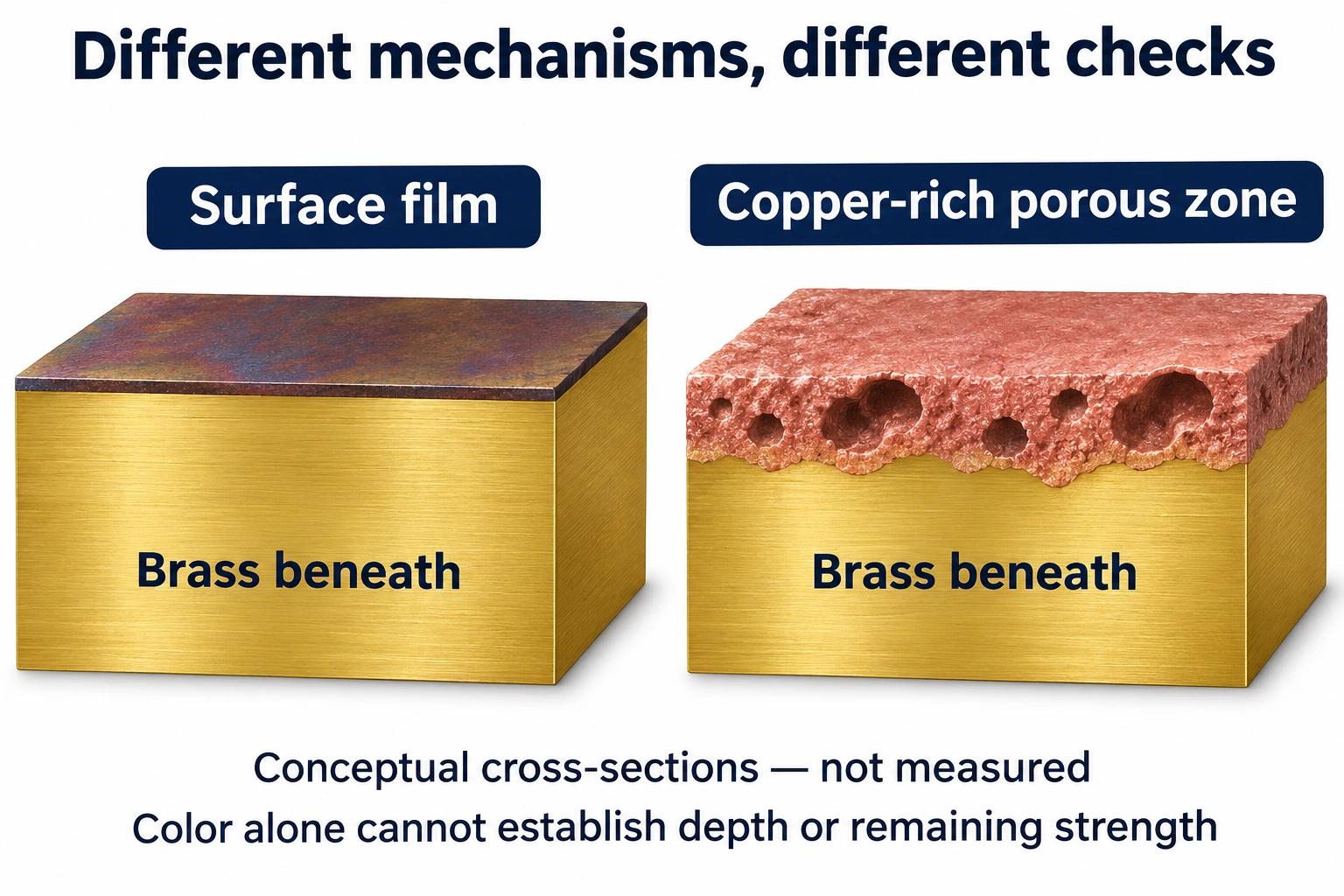
Removing a visible surface change does not by itself demonstrate that a functional part is acceptable. Where corrosion may have affected a working surface or section, the evaluation needs the material identity and an appropriate condition assessment, rather than appearance alone.
Water exposure does not have one outcome
Brass can resist some environments and suffer corrosion in others. Water chemistry, deposits and flow conditions can influence selective attack. An outdoor fitting, stored rod and immersed component therefore should not be assigned the same corrosion behavior simply because each is called brass.
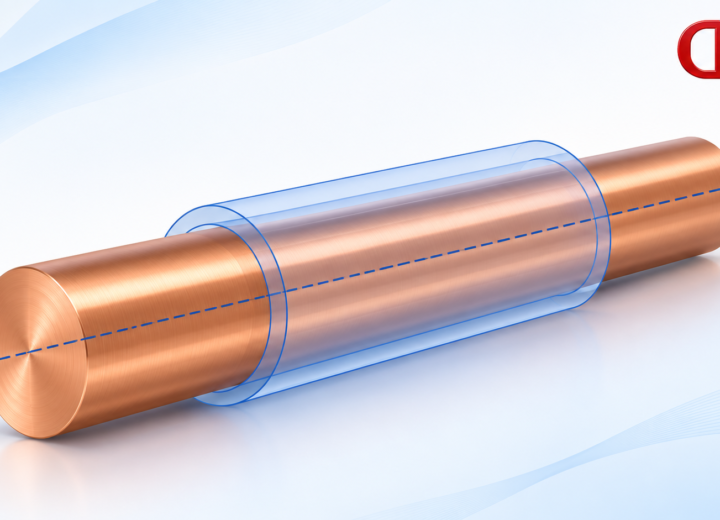
For a material decision, record the actual exposure and required function. DONGYAO’s brass rod product identifies a stock form, but the grade and suitability for a particular environment still need to be established. The product family name is not a water-service approval or a lifetime prediction.
Choose care after identifying the finish and condition
Begin with whether the surface is bare brass, plated, lacquered or otherwise coated. A treatment intended to brighten bare metal may be unsuitable for another finish. Also distinguish routine cleaning from an investigation into corrosion that may have affected the component itself.
Acidic or salty cleaning mixtures can damage brass, and residues left in crevices can contribute to further surface changes. Clean handling and residue control matter. A protective coating may help preserve an appearance while it remains intact, but it has maintenance requirements and does not make every application corrosion-proof.
For routine plate maintenance, the existing brass plate cleaning guide addresses finish identification and cleaning choices. Where the concern is possible material loss or selective attack, establish the cause and condition before choosing a cosmetic treatment.
Match the next action to the actual concern
Consider two hypothetical parts with similar dark patches. One is a decorative brass plate with a known coating and a cosmetic requirement. The other is a functional brass component with an uncertain exposure history. The first question concerns preserving the specified appearance without damaging its finish. The second concerns identifying the material change and whether it affects the required function. Applying the same polishing approach would skip that distinction.
For a coated item, distinguish the coating from the metal it covers. Ask whether the observed change lies on the finish, at an exposed edge or in an area whose finish history is unknown. The guide to metal finishes explains why a surface treatment and a base-metal description are separate specification details. A finish description can guide care, but it does not prove the underlying brass is sound.
For a replacement inquiry, keep the original grade, exposure and functional requirement attached to the observation record. “Brass that will not rust” is too broad to resolve selective corrosion or finish maintenance. A clearer request identifies the material and environment first, then asks which evidence supports the proposed replacement for that use.
The resulting record should separate the observation, likely exposure and next action. That keeps a tarnish-management decision distinct from accepting a corroded part, and gives a supplier a clearer material requirement for any replacement.
References
National Park Service: metal and corrosion identification; CCI Notes 9/13: brass dezincification and care; AMPP: selective zinc loss and service conditions.
For related conductor products, view the product categories.